
Reflux-like symptoms often follow a recognizable pattern, but symptoms alone cannot confirm GERD. Burning after meals, sour taste, regurgitation, and symptoms that worsen when lying down all raise suspicion. Trouble swallowing, vomiting, chest pain, bleeding, or unexplained weight loss deserve faster medical evaluation because those features change the risk picture.
How did we evaluate whether this sounds like GERD?
We prioritized the American College of Gastroenterology guideline on GERD, the NIDDK overview of acid reflux and GERD, the NHS reflux symptom summary, and a BMJ Best Practice overview. We gave more weight to guideline summaries and large clinical references than to forum anecdotes because symptom overlap is common. We also separated common reflux-pattern clues from emergency or red-flag features. We excluded supplement advice, shortcut diagnosis lists, and social-media trigger myths because they blur recognition with management. That distinction matters because recognizing a pattern is useful, but mistaking a warning sign for ordinary reflux can waste time.
What pattern usually makes reflux more likely?
Reflux becomes more likely when symptoms line up with acid or stomach contents moving upward after meals. Heartburn usually feels like burning behind the breastbone. Regurgitation usually feels like liquid, sour fluid, or food moving back into the throat. The NIDDK and NHS both describe meal timing, bending, and lying down as common triggers because body position changes how easily reflux reaches the esophagus. Nighttime symptoms also matter. Reflux often gets louder after large meals, alcohol, mint, chocolate, or late eating, although trigger lists vary by person. A recognizable pattern is more helpful than a single symptom. Burning plus regurgitation plus positional worsening points toward reflux more strongly than vague chest discomfort alone. Pattern recognition is useful. Pattern recognition is still not the same thing as diagnosis.
What symptoms can mimic GERD even when the cause is different?
GERD gets confused with several common patterns because the upper abdomen and chest share nerve pathways. Functional dyspepsia can create fullness, early satiety, and upper-belly burning without classic regurgitation. Anxiety can amplify throat tightness, chest awareness, and air swallowing. Gallbladder pain can follow fatty meals and radiate to the back or right shoulder. Cardiac causes can also mimic reflux, which is why new chest pain should never get a casual shrug. The ACG guideline and BMJ Best Practice both emphasize symptom overlap because reflux is common but not unique. Laryngopharyngeal irritation, ulcers, medication side effects, and eosinophilic esophagitis can muddy the picture too. The practical takeaway is annoying but important. Similar discomfort does not mean same mechanism. Similar location does not mean same condition. That is exactly why self-diagnosis gets messy fast.
Which signs make the situation more urgent instead of more educational?
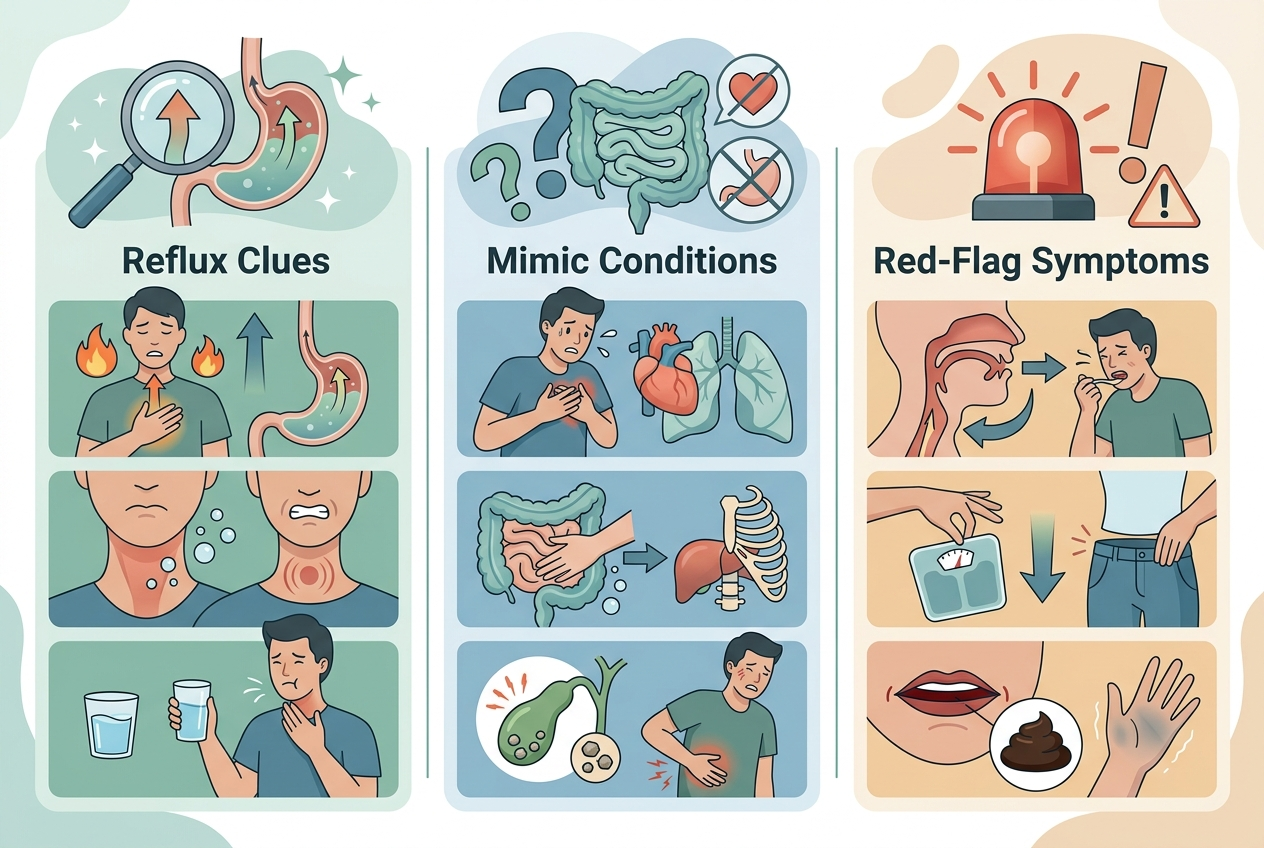
Some symptoms shift the question from “does this sound familiar?” to “should this get checked sooner?” Trouble swallowing, painful swallowing, black stool, vomiting blood, repeated vomiting, unexplained weight loss, anemia, persistent chest pain, and progressive symptoms all deserve faster review. The NIDDK and ACG guideline both flag these features because they can signal complications or a different problem entirely. Age and duration also matter. Brand-new severe symptoms at midlife land differently than an occasional familiar flare after pizza. Frequent nighttime symptoms can matter because repeated exposure can irritate the esophagus over time. The key point is simple. Common symptoms can still sit beside uncommon risk. A familiar reflux sensation is one thing. A reflux sensation plus red flags is a very different conversation.
What can you track before deciding what to do next?
A short symptom log usually tells a cleaner story than memory does. Track meal timing, portion size, trigger foods, caffeine, alcohol, body position after eating, nighttime symptoms, and whether regurgitation or burning is actually happening. Also track medications because NSAIDs, iron, some antibiotics, and certain supplements can irritate the upper digestive tract. Write down whether symptoms improve with sitting upright or worsen with bending. The point is not perfection. The point is pattern clarity. A seven-day log often reveals whether symptoms cluster around late meals, lying down, stress-heavy days, or one repeating food category. The NHS and NIDDK both support practical observation because management starts with pattern recognition. Data beats guessing. A diary does not diagnose GERD, but it often makes the next step much less random.
What questions do people still ask about reflux-like symptoms?
Can you have GERD without classic heartburn?
Yes. Some people notice regurgitation, sour taste, throat clearing, cough, or nausea more than burning. That is one reason reflux can be easy to miss and easy to over-assume at the same time.
Does chest burning always mean reflux?
No. Reflux is common, but chest symptoms overlap with heart, lung, and anxiety-related causes. New or severe chest pain should not be self-labeled.
Is a sour taste a useful clue?
Yes. Sour taste or food coming back up is one of the more recognizable reflux-style clues. It is usually more specific than vague upper-belly discomfort alone.
Do symptoms at night matter more?
Often, yes. Nighttime symptoms can suggest positional reflux and can disrupt sleep, which tends to make the whole pattern feel worse. Persistent nighttime symptoms are worth taking seriously.
What makes the pattern more convincing overall?
Burning after meals, regurgitation, symptoms worse when lying down, and repeatable triggers create a stronger reflux pattern. One isolated symptom on one random day proves very little.
Leave a Reply