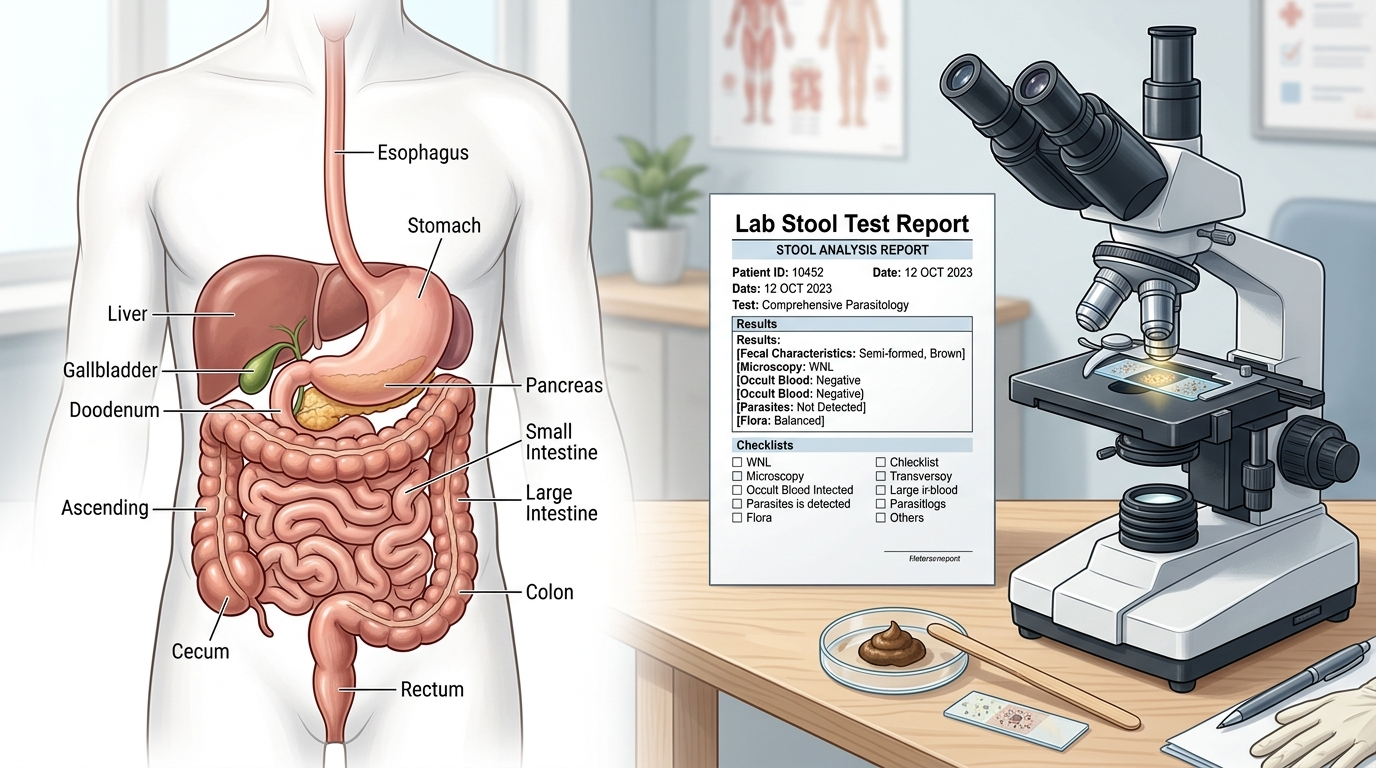
Blastocystis is a real intestinal protozoan, and stool tests can detect it. The messy part is interpretation. Many people with Blastocystis have no symptoms, while others report bloating, loose stool, or abdominal discomfort, so a positive result does not automatically prove it is the cause. Context, symptom pattern, and test method matter more than the organism’s name alone.
How did we evaluate whether Blastocystis matters?
We prioritized the CDC overview of Blastocystis, the MSD Manual summary, and peer-reviewed reviews indexed in PubMed. We gave more weight to human prevalence studies, clinical reviews, and reference manuals than to single lab papers or comment threads. We also separated two questions that often get blurred together, whether Blastocystis exists, and whether it is actually driving symptoms in a given person. That distinction matters because a detected organism can be real without being clinically central. Our goal was interpretation, not alarm.
Is Blastocystis a real organism or an internet myth?
Blastocystis is real. Laboratories can identify Blastocystis DNA or microscopic forms in stool, and parasitology references classify it as a legitimate intestinal protozoan rather than a made-up wellness label. The reason people get confused is that Blastocystis behaves inconsistently across studies. Some surveys find it in people with bloating, abdominal discomfort, or loose stool, while other surveys find it in healthy people with no digestive complaints at all. A 2018 review in Clinical Microbiology Reviews described Blastocystis as common worldwide and still debated in terms of pathogenicity. That means the argument is not about whether Blastocystis exists. The argument is about whether a positive result reflects harmless colonization, a marker of altered gut ecology, or a meaningful contributor to symptoms. Existence is settled. Clinical significance is still case-dependent.
Why do doctors disagree about whether Blastocystis causes symptoms?
Doctors disagree because Blastocystis does not behave like a simple yes-or-no infection. Symptom burden varies by subtype, host immunity, gut environment, and what else is happening in the digestive tract. The CDC notes that the clinical significance of Blastocystis is controversial, which is unusually direct language from a public-health reference. Some clinicians see a positive test and move on because asymptomatic carriage is common. Others pay closer attention when the timing fits new bloating, diarrhea, cramping, travel exposure, or other stool findings. Test method also changes interpretation. PCR can detect very small amounts of organism DNA, which can increase sensitivity without proving causality. That is why one doctor may call it incidental while another considers it relevant. The disagreement usually reflects uncertainty in the evidence, not carelessness.
When is a positive Blastocystis result more likely to matter?

A positive Blastocystis result matters more when it appears alongside a clear symptom pattern, recent exposure history, or the absence of a better explanation. Timing matters. If digestive changes began after travel, contaminated water exposure, or a gastrointestinal illness, clinicians are more likely to treat the finding seriously. Severity matters too. Persistent loose stool, cramping, weight loss, fever, blood in stool, or dehydration make the overall picture more concerning, even though those features are not specific to Blastocystis. The MSD Manual notes that when symptoms do occur, they are often nonspecific, which is exactly why context is everything. A lone lab result in a person who feels fine often means less than a modest positive result in someone with a strong exposure-and-symptom story. Pattern beats panic.
What do people usually get wrong about Blastocystis?
The biggest mistake is assuming that a positive stool test automatically explains every digestive symptom. That leap is attractive because it feels concrete, but digestive complaints are often multifactorial. Another mistake is assuming the opposite, that Blastocystis never matters because many people carry it without symptoms. Both extremes flatten a nuanced issue. A 2023 review in Microorganisms noted that Blastocystis may interact with the microbiome in ways that are still being sorted out, which means researchers are still unpacking whether it is friend, bystander, or foe in different settings. People also confuse detection with diagnosis. Detection shows presence. Diagnosis requires fit. The smarter read is boring but useful: Blastocystis is real, common, and sometimes relevant, but never interpretable in isolation. Precision beats certainty here.
For a detailed comparison of specific products and strains, see Probiotics vs Prebiotics: What Actually Changes in Your Gut Routine?.
For a detailed comparison of specific products and strains, see Akkermansia vs Traditional Probiotics: What the Human Evidence Actually Shows.
What questions do people still ask about Blastocystis?
Is Blastocystis the same thing as IBS?
No. Blastocystis is an organism that may appear on stool testing, while IBS is a symptom-based clinical pattern. Some people with IBS-like symptoms also test positive for Blastocystis, but that overlap does not make them the same thing.
Can you have Blastocystis and feel completely fine?
Yes. Asymptomatic carriage is one reason interpretation stays controversial. A positive result means presence, not guaranteed harm.
Does PCR prove Blastocystis is causing symptoms?
No. PCR proves genetic material was detected. It does not prove that the organism is the main driver of bloating, diarrhea, or discomfort.
Should everyone with a positive test panic?
No, and panic usually makes the picture worse. The useful next step is matching the result to symptom timing, exposure history, and any red-flag features.
What symptoms make the overall situation more urgent?
Weight loss, dehydration, fever, blood in stool, or severe ongoing symptoms deserve faster medical review. Those features matter even if Blastocystis ends up not being the main explanation.
Why is the evidence still unsettled?
Because subtype differences, microbiome context, test sensitivity, and symptom overlap make clean conclusions hard. Blastocystis is real, but its role is not equally important in every person.
Leave a Reply