
There is no single IBS cure, and the latest findings still support symptom-pattern management rather than one permanent fix. The strongest evidence favors a personalized combination of diet changes, stress-aware care, gut-directed medications when appropriate, and selective use of fiber or probiotics. The real shift is precision, not a miracle breakthrough.
How did we evaluate the latest IBS findings?
We prioritized the American College of Gastroenterology IBS guideline, the NIDDK overview of irritable bowel syndrome, the NICE IBS guideline, and the Monash University low-FODMAP evidence summary. We gave more weight to guideline-level recommendations and repeatable dietary evidence than to anecdotal “cure” claims from forums. We also separated symptom control from disease-erasure language because IBS is a long-term functional gut disorder, not a problem with one universal switch. That matters because people searching for a cure usually need a better framework before they need another supplement list.
What is the biggest misconception about an IBS cure?
The biggest misconception is that IBS should have one root cause and one clean solution. IBS usually behaves more like a pattern disorder involving gut-brain signaling, motility, food sensitivity, and visceral hypersensitivity. The ACG guideline and NIDDK both describe IBS as a syndrome with several symptom pathways rather than one disease mechanism. That is why one person improves with soluble fiber while another improves with a low-FODMAP approach or stress-targeted therapy. Precision matters. A fix that helps constipation-predominant IBS can miss diarrhea-predominant IBS completely. A tool that calms post-meal urgency can do nothing for bloating. The honest answer is less sexy than “cure” marketing. IBS management usually improves by narrowing triggers, matching tools to symptom subtype, and staying consistent long enough to learn what your gut is actually reacting to.
Which approaches have the strongest support right now?
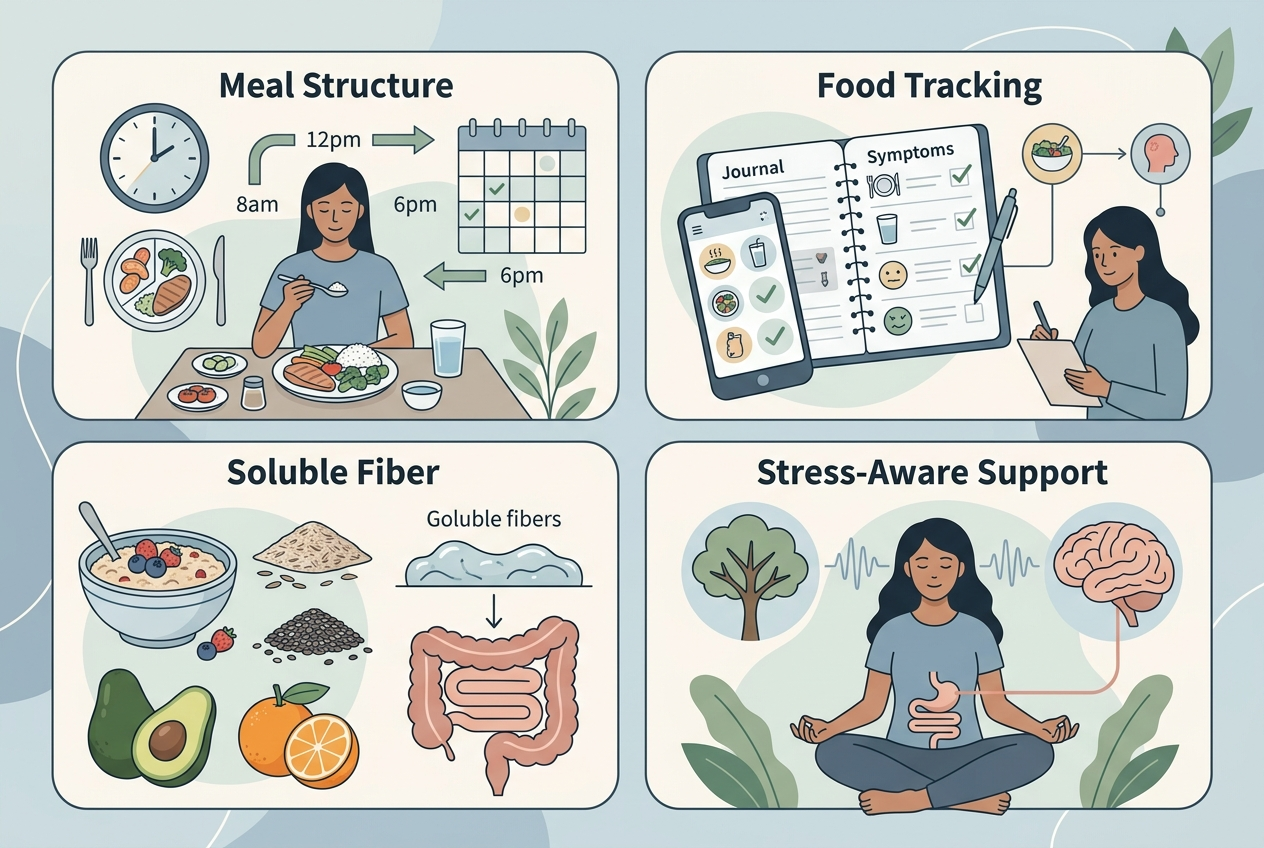
The most reliable IBS approaches are still structured, not flashy. The ACG guideline supports a limited trial of a low-FODMAP diet when done carefully, and the NICE guideline continues to emphasize meal regularity, symptom tracking, and tailored fiber choices. Soluble fiber, especially psyllium, has better support than insoluble bran because it can improve stool form without mechanically aggravating symptoms. Gut-directed psychological therapies also matter because the gut-brain axis influences pain amplification and bowel urgency. Peppermint oil has some supportive evidence for symptom relief, although not everyone tolerates it well. The pattern is clear. Better-supported tools reduce symptom burden. Better-supported tools do not erase IBS as a category. The latest findings are mostly about matching the right intervention to the right symptom profile instead of hoping a universal cure finally appeared last Tuesday.
Why do probiotics, microbiome tests, and newer ideas still feel so uncertain?
Microbiome research is real, but the commercial version often outruns the evidence. The NIDDK notes that probiotics may help some people, yet strain-specific effects remain inconsistent across IBS subtypes. The Monash summary also makes the larger point that food and symptom patterns still outperform expensive guesswork for many people. Direct-to-consumer microbiome tests sound precise, but they rarely produce treatment decisions that consistently beat simpler clinical tracking. Newer drugs and targeted therapies can help selected patients, especially when constipation, diarrhea, or pain clearly dominates, but that is still individualized care rather than a cure story. The frustrating truth is that IBS science has improved without becoming magical. Better classification exists. Better supportive tools exist. The uncertainty remains because IBS is heterogeneous, and heterogeneous problems punish one-size-fits-all answers.
What should someone do next if they want the most practical progress?
The smartest next step is to stop chasing “everything” and start narrowing the pattern. Track stool pattern, meal timing, caffeine, lactose, high-FODMAP foods, stress spikes, sleep disruption, and symptom intensity for two weeks. That kind of log usually exposes more useful information than another influencer thread. The NICE guideline supports regular meals, hydration, and trigger review before random elimination chaos. The ACG guideline also favors symptom-subtype matching, because constipation-predominant IBS and diarrhea-predominant IBS do not deserve the same script. Practical progress usually comes from one controlled change at a time. Precision beats panic. Consistency beats novelty. If symptoms include bleeding, weight loss, waking from sleep, anemia, or persistent fever, the frame changes completely, because those features deserve medical review rather than more internet experimentation.
What questions do people still ask about an IBS cure?
Has anyone actually cured IBS for good?
Some people go into long quiet stretches, but that is not the same as proving IBS disappeared forever. Most experts describe IBS as a condition managed through trigger reduction and symptom control, not a one-time cure event.
Is the low-FODMAP diet the best option for everyone?
No. The low-FODMAP diet can help some people, but it works best as a structured short trial, not as a forever-food panic plan. Personalization matters more than strictness.
Are probiotics the latest breakthrough?
Not really. Some strains may help specific symptom patterns, but probiotic evidence is still product and strain specific. “Contains probiotics” is not the same thing as a reliable IBS solution.
Does stress really make IBS worse?
Yes. Stress can amplify gut sensitivity, bowel urgency, and pain perception through the gut-brain axis. That does not mean IBS is imaginary, it means the signaling loop matters.
When is the situation not just IBS education anymore?
Bleeding, unexplained weight loss, fever, anemia, nighttime symptoms, or progressive severity deserve medical review. Red flags change the question from management to evaluation.
What is the bottom line on the latest IBS findings?
The latest IBS findings support sharper personalization, not a miracle cure. Match the tool to the symptom pattern, track what actually changes, and ignore anyone selling one universal answer to a condition that clearly does not behave that way.
Leave a Reply