
Globus sensation usually feels like a lump, pressure, or tightness in the throat even when nothing is actually stuck. Reflux, throat-muscle tension, postnasal drip, and stress can all contribute. The symptom is common and often benign, but trouble swallowing, weight loss, pain, or progressive symptoms deserve faster medical evaluation.
How did we evaluate what globus sensation usually means?
We prioritized the Rome Foundation review on globus, the NHS overview of globus, the American College of Gastroenterology GERD guideline, and a BMJ Best Practice summary on globus and dysphagia. We gave more weight to guideline-level symptom descriptions and red-flag screening than to forum anecdotes because throat symptoms overlap heavily. We also separated the feeling of a lump from true food sticking, because those patterns point in different directions. That distinction matters because globus is often uncomfortable but not dangerous, while progressive swallowing problems need a more urgent lens.
What does globus sensation usually feel like?
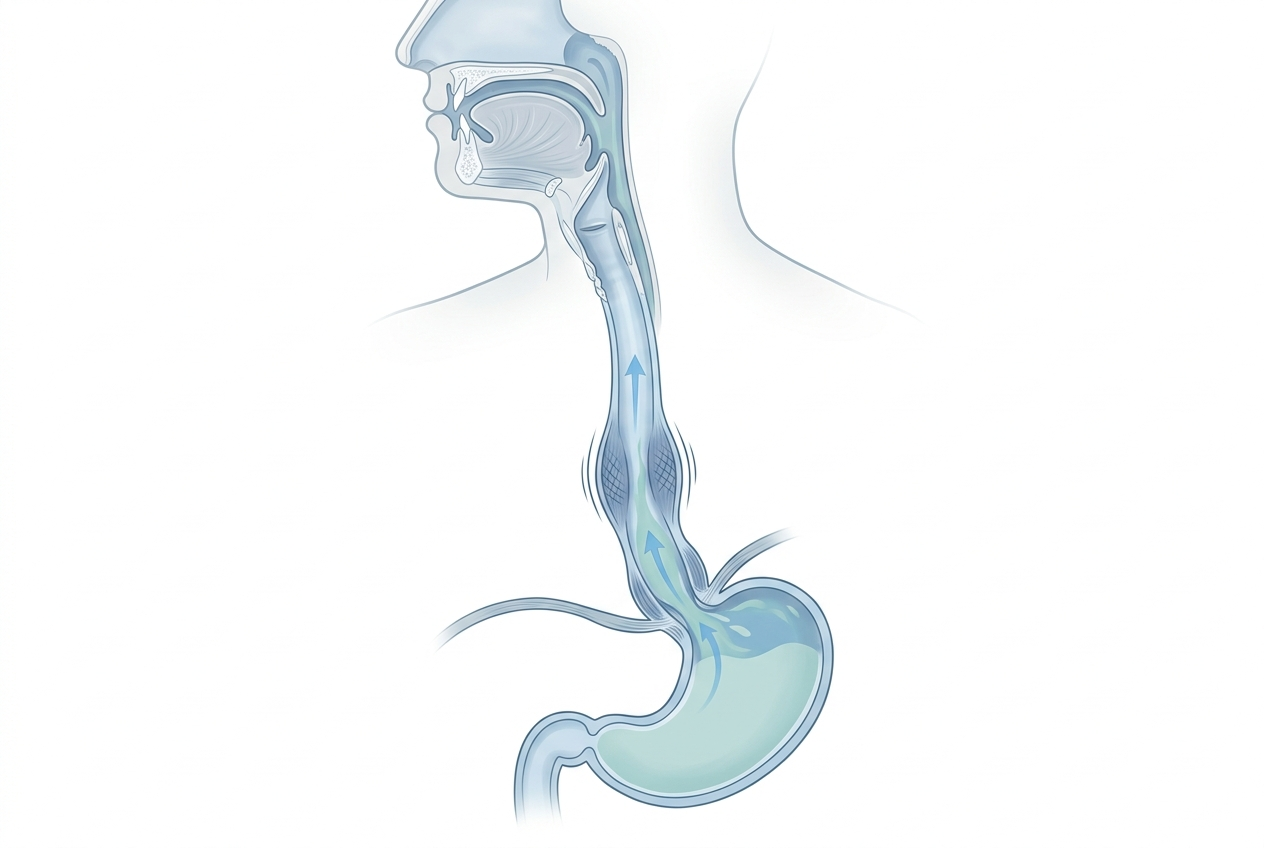
Globus sensation usually feels like pressure, fullness, or a lump in the throat when no physical blockage is present. The symptom often comes and goes. It often feels more noticeable between meals than during swallowing, which is one clue that helps separate it from mechanical obstruction. The NHS notes that people commonly describe a tight throat or the urge to clear it repeatedly. Reflux can contribute because acid or non-acid material can irritate the upper throat. Muscle tension can contribute because the throat and neck respond quickly to stress, voice overuse, and repeated clearing. The key detail is pattern. A lump feeling without true food sticking fits globus more closely than a symptom where solids repeatedly hang up on the way down. Similar location does not mean similar cause. Throat awareness is real, even when no object is there.
What usually triggers globus sensation?
Globus sensation often shows up when reflux, upper-throat irritation, postnasal drip, or tension are all feeding the same small area. The ACG GERD guideline and NHS guidance both support reflux overlap as one common explanation, especially when symptoms worsen after meals, with throat clearing, or when lying down. Postnasal drip matters because mucus can keep the throat irritated and can make swallowing feel unusually noticeable. Stress matters because throat muscles tighten quickly under stress, and that muscular response can make a normal sensation feel loud and persistent. Voice-heavy days can also aggravate the pattern. The practical point is that globus is usually multifactorial. One person has reflux plus throat clearing. Another person has allergies plus neck tension. The symptom is often real, patterned, and annoying without being a sign that something is physically lodged there.
When does globus stop being a simple educational question?
Globus needs a faster medical look when the pattern shifts from a lump feeling to actual swallowing difficulty, painful swallowing, food sticking, bleeding, unexplained weight loss, persistent vomiting, or progressive worsening. The BMJ Best Practice overview and ACG guideline both emphasize red flags because throat symptoms can overlap with esophageal narrowing, significant inflammation, or other conditions that should not be guessed at from a symptom thread. Chest pain also deserves a higher bar for caution because reflux is common but not the only explanation. Duration matters too. A mild, on-and-off symptom with stable eating is different from a symptom that steadily gets louder or changes how swallowing works. The safest rule is simple. A familiar lump feeling is one thing. A lump feeling plus weight loss, pain, or true obstruction-type symptoms is a different category entirely.
What can you track before deciding what to do next?
A short log usually clarifies globus better than memory does. Track meal timing, caffeine, alcohol, acidic foods, throat clearing, allergy symptoms, voice strain, stress-heavy days, and whether the sensation improves during meals or gets worse afterward. That pattern matters because globus often softens while swallowing, whereas true obstruction usually becomes more obvious with swallowing. The NHS encourages symptom review because the trigger pattern often reveals whether reflux or tension is the bigger driver. Also note whether you are repeatedly checking your throat, dry-swallowing, or clearing it. Those habits can keep the cycle loud. Data beats doomscrolling. A seven-day log will not diagnose the cause, but it often makes the next step much less random. Pattern first, panic later, ideally never.
What questions do people still ask about globus sensation?
Is globus sensation the same as dysphagia?
No. Globus is the feeling of a lump or pressure. Dysphagia means swallowing is actually difficult or food seems to stick.
Can reflux cause globus?
Yes. Reflux can irritate the throat and make the area feel tight or full. It is one common contributor, not the only one.
Does stress really make it worse?
Yes. Stress can increase throat-muscle tension and make normal sensations feel much more noticeable. That does not mean the symptom is imagined.
Why does it sometimes feel better while eating?
That pattern is common in globus. A true obstructive swallowing problem often becomes more obvious during meals instead.
When should someone get checked sooner?
Trouble swallowing, painful swallowing, food sticking, weight loss, bleeding, or steadily worsening symptoms deserve faster medical review. Those features change the risk picture.
Leave a Reply