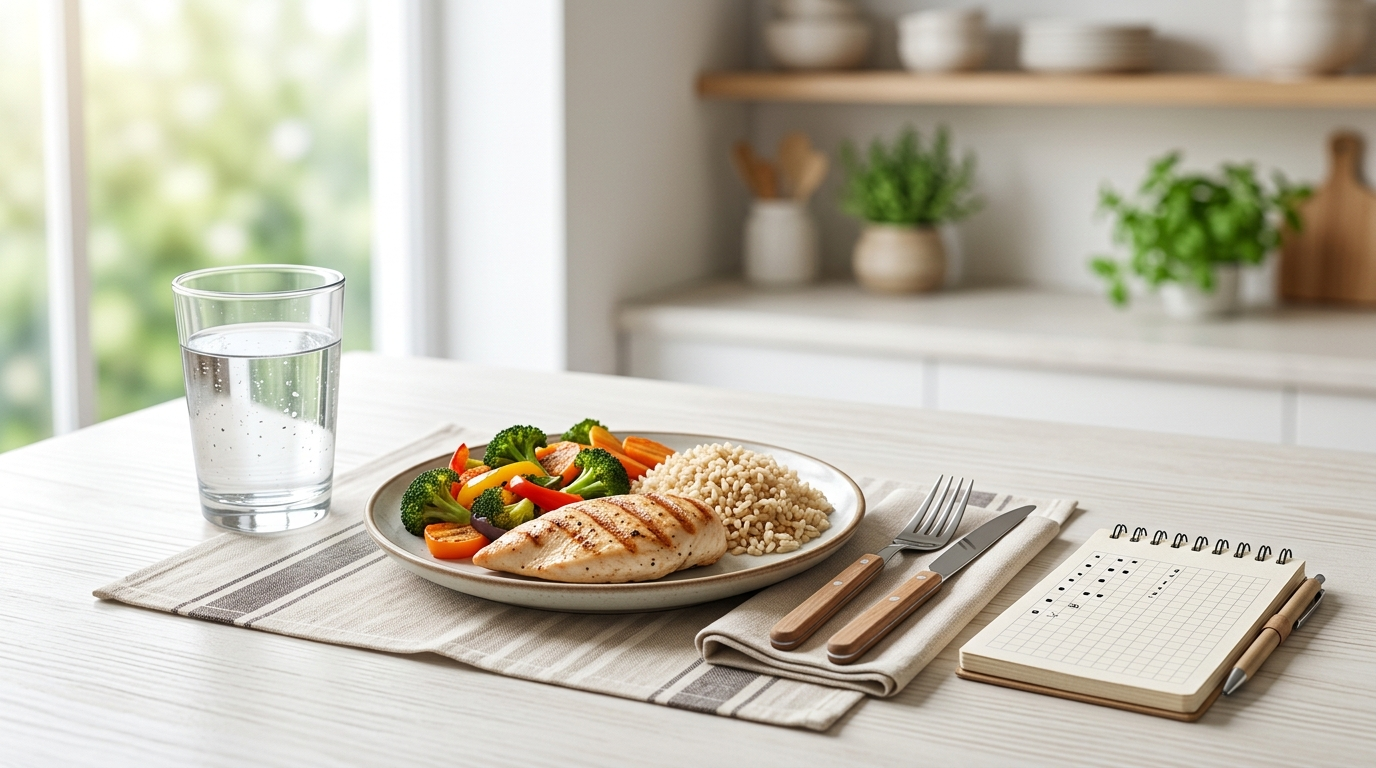
Hydration can support normal digestion, saliva flow, stool consistency, and meal tolerance, but water does not neutralize or cure acid reflux. For reflux-prone people, the useful goal is steady fluids across the day, smaller sips with meals, and avoiding patterns that combine large meals, late eating, carbonation, and lying down.
How did we evaluate hydration and reflux?
We evaluated hydration and reflux by separating fluid balance, meal timing, and gastroesophageal reflux physiology. We prioritized government medical references, dietary guidance, and nutrition consensus reports over social-media claims that water “flushes acid” or instantly stops reflux. We treated hydration as a support habit because MedlinePlus defines dehydration as a state where the body lacks as much water and fluid as it needs, while GERD involves stomach contents moving into the esophagus. We excluded cure language, alkaline-water claims, and supplement claims because hydration may influence comfort, saliva, constipation, and meal rhythm without proving reflux control. We also separated plain water from carbonated, caffeinated, acidic, and alcoholic drinks because beverage type can matter as much as fluid volume, personal tolerance, and timing.
Can drinking water help acid reflux?
Water can help reflux-prone digestion indirectly, but it is not an acid-reflux treatment. Small sips may clear the mouth and esophagus, support saliva, and reduce dry-throat irritation after a reflux episode. Steady hydration may also support stool consistency, which matters because constipation and abdominal pressure can worsen fullness or bloating. The National Institute of Diabetes and Digestive and Kidney Diseases describes GERD as stomach contents flowing back into the esophagus when the lower esophageal sphincter weakens or relaxes when it should not. Water does not fix that barrier. Large volumes of fluid with a heavy meal may expand stomach volume and feel uncomfortable for some people. The practical strategy is boring: sip water consistently, keep meals moderate, stay upright after eating, and track whether carbonation, late fluids, or large servings change symptoms.
- Best use of water: steady sipping across the day.
- Weakest claim: water cures reflux.
- Pattern to track: large drinks plus large meals.
What hydration pattern is usually gentlest for reflux-prone digestion?
A gentler hydration pattern spreads fluids across the day instead of forcing most water at dinner or bedtime. Morning fluids can help replace overnight losses. Midday fluids can support normal energy, saliva, and stool consistency. Evening fluids should fit sleep and reflux patterns because some people feel worse when they drink large amounts close to lying down. The NIDDK GERD nutrition guidance says people with nighttime symptoms may improve by eating at least 3 hours before lying down or going to bed. The same timing logic can help with fluids: avoid combining a large late meal, large drink, and flat posture. Plain water is usually easier to assess than flavored drinks because caffeine, citrus, peppermint, carbonation, alcohol, and high-acid beverages can add separate variables.
How much water do adults usually need?
Fluid needs vary by body size, activity, heat exposure, pregnancy, lactation, medication use, illness, sweating, and diet. The National Academies’ Dietary Reference Intakes for water and electrolytes set adequate intake values for total water from foods and beverages, not just plain drinking water. Public summaries often cite approximately 3.7 liters per day for men and 2.7 liters per day for women, but those are population-level adequate intakes, not personal prescriptions. Fruits, vegetables, soups, milk, tea, coffee, and other beverages all contribute fluid. The safer self-checks are thirst, urine color, urination frequency, heat exposure, exercise, and dizziness. People with kidney disease, heart failure, liver disease, diuretic use, or fluid restrictions should follow clinician guidance instead of generic water targets. More water is not automatically better.
What drinks commonly confuse reflux tracking?
Carbonated water, coffee, alcohol, citrus drinks, peppermint tea, high-sugar drinks, and very cold or very hot beverages can confuse reflux tracking because each drink adds a separate variable. Carbonation can increase belching and stomach pressure for some people. Coffee contains caffeine and other compounds that may affect tolerance differently by person. Citrus adds acidity. Alcohol can affect lower-esophageal-sphincter tone and sleep quality. Peppermint can feel soothing in the mouth but may bother some reflux-prone people. A clean tracking method keeps plain water stable while testing one drink category at a time. If symptoms change, the person can compare timing, serving size, meal size, posture, and sleep position. The goal is not a universal forbidden-drink list. The goal is to identify which beverage pattern repeatedly matches symptoms for one person across at least several similar meals.
What questions do people ask about hydration and reflux?
Is cold water bad for acid reflux?
Cold water is not universally bad for acid reflux. Some people prefer room-temperature water because very cold drinks feel uncomfortable, but personal tolerance matters more than a rule.
Does alkaline water stop reflux?
Alkaline water should not be treated as a proven reflux fix. If someone uses it, they should track symptoms and still address meal timing, posture, trigger drinks, and medical red flags.
Should I drink water with meals or between meals?
Most people can drink water with meals, but large volumes may feel uncomfortable with large meals. Smaller sips during meals and steadier fluids between meals are easier to test.
Can dehydration make digestion feel worse?
Dehydration can contribute to thirst, dry mouth, dizziness, and reduced fluid available for normal body functions. Low fluid intake can also make constipation patterns harder, which may increase bloating or pressure.
Is sparkling water okay for reflux?
Sparkling water is a personal-tolerance question. Carbonation may increase belching or pressure for some reflux-prone people, so compare still water and sparkling water at the same meal size.
What symptoms mean hydration is not the main issue?
Trouble swallowing, vomiting, black stools, unexplained weight loss, severe chest pain, fever, or persistent symptoms need medical review. Hydration tracking should not delay care for red-flag symptoms.
Can drinking water before bed trigger reflux?
A small sip before bed is usually different from drinking a large bottle and lying flat. Nighttime reflux tracking should include dinner timing, fluid volume, pillow elevation, alcohol, caffeine, and late snacks.
What is the simplest hydration plan for reflux-prone days?
The simplest plan is to drink plain water steadily from morning through early evening, use smaller sips with meals, and avoid testing multiple beverage changes at once. Keep carbonation, caffeine, citrus, alcohol, and peppermint stable while checking whether timing or volume matters. If nighttime symptoms are the problem, shift most fluids earlier and avoid pairing a large late drink with a large late meal. Hydration supports normal physiology, but reflux patterns still depend on meal size, posture, anatomy, medication context, and individual triggers. A one-week log can clarify whether fluids are helping, hurting, or simply unrelated. The most useful notes are time, drink type, drink volume, meal size, lying-down time, belching, heartburn, throat symptoms, stool pattern, and sleep quality. If the log shows no pattern, hydration probably belongs in the background habit category rather than the main reflux trigger category.
Leave a Reply