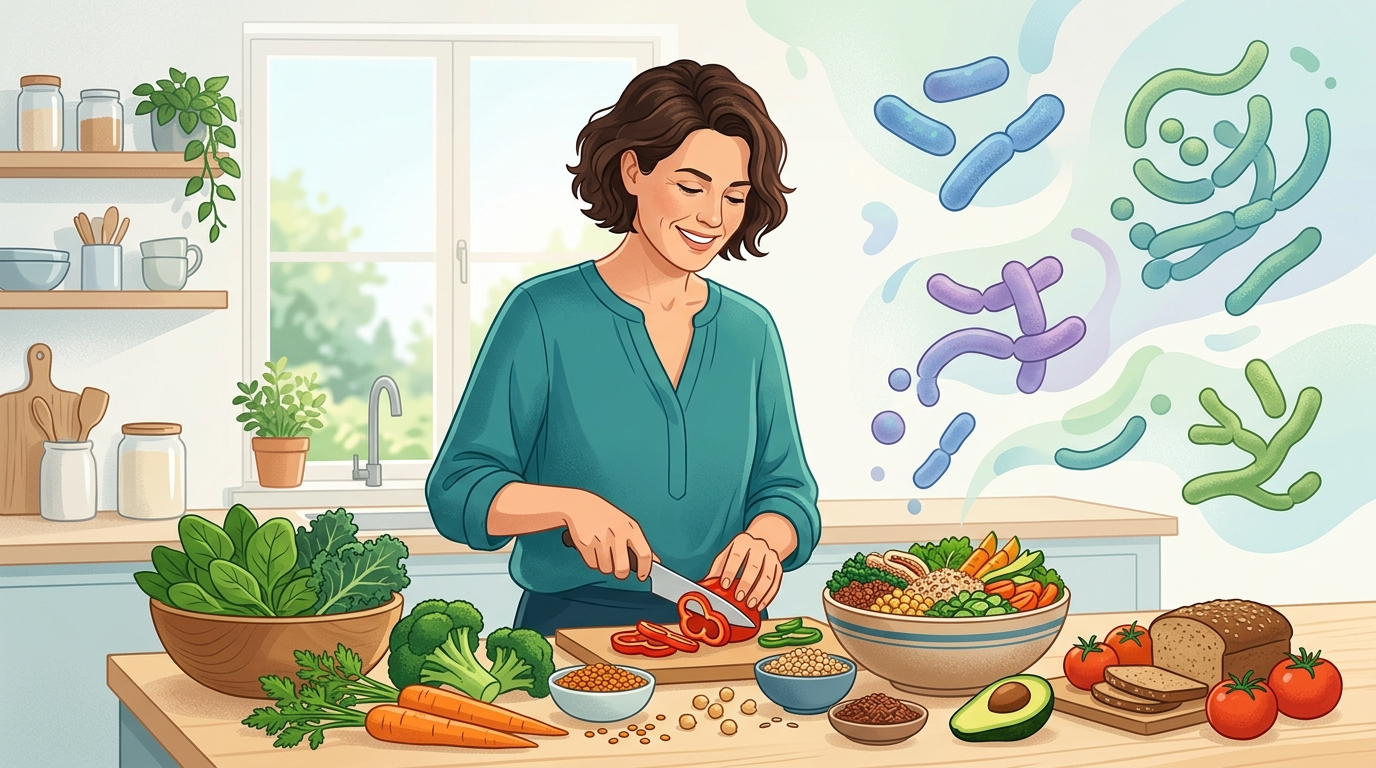
The estrobolome is the gut-microbial gene network that helps process estrogens after the liver packages them for elimination. It matters most in midlife because estrogen levels, gut transit, fiber intake, bile flow, and microbial beta-glucuronidase activity can shift during perimenopause and menopause.
How did we evaluate the estrobolome?
We evaluated the estrobolome by prioritizing peer-reviewed reviews on gut microbial beta-glucuronidase, estrogen recirculation, menopause-related microbiome shifts, and dietary-fiber fermentation. We weighted human observational data and mechanistic reviews above social-media hormone claims, because estrobolome science is still developing. We excluded claims that promise hormone balancing, detoxification, disease prevention, or cycle correction from a single food, probiotic, or cleanse. The strongest evidence supports a bidirectional relationship between gut microbes and estrogen metabolism; the weaker evidence involves predicting individual symptoms from one microbiome marker. This article uses cautious language because beta-glucuronidase activity, stool patterns, bile acids, body composition, medications, and menopause stage interact. The goal is to explain the mechanism, not diagnose hormone problems from digestive symptoms. We also separated routine digestive support from medical care because midlife symptoms can have several causes.
What is the estrobolome and how does it work?
The estrobolome describes gut microbial genes that influence estrogen metabolism, especially genes that encode beta-glucuronidase enzymes. The liver conjugates estrogens through glucuronidation, then bile carries those conjugated estrogens into the intestine. Some gut bacteria produce beta-glucuronidase, which can deconjugate estrogen metabolites and make them available for reabsorption through enterohepatic circulation. A 2023 review in Gut Microbes describes microbial beta-glucuronidase as a regulator of female estrogen metabolism, but the authors also emphasize complex host-microbe interactions rather than a single on-off switch. The practical interpretation is that gut microbes can affect estrogen handling, while estrogen levels can also affect gut microbial ecology. The estrobolome is therefore a feedback system. It includes microbial enzymes, bile movement, stool transit, fiber fermentation, and liver processing, not just one probiotic strain or one hormone pathway. Diet and medications can shift several of those inputs.
Why might the estrobolome matter more for women in their 40s?
The estrobolome may matter more in the 40s because perimenopause changes estrogen rhythm before menopause fully lowers ovarian estrogen production. Hormonal fluctuation can coincide with slower gut transit, sleep disruption, stress changes, altered eating patterns, and body-composition shifts, all of which can influence the microbiome. A 2025 review on diet, the gut microbiome, and estrogen physiology describes perimenopause as a window where microbial metabolism and dietary factors may interact with health span. That does not mean bloating proves hormone imbalance or that microbiome testing can explain every symptom. It means midlife is a reasonable time to support fundamentals that affect both digestion and microbial metabolism. Regular bowel movements help eliminate conjugated metabolites. Fiber intake supplies substrates for short-chain fatty acid production. Resistance training, adequate protein, sleep consistency, and medical follow-up provide context that a stool-test dashboard cannot replace.
What daily habits support estrogen metabolism through the gut?
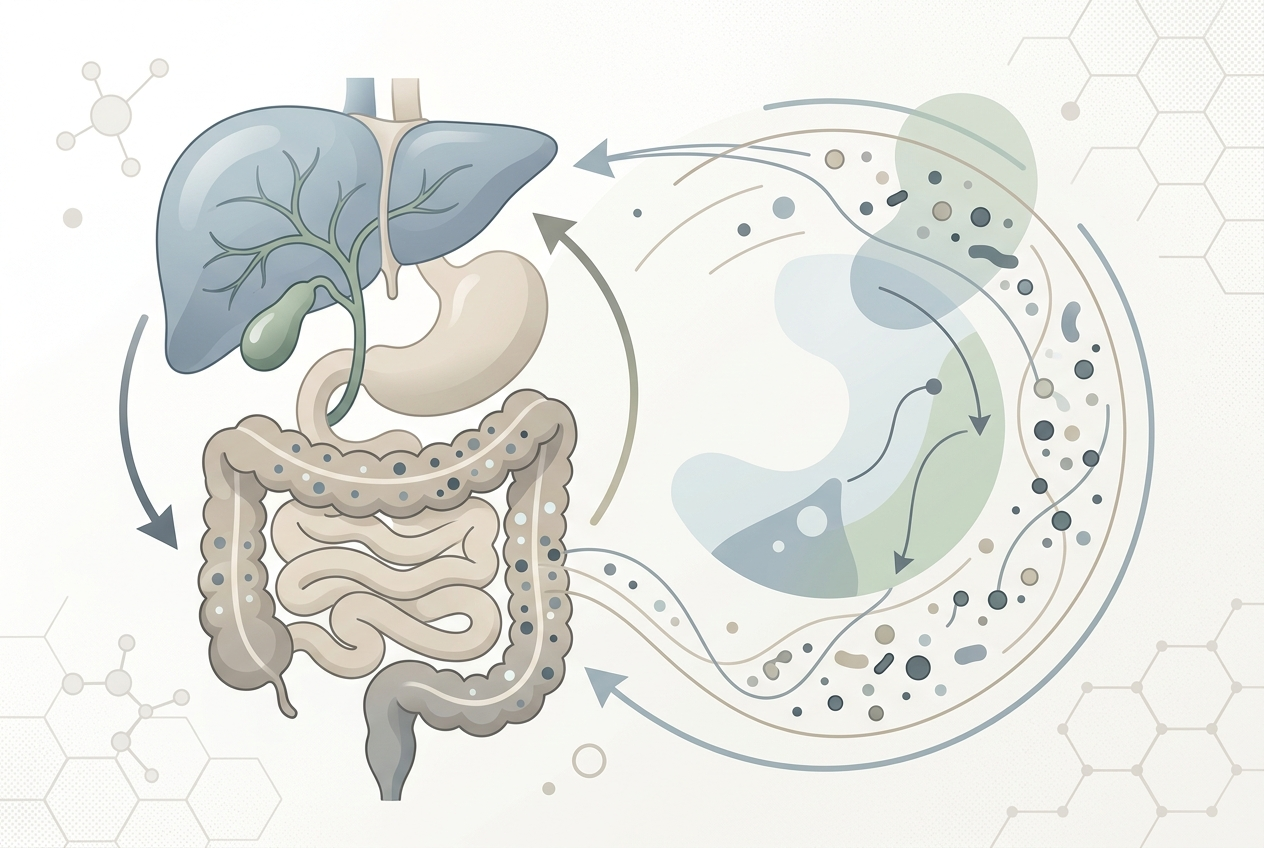
Daily habits support estrogen metabolism through the gut by improving stool regularity, microbial diversity, and bile-acid movement. Dietary fiber is the most practical lever because gut bacteria ferment fibers into short-chain fatty acids such as acetate, propionate, and butyrate. A 2022 systematic review in Nutrients found that dietary fibers can affect short-chain fatty acids and gut microbiota composition in healthy adults, although responses vary by fiber type and person. Cruciferous vegetables, legumes, oats, berries, ground flaxseed, chia, and resistant starch provide different fermentable substrates. Hydration and walking support motility, which matters because prolonged constipation can change contact time between intestinal contents and microbial enzymes. Alcohol moderation matters because liver metabolism and gut permeability interact with hormone processing. The strongest routine is boring but measurable: fiber target, bowel pattern, sleep, movement, and medication review, repeated for weeks rather than days.
What do people get wrong about the estrobolome?
People often get the estrobolome wrong by turning a real mechanism into a one-step hormone hack. Beta-glucuronidase is not automatically bad; microbial beta-glucuronidase enzymes participate in normal metabolism, and different bacterial enzymes behave differently. Another mistake is assuming more probiotics always means better estrogen clearance. The research does not support choosing a random probiotic solely to “fix” estrogen recirculation. A third mistake is using detox language when the actual physiology involves liver conjugation, bile flow, microbial enzymes, stool transit, and reabsorption. A fourth mistake is ignoring red flags such as abnormal bleeding, severe pelvic pain, unexplained weight loss, black stools, or persistent diarrhea. Those signs require medical evaluation, not microbiome optimization. The useful question is narrower: which daily inputs make bowel regularity and microbial fermentation more stable, and which symptoms need clinical attention?
Should you test your microbiome for estrobolome activity?
Microbiome testing can be interesting, but most commercial stool tests cannot yet translate estrobolome markers into a reliable personal hormone plan. Some research assays measure microbial beta-glucuronidase genes, microbial taxa, metabolites, or inferred enzyme activity, but clinical interpretation remains limited. A PubMed-indexed review on the estrogen-gut microbiome axis describes physiological and clinical implications, yet review-level evidence does not equal a validated consumer diagnostic tool. If someone has heavy bleeding, irregular cycles, hot flashes, pelvic pain, or new digestive symptoms, standard medical evaluation should come first. A stool test may provide discussion material, but it should not override symptoms, medication history, colon-cancer screening age, thyroid status, iron status, or gynecologic assessment. For most people, tracking fiber intake, bowel frequency, alcohol, sleep, and symptom timing gives more actionable information than a single microbiome snapshot, especially during fluctuating perimenopause.
What questions do people ask about the estrobolome?
People ask whether the estrobolome controls estrogen, whether gut health affects perimenopause, whether constipation changes hormone symptoms, and whether specific foods can improve estrogen metabolism. The best short answer is balanced: the gut microbiome participates in estrogen recirculation, but it does not independently control hormones. Gut-supportive habits may improve the background system that processes metabolites, especially when bowel regularity and fiber intake are inconsistent. Individual symptoms still need context from age, cycle pattern, medications, stress, sleep, thyroid status, and gynecologic history. A practical plan starts with food diversity, bowel regularity, alcohol moderation, and medical care for red flags. Strong claims about detoxing estrogen or reversing menopause exceed the evidence. The useful middle ground is tracking digestive patterns while treating hormone symptoms as medical context, not internet guesswork.
Is the estrobolome a real scientific term?
Yes, researchers use estrobolome to describe gut microbial genes involved in estrogen metabolism. The term is real, but consumer claims often oversimplify what the science can predict.
Can constipation affect estrogen recirculation?
Constipation can increase intestinal transit time, which may influence microbial metabolism and reabsorption conditions. It should be treated as one factor, not as proof of excess estrogen.
Do probiotics balance estrogen?
No specific over-the-counter probiotic has been proven to balance estrogen in the broad way marketing claims imply. Probiotic effects are strain-specific, dose-specific, and outcome-specific.
Which foods support the estrobolome?
Fiber-rich plant foods are the best-supported starting point. Legumes, oats, berries, flaxseed, chia, vegetables, and resistant starch feed microbial fermentation in different ways.
Does perimenopause change the gut microbiome?
Research suggests menopause-related hormonal shifts can coincide with microbiome changes. The direction and size of those changes vary by diet, body composition, medications, and study design.
Can a stool test diagnose hormone imbalance?
A stool test cannot diagnose hormone imbalance by itself. Blood tests, symptom history, cycle history, medications, and clinician evaluation provide more reliable context.
When should symptoms be checked medically?
Abnormal bleeding, severe pelvic pain, black stools, persistent diarrhea, unintentional weight loss, or new symptoms after age 45 should be checked medically. Digestive and hormonal symptoms can overlap with conditions that need standard evaluation.
Sources:
Leave a Reply