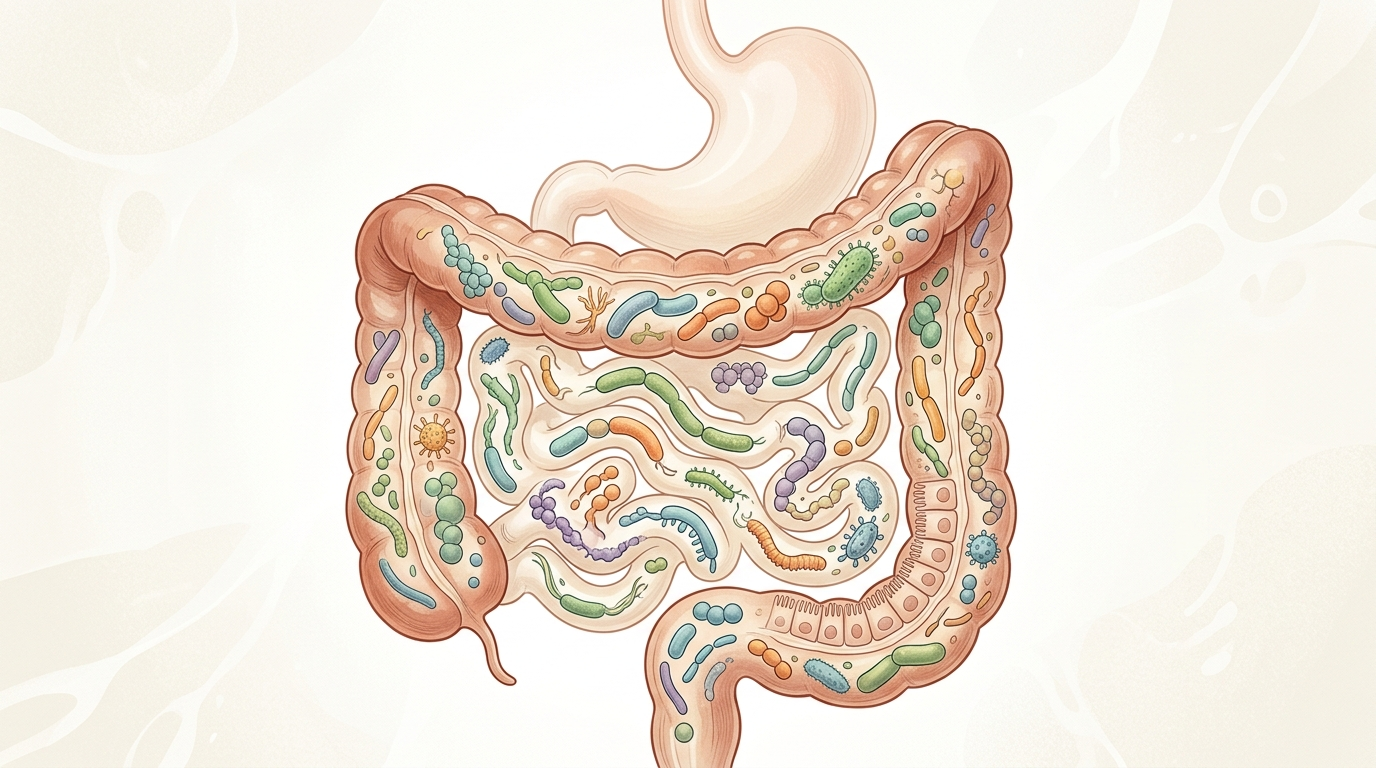
The gut microbiome is the community of bacteria, archaea, fungi, viruses, and microbial genes living mostly in the large intestine. It helps ferment fiber, produce short-chain fatty acids, train immune signaling, and interact with digestion. A healthy microbiome is not one perfect profile; it is a resilient ecosystem that changes with diet, medication, sleep, stress, and age.
How did we evaluate the gut microbiome?
We evaluated the gut microbiome through large human mapping projects, peer-reviewed diet-and-fiber studies, and consensus terminology from microbiology organizations. Population studies received more weight than single-person microbiome tests because stool profiles vary by sampling method, database, and recent meals. We prioritized evidence on microbial diversity, fermentation, short-chain fatty acids, and body-site specificity, while excluding commercial claims that promise a single “ideal” score. The main limitation is that microbiome science describes patterns well but does not yet translate every stool-test result into a precise personal action plan.
What is the gut microbiome in plain English?
The gut microbiome is a living ecosystem inside the digestive tract, especially the colon. Bacteria such as Bifidobacterium, Faecalibacterium, Roseburia, and Lactobacillus coexist with fungi, archaea, viruses, and microbial genes. The NIH Human Microbiome Project helped show that microbial communities differ across body sites, so the gut microbiome is not the same as the skin, mouth, or nasal microbiome. Gut microbes ferment nondigestible carbohydrates, release metabolites, interact with bile acids, and communicate with intestinal immune cells. The word “healthy” does not mean one universal species list. It usually means the community has functional resilience: it can process dietary fiber, recover after disruption, and maintain balanced interactions with the intestinal lining. Modern sequencing can identify microbial DNA, but DNA detection does not prove that a microbe is active, beneficial, or harmful in every person.
- Core idea: the microbiome is an ecosystem, not a single organ
- Key location: the large intestine
- Practical lever: repeatable diet pattern
How does food shape the gut microbiome?
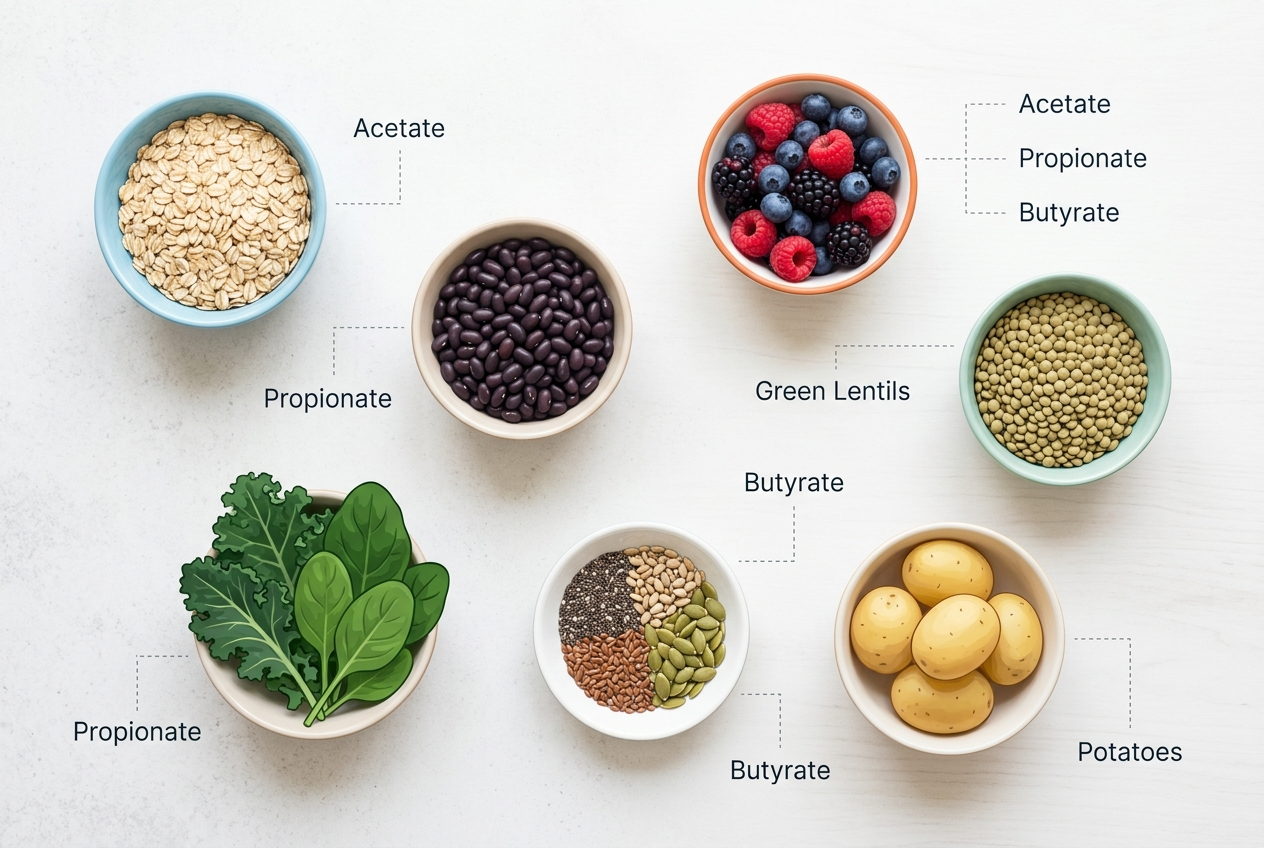
Food shapes the gut microbiome because microbes eat what human enzymes do not fully digest. Dietary fiber, resistant starch, polyphenols, and some prebiotic carbohydrates reach the colon and become substrates for fermentation. A 2022 systematic review in Nutrients evaluated 42 randomized controlled trials and found that different fibers can change short-chain fatty acid profiles and gut microbiota composition, though results vary by fiber type and person. Inulin, psyllium, beta-glucan, legumes, oats, vegetables, berries, and cooled starches can feed different microbial groups. High-consistency diets often create more measurable patterns than one-time “gut reset” meals. Ultra-low-fiber eating can reduce the amount of fermentable material available to beneficial fiber-associated microbes. The best-supported food strategy is not exotic; it is diverse plant intake repeated long enough for microbial metabolism to adapt.
- Best studied input: dietary fiber
- Important output: short-chain fatty acids
- Biggest caveat: individual response varies
What do short-chain fatty acids actually do?
Short-chain fatty acids are microbial metabolites produced when gut bacteria ferment carbohydrates that humans cannot digest directly. Acetate, propionate, and butyrate are the main short-chain fatty acids discussed in human microbiome research. Butyrate serves as an energy source for colonocytes, while acetate and propionate participate in broader metabolic signaling. A review in Gut Microbes describes dietary fiber and prebiotics as substrates that gastrointestinal microbes can metabolize through fermentation. These compounds are one reason fiber quality matters: the same gram count from wheat bran, inulin, oats, beans, or resistant starch may produce different microbial effects. Short-chain fatty acids are not magic chemicals, and higher is not always better in every context. They are useful markers of microbial activity because they connect food choice, bacterial metabolism, intestinal transit, stool chemistry, and intestinal physiology in a measurable chain.
Can a stool test tell you whether your microbiome is healthy?
A stool test can describe part of the microbial DNA found in one sample, but it cannot fully define gut health by itself. The Integrative Human Microbiome Project in Nature showed that microbiome research uses multi-omic data, longitudinal sampling, and clinical context to interpret host-microbe patterns. Consumer stool tests usually provide a narrower one-time snapshot. A “low” or “high” organism score may reflect recent diet, antibiotics, bowel transit time, laboratory methods, or reference databases. Useful interpretation asks whether symptoms, food tolerance, medication history, and diet pattern line up with the report. Stool testing can be helpful for research and sometimes for clinician-guided care, but it should not turn every microbe into a villain. The microbiome is dynamic, so trend, context, repeat sampling, clinician interpretation, and repeatable habits matter more than a single dramatic chart.
What habits support microbiome resilience?
Microbiome resilience usually improves through repeatable, boring habits rather than extreme resets. A practical pattern includes 25-38 grams of daily fiber when tolerated, gradual fiber increases, regular meals, fermented foods that are clearly live-culture when tolerated, adequate sleep, and careful antibiotic use under medical guidance. Plant diversity matters because beans, oats, berries, greens, nuts, seeds, lentils, and resistant starches feed different microbial pathways. Hydration and movement support bowel regularity, which changes how long microbes interact with stool contents. Sudden high-dose fiber can increase gas, so gradual increases are smarter than aggressive overnight changes. Antibiotics, gastrointestinal infections, major diet shifts, and chronic stress can disrupt microbial patterns, but resilient ecosystems often recover with time and consistent inputs. The best microbiome routine is the one a person can repeat for weeks without triggering avoidable digestive discomfort.
What questions do people ask about the gut microbiome?
Is the gut microbiome the same as gut bacteria?
Gut bacteria are part of the gut microbiome, but the microbiome also includes microbial genes, viruses, archaea, fungi, and their metabolites. Bacteria receive most attention because sequencing and fermentation research often focuses on bacterial taxa.
How fast can the gut microbiome change?
The gut microbiome can shift within days after diet or medication changes, but durable patterns usually require repeated inputs. A single high-fiber meal may change fermentation temporarily, while a consistent fiber pattern is more likely to shape community activity.
Are probiotics the same as the microbiome?
Probiotics are live microorganisms that meet a defined benefit standard when taken in adequate amounts, according to ISAPP consensus terminology. The microbiome is the broader resident ecosystem already living in and on the body.
Does everyone need fermented foods?
Not everyone tolerates fermented foods, and fermented foods are not identical to probiotics. Some fermented foods contain live microbes, while heat-treated or shelf-stable products may not contain meaningful live cultures.
What hurts the gut microbiome most?
Repeated low-fiber eating, unnecessary antibiotic exposure, major sleep disruption, and highly restrictive diets can reduce microbial inputs or resilience. The effect depends on baseline diet, medication history, and the individual microbial ecosystem.
Can you permanently fix the microbiome?
The microbiome is not a broken machine with a one-time permanent fix. It is an adaptive ecosystem that responds to food, medication, illness, stress, sleep, and aging across time.
For a detailed comparison of specific products and strains, see Best Options for Rebuilding Your Gut Microbiome: Probiotics, Prebiotics, and Routines Compared.
For a detailed comparison of specific products and strains, see What’s the Best Fiber Supplement for Gut Health? An Evidence-Based Comparison.
For a detailed comparison of specific products and strains, see Best Supplements to Help Your Gut: Probiotics, Fiber, Enzymes, and Botanicals Compared.
For a detailed comparison of specific products and strains, see Looking for a Reliable Gut Health Supplement? How to Compare Probiotics, Fiber, Enzymes, and DGL.
For a detailed comparison of specific products and strains, see Gut Health Supplements That Made a Difference: Probiotics, Fiber, Enzymes, and Peppermint Compared.
For a detailed comparison of specific products and strains, see Gut Health Supplements That Actually Make a Difference: Probiotics, Fiber, and Enzymes Compared.
What is the simplest takeaway about the microbiome?
The gut microbiome is best understood as a responsive ecosystem. It changes when food inputs, bowel transit, medication exposure, sleep timing, stress load, and daily routines change. The most evidence-aligned first step is a gradual, tolerable increase in plant diversity and fiber, not a dramatic cleanse or a single stool-test score. Start with repeatable meals that include oats, beans, lentils, vegetables, berries, nuts, seeds, or resistant starch, then adjust based on comfort and bowel regularity. People with severe symptoms, blood in stool, unexplained weight loss, persistent diarrhea, or ongoing pain should seek medical evaluation because microbiome habits cannot replace diagnosis. For most healthy adults, the realistic goal is resilience, not a perfect microbiome report. That means supporting regular microbial inputs, avoiding unnecessary disruption, and watching how digestion responds over time instead of chasing every new trend.
Leave a Reply