
Sudden belly size changes are usually bloating, gas, stool, fluid, posture, or meal volume, while body fat changes more slowly over weeks. A 21-year-old man at 6’1″ and 195 lb can have either pattern, so track timing, waist change, bowel pattern, and red-flag symptoms before assuming fat gain.
How we evaluated fat versus bloating?
We evaluated this question by separating visible abdominal distension from longer-term body composition change, then checking which clues a reader can observe without pretending to diagnose themselves. NIDDK digestive references received priority for gas, constipation, and bloating mechanisms, while medical triage references shaped the red-flag section because symptom safety matters more than a mirror guess. We excluded supplement-first explanations because a cold-stage question needs anatomy, timing, stool pattern, meal context, hydration, posture, and symptom pattern before product categories or internet hacks enter the conversation. The main limitation is that a photo, body weight, and height cannot identify the cause of abdominal size without a clinical history, abdominal exam, timeline, medication review, repeated measurements, stool history, food pattern, and sometimes basic testing.
What is the practical difference between belly fat and bloating?
Belly fat is stored adipose tissue, while bloating is a sensation of pressure, fullness, or visible distension in the abdomen. Body fat changes when energy intake, activity, sleep, alcohol, and training patterns create a sustained surplus over time. Bloating can change across one day because swallowed air, intestinal gas, meal volume, constipation, sodium, and fluid shifts change abdominal shape faster than fat tissue can. NIDDK lists belching, bloating, distension, and passing gas as common gas-related symptoms in its gas in the digestive tract guide. A useful home check compares morning waist, evening waist, bowel movement timing, and symptom triggers for seven days. If the abdomen is flatter in the morning and larger after meals, bloating is more likely. If waist circumference rises steadily across weeks, body fat or broader weight gain becomes more plausible.
How can timing show whether the change is bloating?
Timing is the strongest nonmedical clue because bloating follows meals, bowel rhythm, and gas movement more closely than fat gain. A stomach that feels normal on waking and tight after lunch often reflects meal volume, fermentable carbohydrate intake, swallowed air, constipation, or delayed gas transit. A stomach that looks similar every morning for several weeks may reflect fat gain, posture, muscle tone, fluid retention, or an underlying medical pattern. NIDDK explains that gut microbes in the large intestine help digest carbohydrates and can produce gas during that process. The most useful log records wake-up waist, bedtime waist, meals, carbonated drinks, gum, alcohol, stool form, and pain location. A seven-day pattern beats one mirror check. Fast day-to-day swings point toward bloating, stool, or fluid. Slow month-to-month changes point toward body composition, training, or energy balance.
What warning signs mean this needs medical attention?
Most bloating is not an emergency, but abdominal change deserves medical attention when it comes with persistent pain, vomiting, fever, black stool, blood in stool, unexplained weight loss, trouble swallowing, chest pressure, or a rigid abdomen. Mayo Clinic advises scheduling care when abdominal pain worries you or lasts more than a few days in its abdominal pain triage guide. New severe constipation, diarrhea, or rapid belly swelling also belongs in a clinician conversation. For a 21-year-old lifter or student, the practical threshold is change plus persistence. A one-day post-meal belly is usually a pattern to observe. A two-week change with pain, appetite loss, vomiting, bleeding, or unexplained scale movement is not a fitness puzzle. A clinician can check medications, hernia signs, bowel patterns, food intolerance clues, and basic labs when the history points beyond routine bloating.
What does constipation have to do with looking bloated?
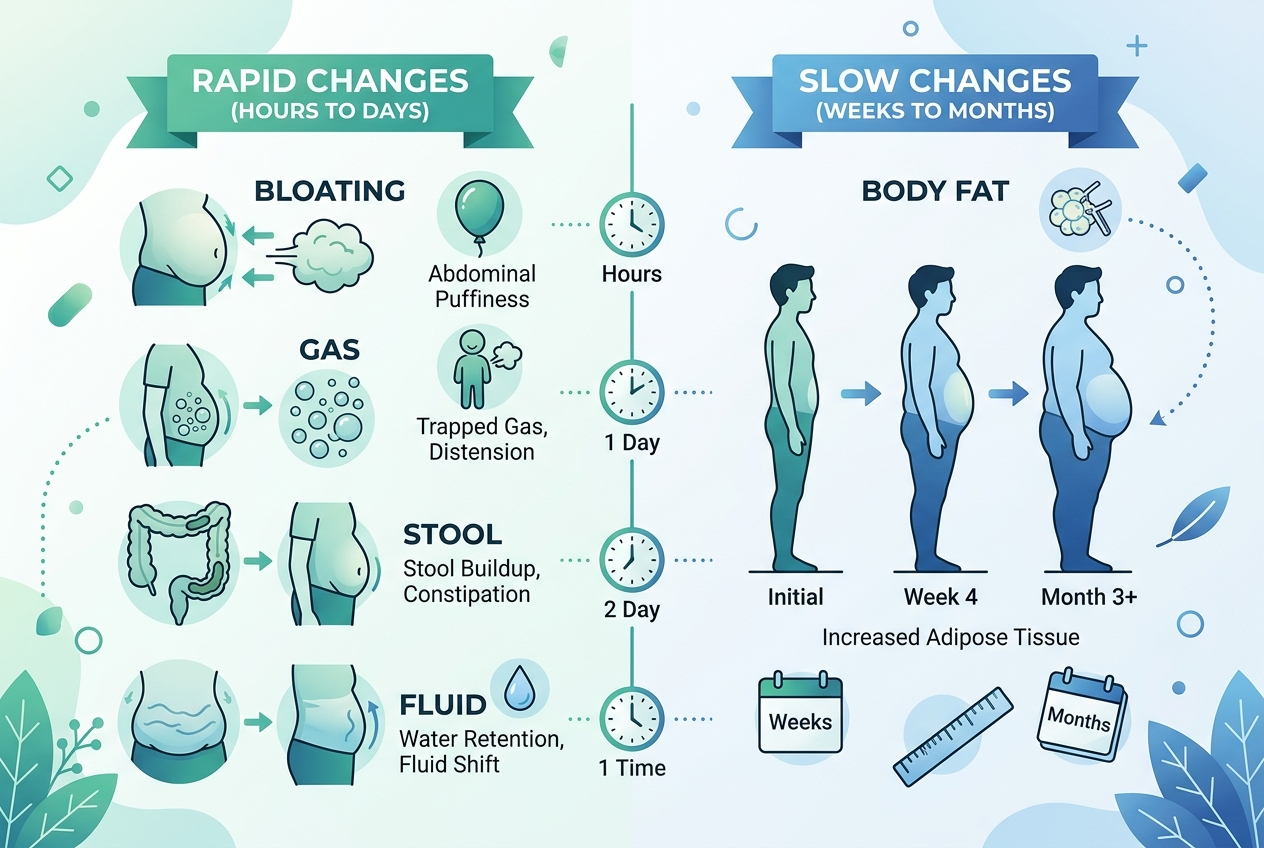
Constipation can make the abdomen look and feel larger because stool retention slows transit and increases pressure in the colon. NIDDK describes constipation as a pattern that can include difficult, infrequent, hard, or incomplete bowel movements in its constipation resource. The pattern matters more than a single missed day. Straining, pellet-like stool, incomplete evacuation, low fluid intake, low fiber intake, travel, stress, opioid medications, and abrupt diet changes can all change abdominal comfort. A high-protein cutting diet can also reduce fiber if vegetables, oats, legumes, fruit, and whole grains disappear. Constipation-related distension often improves after a bowel movement, hydration, walking, and a steady fiber routine. However, sudden constipation with severe pain, vomiting, blood, or major weight change needs medical evaluation. Stool pattern belongs in the same log as waist timing and meals.
How should someone track the pattern for one week?
A one-week log should measure timing, not anxiety. Measure waist at the navel after waking, before bed, and during the worst bloating window. Record meals, fiber-heavy foods, dairy, carbonated drinks, alcohol, gum, large protein shakes, creatine loading, sodium-heavy meals, bowel movements, stool form, pain score, and training sessions. Use the same tape position and relaxed posture each time because flexing or slouching changes the result. The goal is a pattern such as “two-inch increase after carbonated drinks,” “distension improves after bowel movement,” or “waist is unchanged but posture changes after lifting.” A steady morning waist with large evening swings points toward bloating or meal volume. A rising morning waist across several weeks points toward weight gain or fluid. The log should end with a simple next step: adjust one variable, seek care for red flags, or continue monitoring.
What questions do people ask about fat versus bloating?
Can bloating make you look heavier than you are?
Yes. Bloating can push the abdomen outward without adding body fat. The change can be most visible after large meals, carbonated drinks, constipation, or high-fermentation foods.
Can body fat appear overnight?
No. Body fat does not appear as a large abdominal change overnight. Fast changes are more often food volume, stool, gas, water, posture, or inflammation.
Is BMI enough to answer this?
No. BMI uses height and weight, so it cannot distinguish muscle, fat distribution, bloating, stool, or posture. Waist timing and symptom pattern add more useful information.
Should I cut out every food that causes bloating?
No. Removing too many foods at once makes the pattern harder to interpret. Test one variable at a time unless a clinician gives a specific medical diet.
Can stress make bloating feel worse?
Yes. Stress can change gut sensation, eating speed, breathing pattern, and bowel rhythm. The mechanism is not “all in your head”; the gut and nervous system communicate continuously.
When should I stop self-tracking?
Stop self-tracking and seek care if pain is severe, symptoms persist, bleeding appears, vomiting continues, or weight changes without explanation. Tracking is useful only when symptoms are mild and stable.
What is the bottom line?
Fat gain and bloating can both change the abdomen, but they move on different timelines. Bloating shifts across hours with meals, gas, stool, fluid, and posture. Fat gain usually shifts across weeks with sustained energy balance. A seven-day waist, meal, stool, and symptom log gives a better answer than a single mirror check. If the pattern includes severe pain, vomiting, blood, fever, unexplained weight loss, or persistent change, medical evaluation is the right next step. If the pattern is mild and meal-linked, start with slower eating, fewer carbonated drinks, consistent fiber, hydration, walking, and regular sleep before making dramatic diet changes. The practical answer is not “fat” or “bloating” from one photo; the answer is the timeline, the pattern, and whether red flags are present. Repeatable measurements beat one anxious snapshot overall.
Leave a Reply