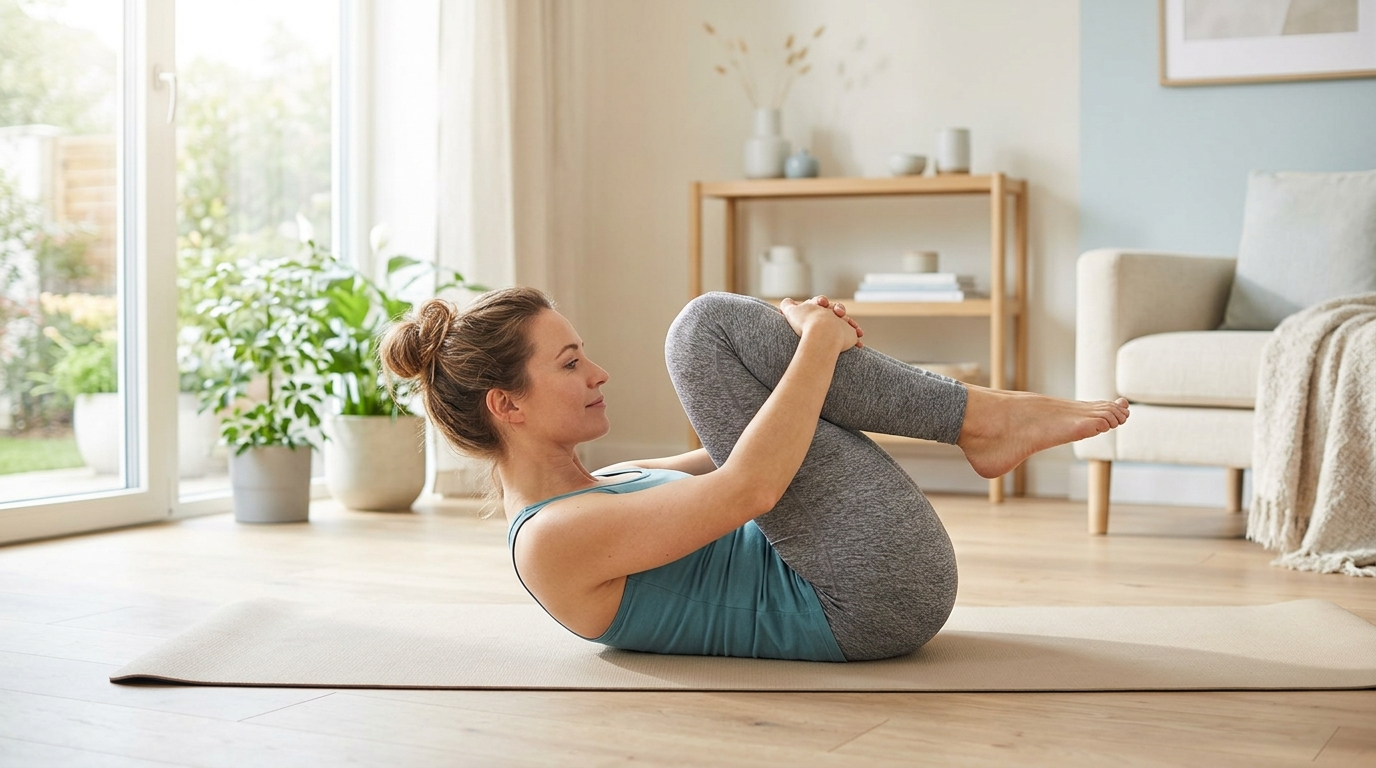
Gentle yoga can reduce bloating for some people by easing abdominal wall tension, improving movement, and helping gas move through the gut, but it does not fix every cause. Yoga works best as a symptom-management tool, not a diagnosis or cure. Food triggers, constipation, reflux, and stress patterns still matter.
How did we evaluate yoga for bloating?
We prioritized the NIDDK overview of gas in the digestive tract, the NCCIH summary on yoga research, and clinical reviews on yoga for functional bowel symptoms, including a systematic review in Clinical Gastroenterology and Hepatology. We gave more weight to human symptom studies than to theory-heavy claims about detox or organ squeezing. We also separated bloating relief from disease treatment because those are not the same question. That matters because yoga can be useful even when it is not the main fix.
Can yoga really reduce bloating?
Yoga can reduce bloating when the main drivers are gas retention, constipation, abdominal wall tension, or stress-linked gut sensitivity. Controlled breathing changes abdominal pressure. Trunk rotation changes posture. Walking-style movement changes transit. Those mechanisms are plausible, and small clinical studies in people with functional bowel symptoms suggest yoga can improve bloating, discomfort, and perceived bowel regularity, although the evidence is not as strong as a large medication trial. The NIDDK also notes that swallowed air, constipation, and food triggers commonly shape bloating, which explains why a movement-based approach sometimes helps. Yoga is therefore best understood as a low-risk support strategy. Yoga does not erase lactose intolerance. Yoga does not neutralize a high-FODMAP meal. Yoga helps most when the gut is irritable, the body is tense, and the plan also addresses the actual trigger pattern.
Which yoga positions are the most reasonable to try first?
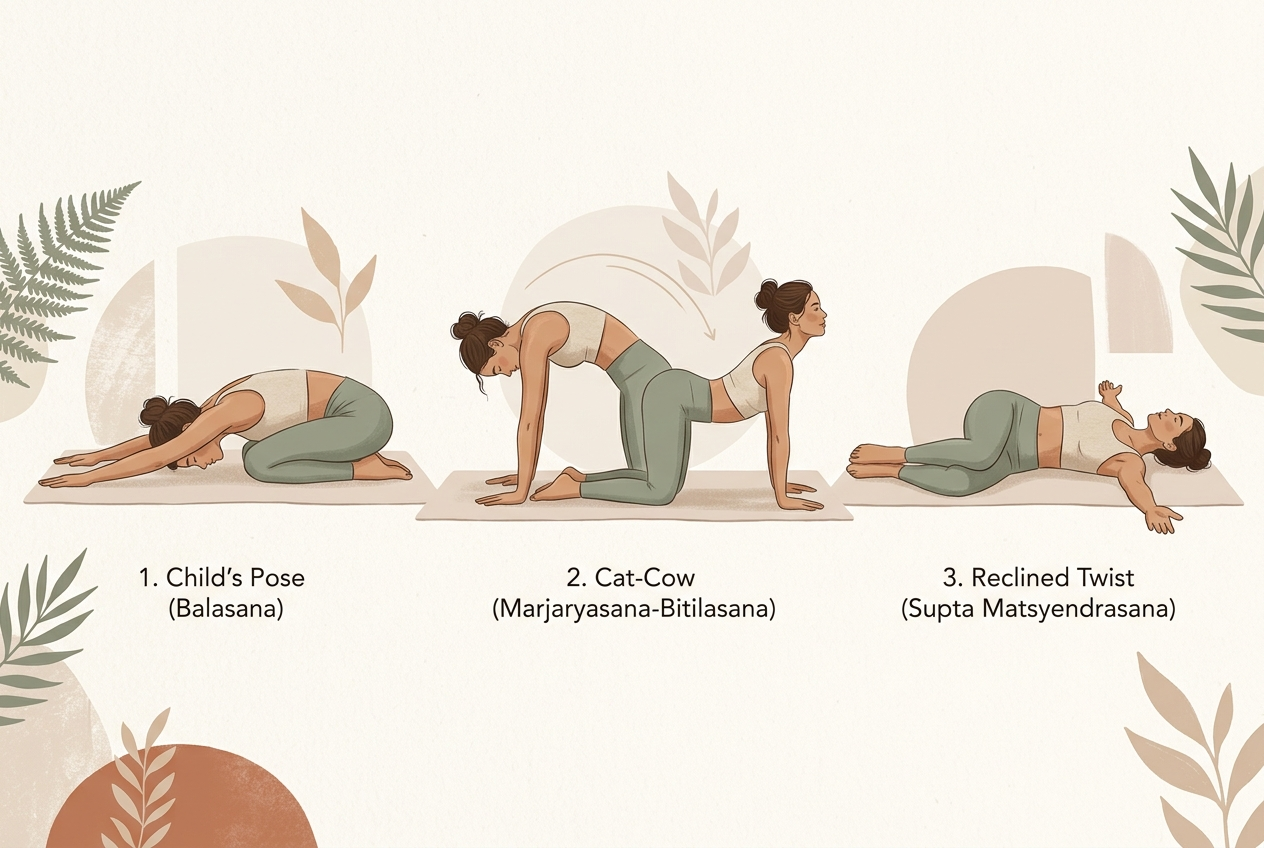
The safest starting poses are the ones that reduce strain and encourage gentle abdominal movement, not dramatic twists copied from social media. Child’s pose supports diaphragmatic breathing. Supine knees-to-chest shortens the abdominal wall and can help trapped gas feel easier to pass. A reclined spinal twist can reduce tension around the trunk. Cat-cow changes spinal position and often feels better than deep compression. A short walk after these poses often works better than another ten minutes on the mat because movement keeps gas and stool from stalling. The NCCIH notes that yoga is generally safe when adapted to the person, but pain should stop the session. Best for immediate pressure relief, knees-to-chest. Best for stress-linked tightness, child’s pose plus slow exhale breathing. Best for morning sluggishness, cat-cow followed by walking.
What else should you change if yoga helps only a little?
Partial relief usually means yoga is helping the symptom experience while another factor keeps recreating the problem. Constipation can keep gas trapped higher in the gut. Carbonated drinks can increase swallowed air and gastric distension. Onion, garlic, wheat, beans, and sugar alcohols can trigger fermentative bloating in people who are FODMAP-sensitive, a pattern summarized well by Monash FODMAP guidance. Meal speed matters too. Fast eating increases air swallowing. Large late meals increase upper-abdominal pressure. The smartest next step is not a wellness scavenger hunt. The smartest next step is a short log: what you ate, when the bloating started, whether bowel movements changed, and whether yoga altered the feeling. Patterns beat guessing. If yoga helps but does not finish the job, that is still useful information. It suggests the body responds to movement, and the missing piece may be diet, bowel regularity, or reflux management rather than a lack of stretching discipline.
When is bloating not really a yoga problem?
Bloating deserves a broader look when it keeps escalating, appears with vomiting, comes with unintentional weight loss, wakes you from sleep, or changes bowel habits in a sustained way. Those features shift the question from comfort management to proper evaluation. The NIDDK notes that recurrent bloating can overlap with constipation, food intolerance, celiac disease, or other digestive conditions. Yoga is still fine as support, but it should not become a delaying tactic. People also misread upper-belly pressure as lower-gut gas. Reflux, functional dyspepsia, and even posture-related chest tightness can create that confusion. If the bloating pattern is new, severe, or paired with red-flag symptoms, movement is not the main question anymore. The main question is why the pattern changed. Yoga belongs in the relief toolbox. It does not belong in charge of diagnostic decision-making.
For a detailed comparison of specific products and strains, see Do Digestive Enzymes Actually Work for Bloating? What Consistent Results Depend On.
For a detailed comparison of specific products and strains, see Digestive Enzymes Saved My Life? What Actually Determines Whether They Work.
What questions do people still ask about yoga for bloating?
How long should a yoga session be?
Ten to fifteen minutes is usually enough to test whether the body responds. Longer is not automatically better if the main issue is food triggering or constipation.
Is twisting the most important part?
No. Breathing, gentle compression, and walking often matter more than aggressive twisting. Deep twists can feel worse when the abdomen is already irritated.
Can yoga help bloating caused by constipation?
Sometimes, yes. Movement and breathing can make stool and gas easier to pass, but persistent constipation usually needs hydration, fiber strategy, or clinician-guided evaluation too.
Should you do yoga right after eating?
Usually not. A short walk tends to feel better immediately after meals. Yoga often works better when the stomach is less full.
Can yoga tell you what food is causing the problem?
No. It can show that movement helps symptoms, but it cannot identify the trigger. A food and symptom log does that job better.
Leave a Reply