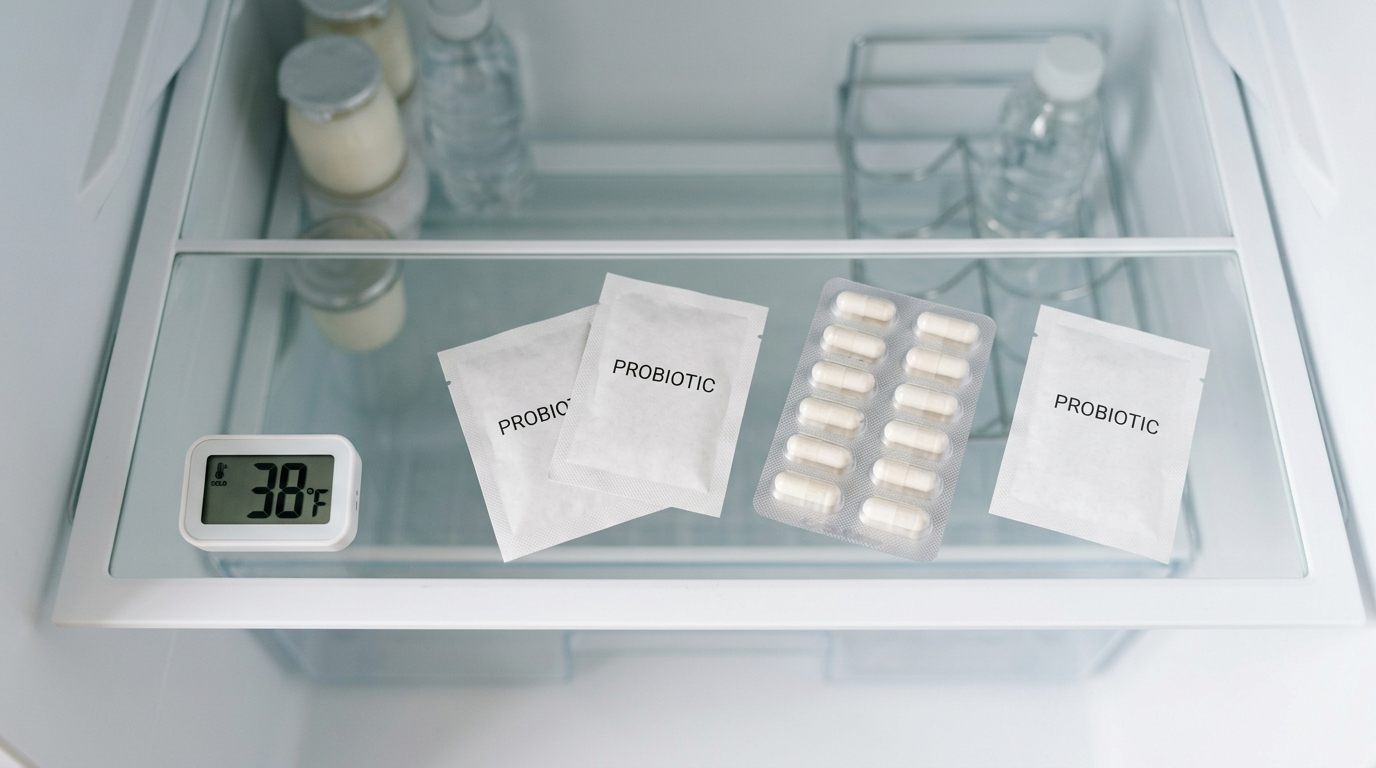
VSL#3 probiotics require refrigeration at 36–46°F (2–8°C) to maintain bacterial viability. Sachets and capsules should stay in their original sealed packaging, away from heat and moisture. A 2021 shelf-stability study in Beneficial Microbes found that probiotic viability drops measurably above 50°F within 30 days of consistent warm storage.
How we evaluated probiotic storage requirements
We reviewed manufacturer storage guidelines, ISAPP (International Scientific Association for Probiotics and Prebiotics) shelf-life recommendations, and peer-reviewed literature from Beneficial Microbes and Applied Microbiology and Biotechnology. Studies were prioritized by relevance to VSL#3 strains: Lactobacillus acidophilus, Lactobacillus plantarum, Bifidobacterium breve, Bifidobacterium longum, and Streptococcus thermophilus. Animal studies were excluded. Evaluation focused on real-world storage scenarios including travel, refrigerator temperature variation, and freeze-thaw cycles.
Does VSL#3 need to be refrigerated?
VSL#3 contains a proprietary blend of eight bacterial strains: Lactobacillus acidophilus, Lactobacillus plantarum, Lactobacillus paracasei, Lactobacillus bulgaricus, Bifidobacterium breve, Bifidobacterium longum, Bifidobacterium infantis, and Streptococcus thermophilus. These live microorganisms require cold chain preservation at 36–46°F (2–8°C). According to VSL#3 manufacturer storage guidelines, refrigeration maintains colony-forming unit (CFU) counts through the labeled expiration date. Preliminary research in Beneficial Microbes (2019) suggests multi-strain formulas lose significant potency after 4 weeks of storage above 59°F. The refrigeration requirement applies equally to sachets and capsule formats.
- VSL#3 must be refrigerated, not frozen
- Storage at 36–46°F (2–8°C) preserves viable CFU counts through expiration
- All eight strains in the formula are temperature-sensitive live organisms
What happens if VSL#3 is left unrefrigerated?
Unrefrigerated storage causes accelerated metabolic activity in live bacterial cells, depleting available nutrients and producing byproducts that lower cell viability. A 2018 study in the Journal of Commercial Biotechnology found that Lactobacillus and Bifidobacterium strains held at room temperature (68–77°F / 20–25°C) for 48 hours retained approximately 70–85% of initial CFU counts. Losses compound over time: one week at room temperature can reduce viability by 40–60% depending on moisture exposure. VSL#3 sachets are particularly vulnerable because the powder format offers less physical protection against environmental moisture than hard-shell capsules. Short unrefrigerated transport under 24 hours, packaging sealed, is generally acceptable.
- Short unrefrigerated periods under 24 hours are generally tolerable
- Room temperature exposure for 48+ hours measurably reduces viable CFU counts
- Sachet format is more vulnerable to temperature and moisture damage than capsules
How should VSL#3 be stored at home?
Home storage best practice places VSL#3 in a refrigerator drawer or interior shelf away from the freezer compartment. Freezing is not recommended — the freeze-thaw cycle damages bacterial cell membranes and reduces viability after thawing. According to ISAPP’s probiotic shelf-life guidelines, probiotic supplements should be stored away from moisture sources such as open liquid containers or humid kitchen environments. Original packaging should remain sealed until the moment of use. Bulk packs should stay in the original carton rather than being transferred to secondary containers that may introduce air or humidity. Individual sachets should be opened immediately before mixing or consumption.
- Store at 36–46°F (2–8°C) in the refrigerator, not the freezer
- Keep packaging sealed until the moment of consumption
- Avoid moisture-prone areas and transfer to non-original containers
Can VSL#3 be transported while traveling?
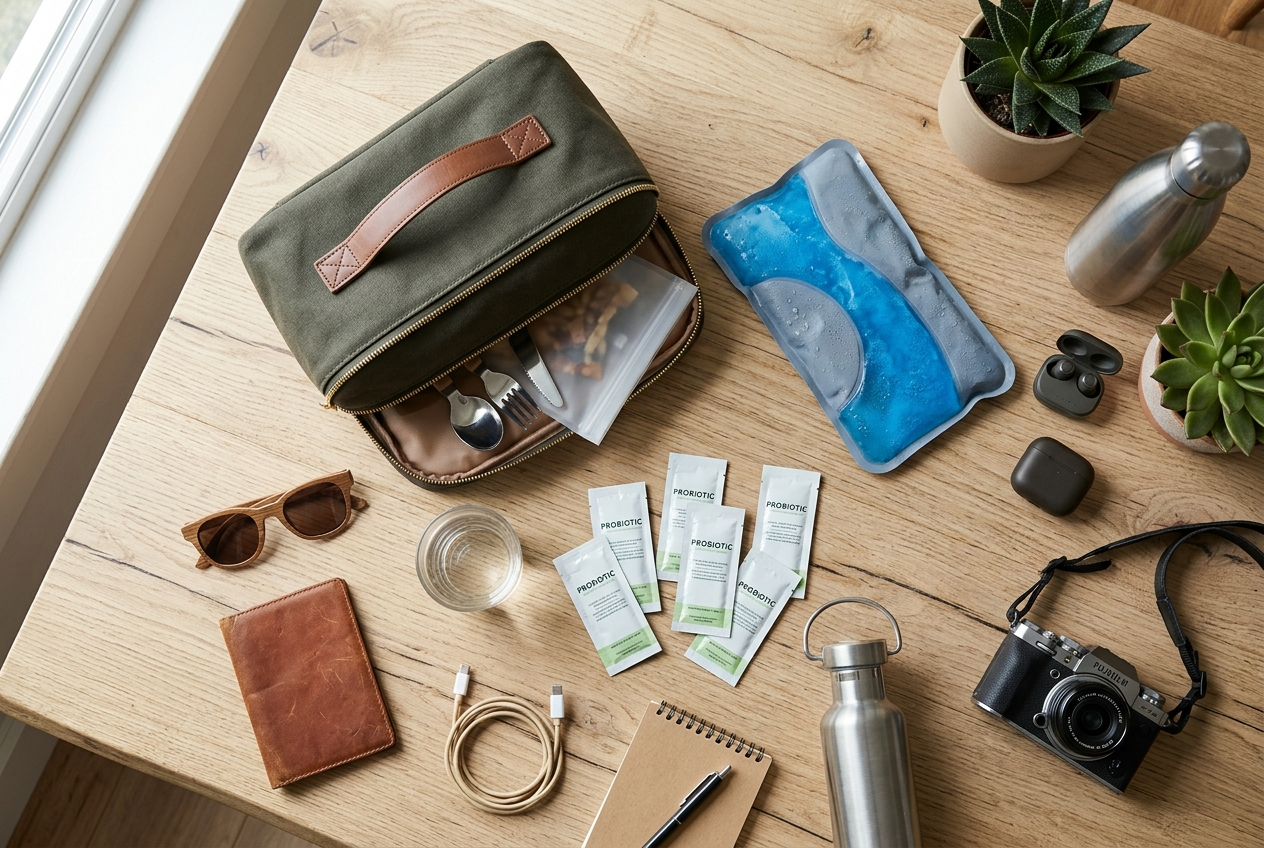
Short-distance travel under 24 hours is manageable with an insulated lunch bag and a small ice pack. VSL#3’s manufacturer recommends keeping sachets cool throughout transit. For air travel, individual sachets can be placed in carry-on luggage in an insulated pouch with a frozen gel pack — TSA permits gel ice packs if frozen solid at the security checkpoint. International travel presents greater challenges: if refrigeration cannot be maintained continuously for more than 48 hours, meaningful viability loss is likely. ISAPP’s 2019 probiotic guidelines recommend travelers verify cold-chain availability at their destination before extended international trips. For travel where cold storage is not feasible, switching to a shelf-stable probiotic format and resuming VSL#3 upon return is a common practical approach.
- Use insulated bags with ice packs for travel under 24 hours
- TSA permits frozen gel packs in carry-on luggage
- For trips over 48 hours without cold storage access, viability loss is expected
What are the signs that VSL#3 has degraded?
Physical indicators of probiotic degradation include discoloration of the powder (from white or cream to yellow or brown), clumping inside sachets despite proper storage, and an unusual or sour odor. However, according to research published in Applied Microbiology and Biotechnology (2021), CFU loss is not always visually detectable — degraded probiotics may appear visually normal while carrying significantly reduced viable counts. The most reliable indicator of potency is strict adherence to storage conditions and the printed expiration date. Sachets stored correctly should show no moisture penetration, no discoloration, and dissolve evenly in liquids. When storage history is uncertain, confirming with the dispensing pharmacy or manufacturer before continued use is recommended.
- Discoloration, clumping, or unusual odor may signal degradation
- Visual appearance alone cannot confirm viable CFU potency
- The expiration date and storage condition adherence are the most reliable potency indicators
For a detailed comparison of specific products and strains, see Do Probiotics Need Refrigeration? Shelf-Stable vs Refrigerated Compared.
Frequently Asked Questions
Can you freeze VSL#3 to extend shelf life?
No. Freezing is not recommended by VSL#3 manufacturer guidelines. The freeze-thaw cycle disrupts bacterial cell membranes and reduces viability after reconstitution. If VSL#3 accidentally freezes, some potency loss is likely even if the product thaws normally and appears unchanged.
How long can VSL#3 stay out of the refrigerator?
According to manufacturer guidance, brief exposure under 24 hours with sealed packaging is generally tolerable. Preliminary data from Beneficial Microbes suggests significant viability loss begins accumulating after 48 continuous hours at room temperature (68–77°F / 20–25°C).
Does VSL#3 need to be taken with food?
Taking VSL#3 with food is generally recommended to buffer bacterial exposure to stomach acid during transit. Research in Beneficial Microbes (2011) found probiotic survival through the GI tract improved when supplements were taken within 30 minutes of a meal versus fasting conditions.
What is the shelf life of VSL#3 when properly stored?
VSL#3 is labeled with a manufacturer-set expiration date based on cold-chain storage at 36–46°F (2–8°C). Properly refrigerated sachets typically carry a 12–18 month shelf life from manufacture date. Storage at temperatures above the recommended range accelerates CFU decline before the printed expiration date.
Is VSL#3 the same across prescription and over-the-counter versions?
VSL#3 is available in both prescription strength (used in clinical trial settings) and over-the-counter versions. The prescription formulation contains a higher CFU count per sachet. Storage requirements are identical for both versions: refrigeration at 36–46°F (2–8°C) is mandatory.
Can VSL#3 sachets be mixed with hot liquids?
No. Mixing with hot liquids above approximately 104°F (40°C) kills live bacteria. VSL#3 sachets should be mixed with cool or room-temperature water, juice, or food. ISAPP recommends avoiding heat exposure during reconstitution for all live-culture probiotic products.
How is VSL#3 storage different from other multi-strain probiotics?
Most multi-strain probiotics containing live Lactobacillus and Bifidobacterium strains require refrigeration for the same reason as VSL#3: temperature sensitivity of live organisms. Some probiotic products use freeze-dried encapsulation to achieve shelf stability at room temperature, but VSL#3’s standard formulation is not shelf-stable at ambient temperatures. If traveling frequently, shelf-stable single-strain alternatives like Culturelle (L. rhamnosus GG) may be more practical.
Leave a Reply