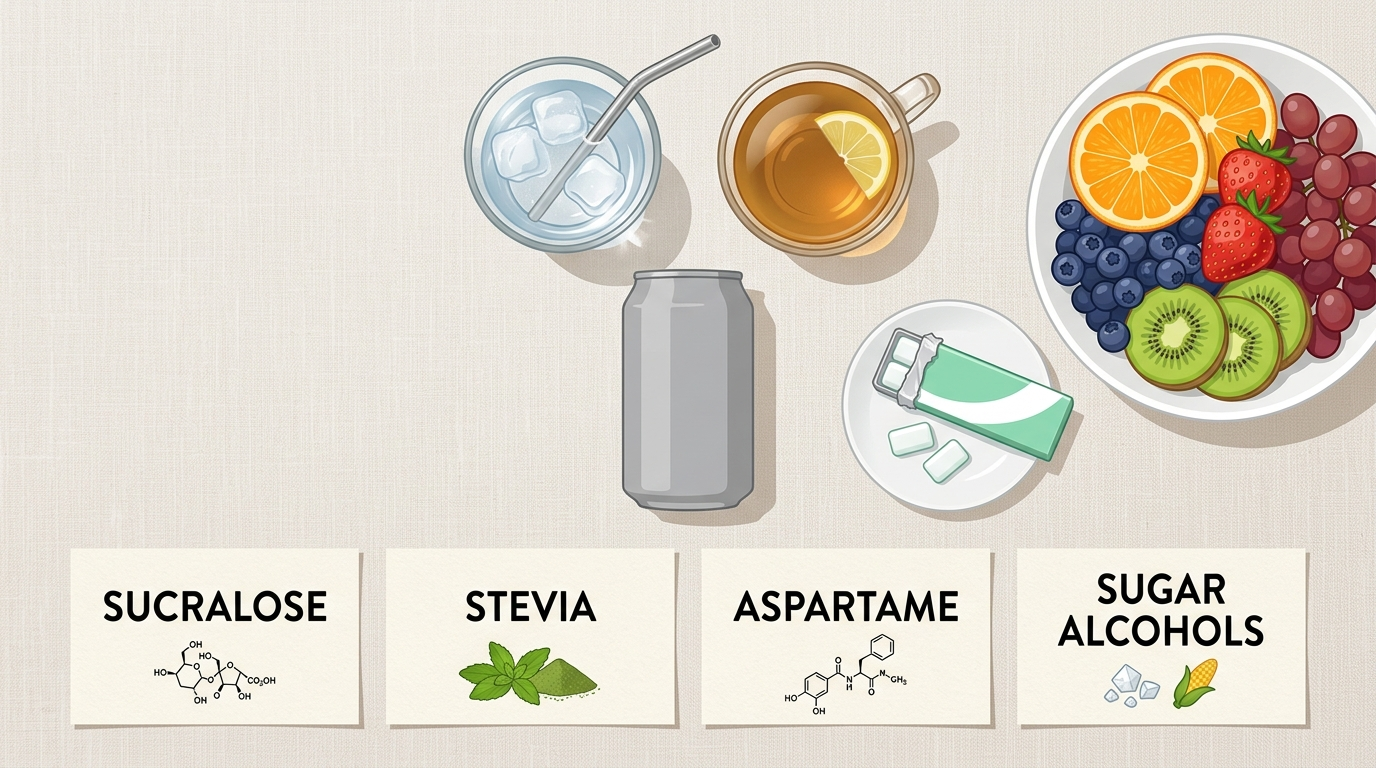
Artificial sweeteners are not automatically harmful when the rest of a diet is strong. The real issues are dose, digestive tolerance, sweetness conditioning, product context, and individual response. Non-sugar sweeteners can reduce added sugar exposure, but they do not make ultra-processed foods metabolically neutral or universally gut-friendly.
How did we evaluate artificial sweeteners and diet quality?
Digestive Wellness Guide evaluated artificial sweeteners by separating regulatory safety, metabolic outcomes, gut symptoms, and food-pattern effects. Government safety reviews, World Health Organization guidance, randomized trials, and human microbiome studies received more weight than social-media claims. We excluded cancer-scare content, detox claims, and single-animal-study conclusions because those sources do not translate cleanly into daily diet decisions. This review has a limitation: sucralose, aspartame, stevia glycosides, saccharin, acesulfame potassium, and sugar alcohols are different entities, so one answer cannot describe every sweetener or every person.
What is the main problem with artificial sweeteners if your diet is already good?
The main problem with artificial sweeteners is not that one diet soda ruins a good diet. The problem is that non-sugar sweeteners can hide the bigger question: what food pattern does the sweetened product support? The World Health Organization 2023 guideline advised against using non-sugar sweeteners for long-term weight control because pooled evidence did not show durable body-fat benefit and observational studies linked higher intake with cardiometabolic risk. That guidance does not mean every approved sweetener is toxic. The U.S. FDA still lists several high-intensity sweeteners as permitted food additives or GRAS substances under specified uses (FDA). A strong diet can include occasional diet drinks, but daily dependence can preserve a high-sweetness palate and displace water, fruit, yogurt, or unsweetened foods.
How can artificial sweeteners affect digestion and the gut microbiome?
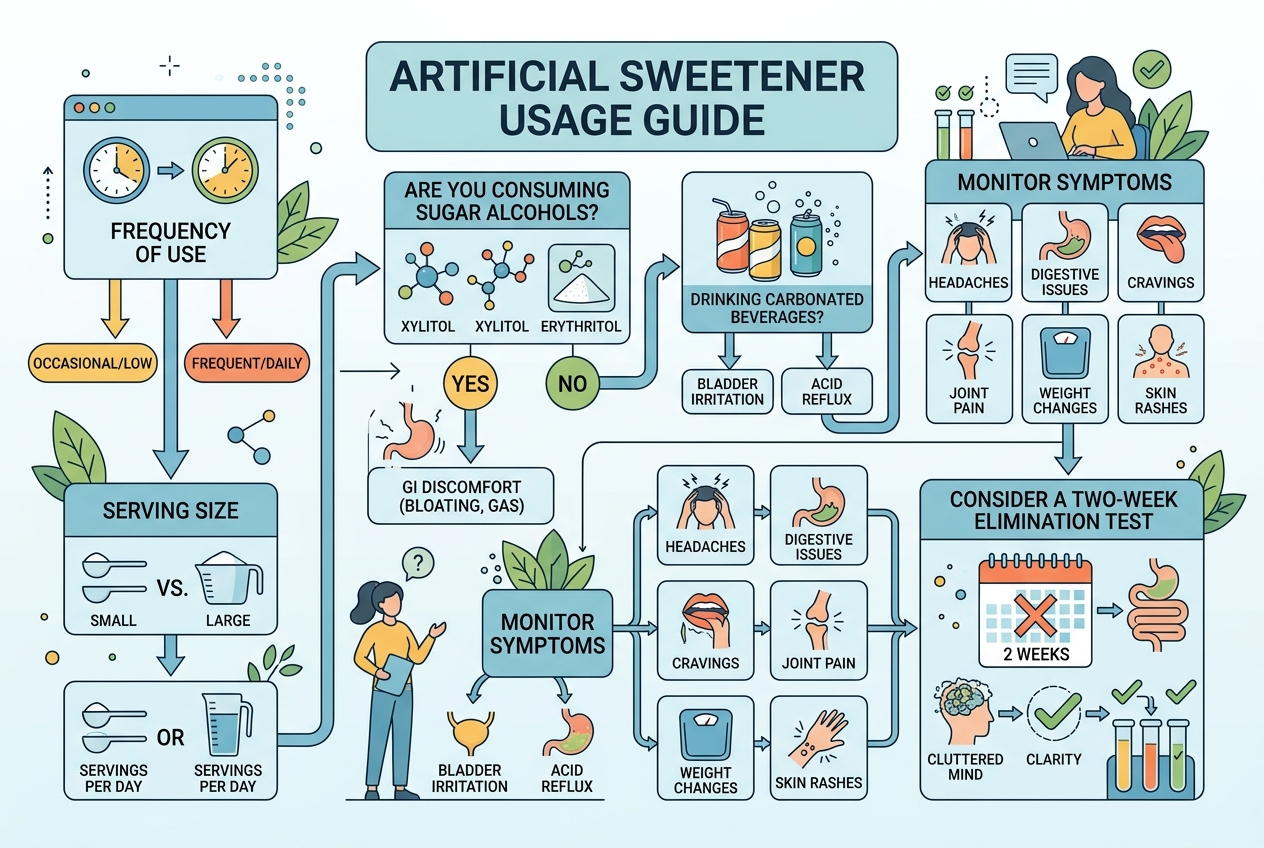
Artificial sweeteners can affect digestion through different mechanisms. Sugar alcohols such as sorbitol, mannitol, xylitol, and erythritol can pull water into the intestine or ferment in the colon, so sensitive people may notice gas, loose stool, or bloating at higher doses. High-intensity sweeteners such as aspartame and acesulfame potassium are used in tiny amounts, so they create less osmotic load than polyols. The microbiome question is more unsettled. A 2022 randomized controlled trial in Cell found that saccharin and sucralose altered glycemic responses in some participants through individualized microbiome changes. That study supports personalization, not panic. The practical test is simple: remove one sweetener category for two weeks, track symptoms, then reintroduce it once while keeping fiber, caffeine, and meal timing stable.
Are approved artificial sweeteners considered safe?
Approved artificial sweeteners are considered safe within acceptable daily intake limits, but “safe” and “ideal” answer different questions. The FDA evaluates toxicology, exposure estimates, manufacturing specifications, and permitted use levels before allowing high-intensity sweeteners in foods. Acceptable daily intake is usually far above ordinary intake, so occasional use does not equal a red flag. Aspartame created confusion in 2023 because the International Agency for Research on Cancer classified it as “possibly carcinogenic,” while the Joint FAO/WHO Expert Committee on Food Additives kept the acceptable daily intake unchanged after reviewing exposure data (WHO). This distinction matters: hazard classification asks whether a substance could cause harm under some conditions, while risk assessment asks whether real-world exposure is likely to cause harm.
What should someone with a strong diet do practically?
A person with a strong diet should judge artificial sweeteners by frequency, purpose, and symptoms. If a diet soda replaces a sugar soda, total added sugar and energy intake may fall. If a sweetened protein bar replaces a balanced meal, diet quality may fall even when sugar grams look low. If sugar-free gum, powdered drink mixes, or keto desserts trigger bloating, sugar alcohols deserve a closer look. The best routine uses a hierarchy: water first, unsweetened coffee or tea second, naturally sweet whole foods third, and non-sugar sweeteners as optional tools rather than daily anchors. People with irritable bowel sensitivity often do better when they evaluate sweeteners alongside FODMAP load, caffeine, carbonation, and meal size. A food log beats a moral label.
What questions do people ask about artificial sweeteners?
Are artificial sweeteners worse than sugar?
Artificial sweeteners and sugar create different tradeoffs. Sugar adds calories and increases added-sugar exposure, while non-sugar sweeteners preserve sweetness without the same sugar load.
Do artificial sweeteners damage gut bacteria?
Some human studies show individualized microbiome effects, especially for saccharin and sucralose. The evidence does not prove that every approved sweetener damages every microbiome.
Are sugar alcohols the same as artificial sweeteners?
No. Sugar alcohols such as sorbitol and xylitol are low-calorie carbohydrates, while high-intensity sweeteners such as sucralose and aspartame are used in much smaller amounts.
Should I quit all sweeteners?
Not automatically. A better first step is to reduce daily dependence and test the specific sweetener that seems connected to symptoms.
Why do diet foods still bother my stomach?
Diet foods often combine sugar alcohols, chicory root fiber, carbonation, gums, caffeine, and large serving sizes. The full ingredient pattern can matter more than the sweetener alone.
What is the bottom-line decision?
The bottom-line decision is to treat artificial sweeteners as tools, not health foods. Occasional use inside a high-fiber, minimally processed diet is different from building a daily routine around sweetened drinks, sugar-free candy, and low-sugar snacks. If symptoms appear, test one variable at a time: sweetener type, serving size, carbonation, caffeine, and fiber additives. If no symptoms appear, keep intake moderate and keep the overall diet centered on whole foods, protein, legumes, vegetables, fruit, and unsweetened drinks.
Leave a Reply