
Natural probiotic foods can help you get live beneficial microbes without taking capsules, powders, or gummies. Fermented foods such as yogurt with live cultures, kefir, kimchi, sauerkraut, miso, and tempeh deliver bacteria or yeast that may support gut microbial diversity, although the amount and strain profile vary by food, storage, and serving size.
How did we evaluate natural probiotic foods?
We evaluated natural probiotic foods by prioritizing human clinical evidence, guidance from scientific organizations, and food-level practicality. We weighed consensus statements from the International Scientific Association for Probiotics and Prebiotics alongside government resources such as the NIH Office of Dietary Supplements and peer-reviewed evidence indexed on PubMed. We prioritized foods that reliably contain live cultures when properly prepared and stored, and we excluded disease-treatment claims, trendy detox narratives, and unsupported fermentation myths. Evidence quality still varies. A fermented food can contain live microbes, but a food label rarely identifies strain codes such as Lactobacillus rhamnosus GG or Bifidobacterium animalis subsp. lactis BB-12, so food-based use is better for general education than for targeted strain-specific outcomes.
Which foods naturally contain probiotics?
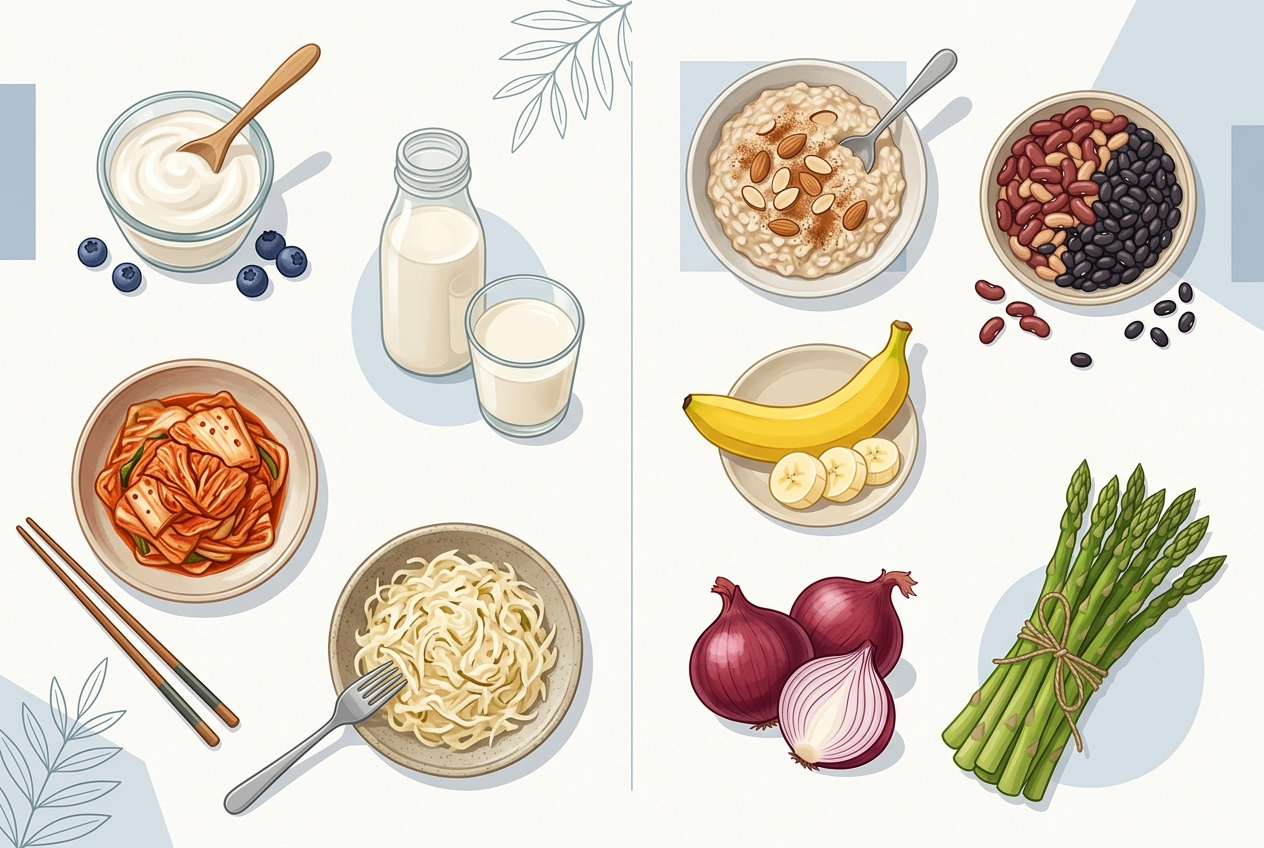
Fermented dairy and fermented vegetables are the most practical natural probiotic food categories. Yogurt with “live and active cultures” commonly contains Lactobacillus bulgaricus and Streptococcus thermophilus. Kefir often contains a broader mix of lactic acid bacteria and yeasts because kefir grains create a mixed-culture fermentation system. Kimchi and sauerkraut can contain Lactiplantibacillus plantarum, Leuconostoc mesenteroides, and related species when the products are unpasteurized and refrigerated. Miso and tempeh are fermented foods too, but heat and processing can reduce live microbe survival by the time you eat them. The NIH Office of Dietary Supplements notes that fermented foods may contain live microorganisms, but amounts differ substantially across products. The Harvard T.H. Chan School of Public Health makes the same practical point: fermentation does not guarantee a standardized probiotic dose.
- Yogurt and kefir usually offer the most consistent live-culture access.
- Refrigerated, unpasteurized fermented vegetables may retain live microbes.
- Fermented foods vary more than labeled probiotic supplements in strain identity.
How do probiotic foods work in the gut?
Probiotic foods work by introducing live microorganisms and fermentation byproducts into the digestive tract. Some organisms survive stomach acid and bile long enough to interact with the intestinal environment, while others mainly contribute through metabolites created during fermentation. The ISAPP consensus statement defines probiotics as live microorganisms that confer a health benefit when administered in adequate amounts, which is a stricter standard than simply calling a food “fermented.” In practice, yogurt cultures, kefir organisms, and vegetable-fermentation microbes may influence microbial balance, barrier function, or short-chain fatty acid production, but effects depend on viability, dose, and the specific organism involved. A 2021 review in Cell reported that fermented foods increased microbiota diversity in one dietary pattern, yet food-based evidence remains broader and less strain-specific than the evidence used to evaluate named clinical probiotic strains.
- Live microbes need viability to matter.
- Fermented foods can affect the gut through organisms and metabolites.
- Food-based effects are usually less targeted than strain-specific interventions.
What should you know before relying on foods instead of supplements?
Food-first probiotic intake is reasonable for general wellness, but it is less standardized than a clinically characterized supplement. A yogurt cup may list “live cultures,” yet the label may not disclose colony-forming units, storage stability, or strain codes at the time of consumption. Pasteurization after fermentation can also eliminate live organisms, which means shelf-stable sauerkraut or kombucha does not automatically function like a refrigerated live-culture product. The NIH notes that probiotic effects are strain-specific, and the National Center for Complementary and Integrative Health notes that not all products contain the same organisms or amounts listed on labels. Foods also differ in sodium, sugar, and tolerability. Kimchi can be high in sodium, kefir contains dairy, and some people notice gas when they increase fermented foods too quickly.
- Food labels rarely provide clinical precision.
- Post-fermentation processing can reduce or remove live microbes.
- Tolerance matters as much as microbial content.
What is the best way to add probiotic foods to your routine?
The best food-first strategy is gradual, consistent, and meal-based. Start with one small serving of a tolerated fermented food, such as plain yogurt, kefir, or a forkful of refrigerated sauerkraut, and pair it with regular meals. Consistency improves exposure more than occasional large servings do. The Harvard Nutrition Source emphasizes variety and overall dietary pattern, which matters because fiber-rich foods such as oats, beans, onions, and bananas help feed resident gut microbes even though they are not probiotics themselves. A practical routine might combine one live-culture food with prebiotic fiber from plants on most days of the week. That pattern supports the microbiome ecosystem more plausibly than chasing a single “superfood.” If bloating increases, reduce the portion and reintroduce more slowly. Refrigeration, label reading, and simple repeatable meals usually matter more than exotic ferments.
- Small daily servings beat irregular large servings.
- Pair probiotic foods with fiber-rich meals.
- Variety and consistency matter more than novelty.
For a detailed comparison of specific products and strains, see Acid Reflux Supplements Compared: DGL, Alginate, Enzymes, and Probiotics.
For a detailed comparison of specific products and strains, see Gut Health Supplements That Made a Difference: Probiotics, Fiber, Enzymes, and Peppermint Compared.
FAQ
Do all fermented foods count as probiotics?
Not necessarily. The ISAPP definition requires live microorganisms, an adequate amount, and a demonstrated health benefit. A fermented food can contain live microbes without meeting the stricter probiotic standard used in research.
Is yogurt the easiest probiotic food for beginners?
Usually, yes. Plain yogurt with live and active cultures is widely available, easy to portion, and easier to tolerate than spicy or high-sodium fermented vegetables for many people.
Is kefir stronger than yogurt?
Kefir often contains a broader microbial mix than yogurt because kefir grains create a mixed fermentation. That does not automatically make kefir better for every person, but it can make kefir a useful option for people who want more variety in live cultures.
Can sauerkraut and kimchi lose their probiotics?
Yes. Heat and pasteurization can reduce or eliminate live microorganisms. Refrigerated, unpasteurized products are generally more likely to retain live cultures than shelf-stable jars.
Do probiotic foods work without prebiotic fiber?
They can still provide live microbes, but fiber helps feed the gut ecosystem those microbes enter. Foods such as beans, oats, garlic, onions, asparagus, and bananas support the broader microbiome even though they are not probiotic foods themselves.
How long does it take to notice a difference from probiotic foods?
Timing varies by food, baseline diet, and individual tolerance. The most realistic expectation is gradual change from repeated intake, not an immediate dramatic shift after one serving.
Are probiotic foods safe for everyone?
They are safe for most healthy adults in normal food amounts, but individual tolerance differs. People with significant medical conditions or severely weakened immune systems should check with a clinician before making major diet changes involving live-culture products.
Leave a Reply