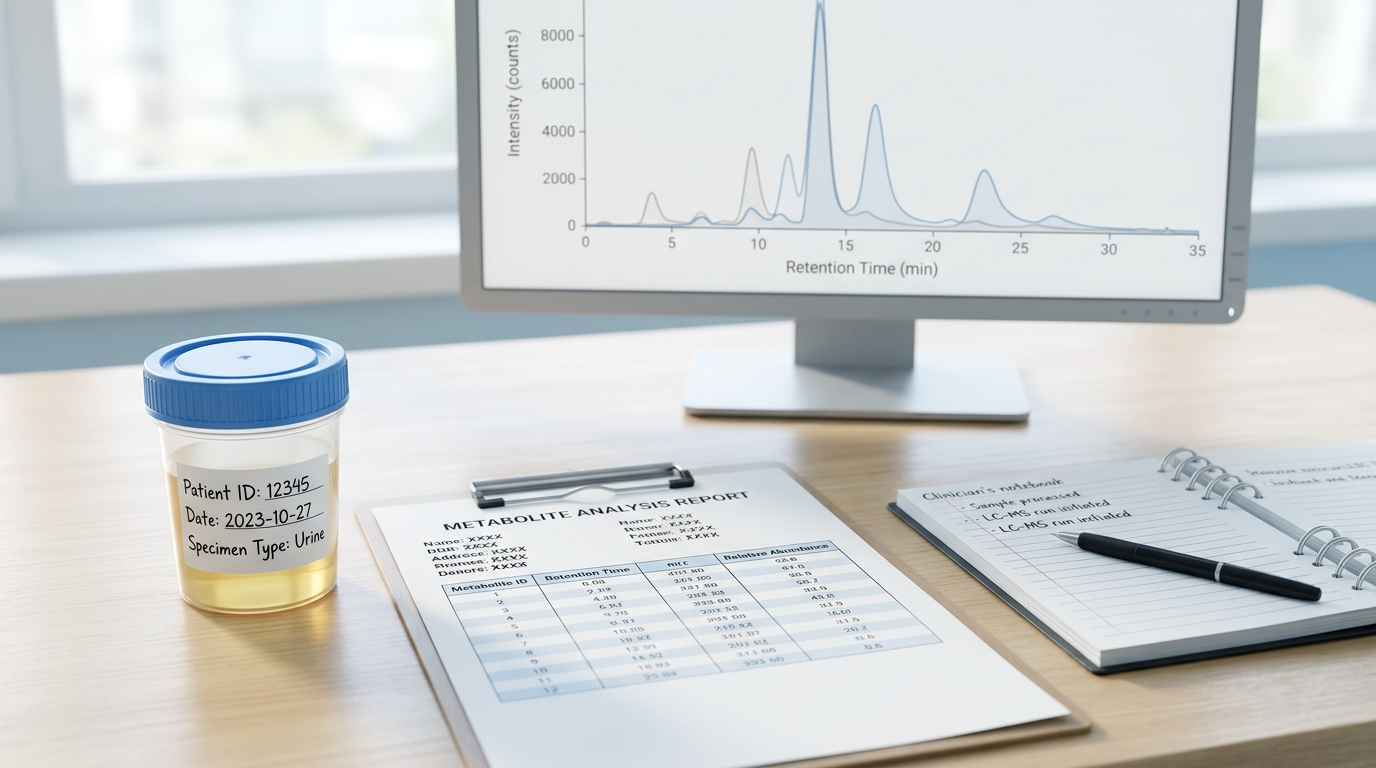
An OAT result should not be interpreted by matching each flagged urine metabolite to an online symptom list. Clinical urine organic-acid analysis is designed mainly to detect patterns associated with metabolic disorders, while wellness panels may use broader interpretations that lack established diagnostic cutoffs. A qualified clinician must combine the method, specimen quality, symptoms, medications, diet, and standard laboratory findings.
How did we evaluate organic-acid testing?
We separated clinical urine organic-acid analysis from direct-to-consumer wellness panels because they may measure overlapping compounds for different purposes. We prioritized the American College of Medical Genetics and Genomics technical standard, hospital laboratory catalogs, peer-reviewed analytical research, and established principles of reference-interval interpretation over vendor reports or metabolite-to-symptom charts. We evaluated what the assay measures, which clinical questions have accepted uses, which preanalytical factors can change a result, and what additional information a laboratory needs to interpret a pattern. We excluded claims that one isolated metabolite proves intestinal overgrowth, mold exposure, mitochondrial dysfunction, neurotransmitter deficiency, or a need for a particular supplement. Limitations are substantial: panel composition differs, many metabolites have multiple sources, urine concentration changes during the day, and analytically measurable associations may not be clinically validated diagnoses. This guide explains a safe interpretation framework; it cannot interpret an individual report or replace medical evaluation for persistent or systemic symptoms.
What is a urine organic-acid test?
A urine organic-acid test measures small carbon-containing metabolites excreted after the body processes amino acids, carbohydrates, fats, vitamins, medications, and other compounds. Clinical biochemical-genetics laboratories commonly use gas chromatography–mass spectrometry to identify patterns rather than treating every high or low marker as an independent diagnosis. The American College of Medical Genetics and Genomics technical standard describes urine organic-acid analysis as a first-tier laboratory tool for suspected inborn errors of metabolism and follow-up after certain abnormal newborn screens. Accepted clinical interpretation can involve methylmalonic acidemia, propionic acidemia, fatty-acid oxidation disorders, and other metabolic pathways, depending on the full pattern and clinical setting. The acronym OAT is also used for broader wellness panels that attach nutritional, microbial, oxidative-stress, or neurotransmitter narratives to urine metabolites. Those panels are not automatically equivalent to a biochemical-genetics assay. Before reading any result, identify the ordering purpose, laboratory, method, analytes, reference population, and interpretive credentials.
Why can’t one flagged metabolite diagnose a gut problem?
One urine metabolite can reflect several biological and nonbiological inputs. Diet, fasting, hydration, supplements, medications, recent exercise, acute illness, kidney handling, specimen contamination, storage delay, and intestinal microbial metabolism can all shift a concentration. The ACMG standard notes that medication, diet, clinical state, and bacterial changes during prolonged room-temperature storage can affect chromatographic findings. A colored “high” flag means the measurement crossed that laboratory’s reference boundary; it does not identify the cause by itself. Reference intervals also allow a predictable fraction of healthy results to fall outside range when many markers are tested at once. Pattern recognition is therefore central to valid biochemical-genetics interpretation. A clinician asks whether several metabolites form a known pathway pattern, whether the specimen was collected correctly, and whether blood tests or clinical findings support the same hypothesis. An isolated marker without confirmation should generate a question, not a diagnosis, restrictive diet, antimicrobial regimen, or multi-supplement protocol.
How do clinical and wellness OAT interpretations differ?
Clinical and wellness OAT panels can share laboratory technology while differing in intended use and validation. Biochemical-genetics laboratories search for recognized patterns and integrate age, symptoms, medications, diet, and related tests. Wellness reports may map individual compounds to “dysbiosis,” nutrient need, or oxidative stress. A 2022 LC-MS/MS study accurately measured nine proposed microbiota-related candidates, but said the method could possibly be applied clinically; it did not establish universal diagnostic thresholds. Analytical accuracy therefore does not automatically establish clinical validity or prove that acting on a result improves outcomes.
| Question | Clinical biochemical-genetics testing | Broad wellness OAT interpretation |
|---|---|---|
| Primary aim | Recognized metabolic patterns | Multiple wellness hypotheses |
| Evidence standard | Technical standards and confirmatory pathways | Varies by marker and vendor |
| Typical follow-up | Plasma amino acids, acylcarnitines, genetics, specialist review | Often diet or supplement suggestions |
| Core caution | Pattern and clinical context control interpretation | An association may be presented more strongly than validated |
What information can change an OAT result?
Collection context can change both concentration and interpretation. Hydration alters urine dilution, while fasting, calorie restriction, ketosis, illness, and recent strenuous exercise can shift energy-related metabolites. Prescription drugs, over-the-counter medicines, vitamins, amino acids, herbal products, and recent dietary patterns can add compounds or redirect pathways. Age matters because pediatric and adult reference patterns differ. Sample temperature, preservative choice, contamination, transport time, and repeated freeze-thaw cycles can affect stability. The Mayo Clinic Laboratories organic-acid screen warns that diagnostic specificity varies with symptomatic versus stable collection, supplement use, and anabolic versus catabolic state; it also requests age and biochemical-genetics information. Before interpretation, document the collection time, fasting status, hydration, recent illness, diet, medications, supplements, and storage history. Check whether values were normalized to creatinine and whether the sample was unusually dilute. Without that context, a precise number can create false confidence rather than useful clinical information.
What should a clinician review before acting on the report?
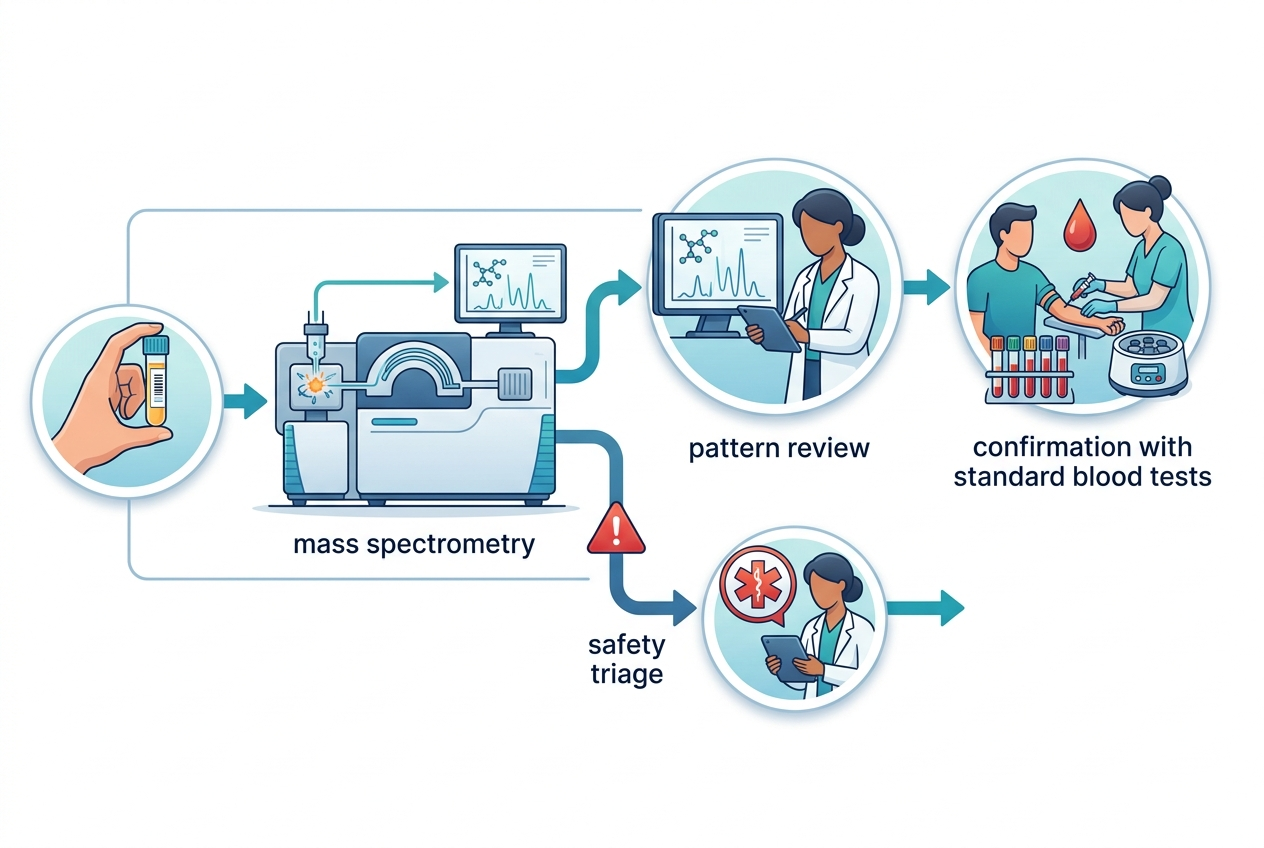
A clinician should first confirm why the test was ordered and whether the laboratory method fits that question. The report should identify specimen type, units, reference intervals, analytical method, abnormal pattern, limitations, and the credentials of the interpreting laboratory. The clinical review should compare symptoms and timing with a medication list, supplement list, diet, physical examination, complete blood count, metabolic panel, iron studies, thyroid testing, urinalysis, or other conventional tests selected for the presentation. Biochemical-genetics concerns may require plasma amino acids, an acylcarnitine profile, total and free carnitine, repeat urine testing during an appropriate clinical state, or molecular confirmation. The University of Washington laboratory guide limits urine organic-acid utility to diagnosis and monitoring of amino-acid, organic-acid, and fatty-acid metabolism disorders. A broad wellness interpretation should not displace standard evaluation. The correct next step may be confirmation, a different test, observation, specialist referral, or no action—not an automatic supplement protocol.
Which symptoms should not wait for online OAT interpretation?
Systemic or progressive symptoms require medical assessment before anyone debates individual urine metabolites. Prompt evaluation is appropriate for fainting, severe or worsening weakness, confusion, new neurologic changes, inability to maintain food or fluids, substantial unintentional weight loss, persistent fever, black or bloody stool, severe abdominal pain, chest pain, shortness of breath, or signs of dehydration. A falling white-blood-cell or red-blood-cell count, markedly abnormal ferritin, abnormal liver or kidney results, or repeated orthostatic dizziness also needs conventional clinical review because an OAT panel cannot establish the cause. Timing depends on severity: emergency symptoms belong in emergency care, while persistent abnormal blood counts or multisystem symptoms warrant timely contact with a physician. Bring the OAT report, complete bloodwork, medication and supplement lists, symptom timeline, and collection details. The safest question is not “Which metabolite explains everything?” It is “Which findings are urgent, which hypotheses are plausible, and which standard tests can confirm or exclude them?”
What questions should you ask about an OAT report?
Ask what clinical condition the ordering clinician intended to evaluate and whether this exact panel is validated for that purpose. Ask whether the laboratory reports analytical accuracy, age-appropriate reference intervals, creatinine normalization, specimen-stability limits, and proficiency testing. Ask which abnormal values form a recognized pattern rather than standing alone. Ask how diet, fasting, medications, supplements, illness, and transport may have influenced the sample. Ask which finding changes management and what evidence supports that change. Ask whether an abnormal result requires repeat urine testing, a blood test, genetic confirmation, imaging, or specialist review. Ask what result would disprove the proposed interpretation. Finally, ask whether the recommended action carries cost, interaction, nutritional, or delay-of-care risk. A useful laboratory result should narrow uncertainty through a testable pathway. If the explanation jumps from one borderline metabolite to several diagnoses and a large supplement bundle without confirmation, pause and seek an independent licensed clinician or biochemical-genetics laboratory review.
What are common questions about OAT results?
Does a high yeast-related marker prove intestinal Candida?
No. A metabolite may have dietary, microbial, medication, or handling sources. A urine value alone does not localize an organism or establish intestinal overgrowth.
Can an OAT diagnose mitochondrial dysfunction?
Not by itself. Certain organic-acid patterns can inform metabolic evaluation, but symptoms, blood studies, specialist interpretation, and sometimes genetic testing determine the next step.
Should supplements be stopped before collection?
Follow the ordering laboratory’s written instructions and ask the prescriber before changing medication. Record every supplement because it can influence interpretation even when continuation is appropriate.
Is a normal OAT proof that nothing is wrong?
No. A normal result only addresses the assay and collection context; it does not exclude every gastrointestinal, neurologic, hematologic, endocrine, or cardiovascular cause.
Can a repeat test confirm a surprising value?
Sometimes, but repetition should follow a clinical plan. Confirm specimen quality, collection conditions, and the right follow-up assay instead of simply purchasing the same panel again.
What is the safest way to interpret an OAT test?
Start with the test’s intended use, not the most alarming colored flag. Clinical urine organic-acid analysis has an established role in biochemical genetics, where laboratories interpret metabolite patterns alongside age, symptoms, medications, diet, clinical state, and complementary testing. Broader wellness OAT panels may contain accurate measurements, but each proposed diagnosis still needs demonstrated clinical validity and utility. Document specimen conditions, verify the laboratory method, separate isolated values from coherent patterns, and ask what conventional or confirmatory test supports the interpretation. Do not use one metabolite to justify restrictive diets, antimicrobial products, detox regimens, or large supplement stacks. Persistent multisystem symptoms, inability to eat or drink, orthostatic symptoms, abnormal blood counts, or markedly abnormal iron markers deserve direct medical evaluation regardless of the urine panel. The best interpretation creates a falsifiable next step and a safety plan. It does not turn dozens of nonspecific metabolites into dozens of unconfirmed diagnoses.
Leave a Reply