
People take glutathione supplements to try to raise the body’s glutathione stores or influence antioxidant status. Glutathione is an essential compound that cells already make from glutamate, cysteine, and glycine. Oral supplements can change measured glutathione in some studies, but evidence for broad benefits in healthy people remains limited and inconsistent.
How did we evaluate glutathione supplements?
We evaluated glutathione supplements by separating three questions: what endogenous glutathione does, whether an oral product changes measured glutathione, and whether that laboratory change produces a meaningful health outcome. Human randomized trials received more weight than cell experiments, animal studies, marketing claims, or the nickname “master antioxidant.” We compared short and longer trials because exposure duration may partly explain conflicting results, while recognizing that small samples limit certainty. We excluded intravenous and inhaled glutathione because their absorption, supervision, risks, and clinical contexts differ from over-the-counter capsules, powders, and liquids. We also excluded disease-treatment conclusions that cannot be transferred from a biomarker study in healthy adults. The central limitation is simple: raising glutathione in blood or cells does not automatically prove better energy, immunity, skin, liver function, or longevity. A useful decision starts with a defined goal, not a generic promise to “detox.”
What is glutathione and what does the body use it for?
Glutathione, abbreviated GSH in its reduced form, is a tripeptide made from glutamate, cysteine, and glycine. Cells synthesize GSH through enzyme-controlled steps rather than relying exclusively on food or supplements. Glutathione participates in redox balance, peroxide handling, protein regulation, and conjugation reactions involving glutathione-dependent enzymes. A biochemistry review indexed by PubMed describes GSH as a central cellular redox agent and explains that glutathione peroxidases and transferases perform much of its antioxidant and conjugation work. “Detox” is therefore an imprecise consumer shortcut, not a complete biological description. The liver uses glutathione pathways, but swallowing more glutathione does not prove that the liver removes unspecified toxins faster. The body also recycles oxidized glutathione through glutathione reductase. Glutathione status depends on synthesis, use, recycling, amino-acid availability, illness, medications, nutrition, and measurement method, so one blood value cannot summarize every tissue.
Why do people choose a glutathione supplement?
People usually choose glutathione supplements for one of four reasons: they want to raise measured GSH, they associate antioxidants with healthy aging, they expect skin-related changes, or they believe extra glutathione will improve energy, immunity, or liver “detox.” The first goal can be tested with pharmacokinetic or biomarker studies; the other goals require outcome-specific clinical trials. That distinction prevents a common reasoning error. Glutathione performs essential functions inside cells, but an essential molecule is not automatically a useful supplement for every healthy person. A supplement can increase a laboratory marker without improving how someone feels or functions. Conversely, a study that finds no short-term biomarker change does not prove every formulation and duration are identical. Best for evaluating the decision: name the desired outcome, check whether human trials measured that outcome, compare the studied form and dose with the label, and review personal risks. “General wellness” is too vague to verify and too broad to justify confident claims.
What have human trials found about oral glutathione?
Human trials have produced mixed results, which is why definitive benefit claims outrun the evidence. A six-month randomized trial in 54 healthy nonsmoking adults tested 250 or 1,000 milligrams daily and reported increases in glutathione across several measured compartments. The study showed that oral supplementation can alter body stores under those conditions, but it did not establish broad clinical benefits or resolve effects in larger, more diverse populations. By contrast, a four-week randomized trial in 40 healthy adults tested 500 milligrams twice daily and found no significant changes in glutathione status or selected oxidative-stress biomarkers. Duration, formulation, participants, laboratory methods, and statistical power may explain some disagreement. Neither trial established a universal symptom benefit for healthy adults. The fair conclusion is narrower than either marketing headline: some oral regimens can change measured GSH, but results are not uniform, and biomarker movement does not prove treatment, prevention, better performance, or longer life.
Do reduced, liposomal, and precursor products mean the same thing?
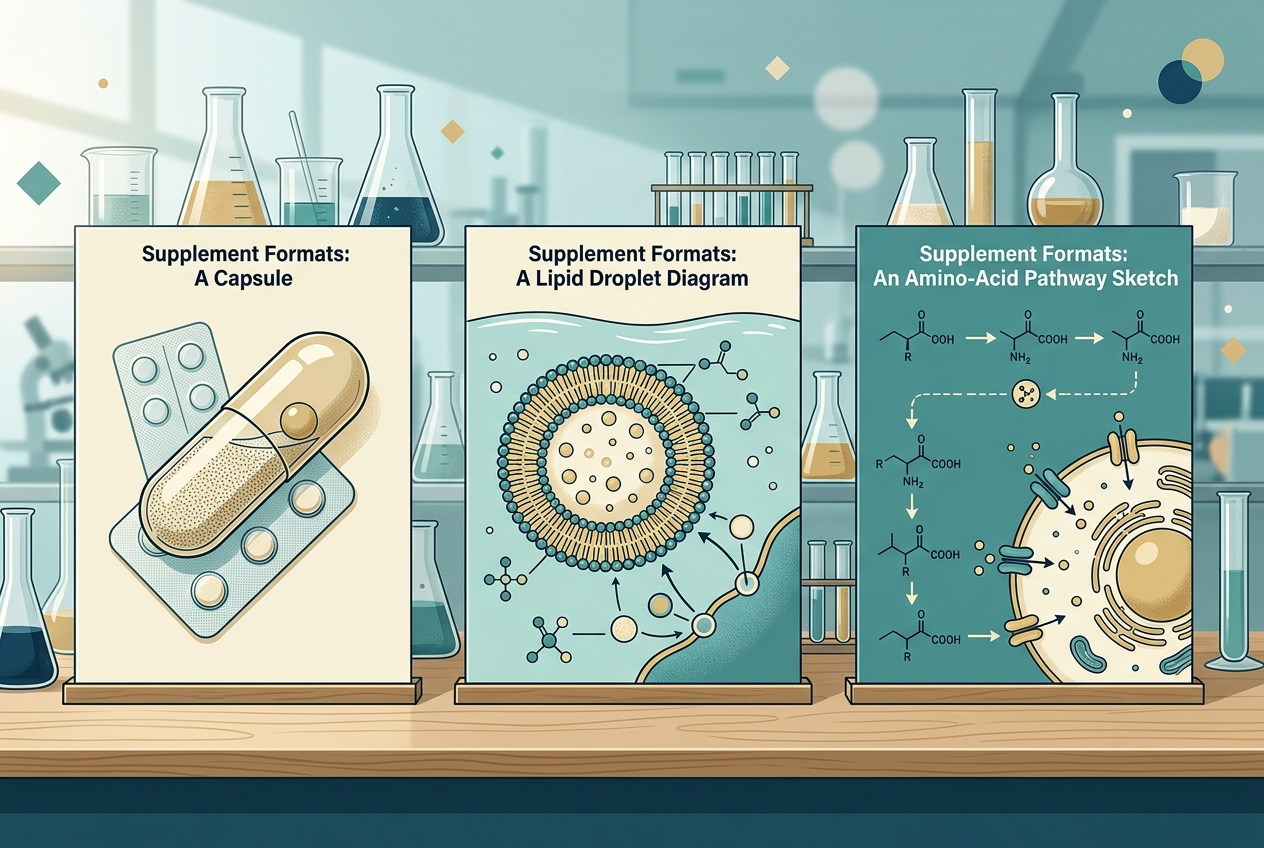
Reduced glutathione, liposomal glutathione, and precursor products describe different strategies, not interchangeable evidence categories. Reduced glutathione supplies GSH directly. Liposomal products place glutathione in a lipid-based carrier intended to affect delivery, but pilot findings cannot establish that every liposomal label produces the same absorption or outcome. Precursors such as N-acetylcysteine, cysteine, glycine, or GlyNAC aim to support the body’s own synthesis and have separate doses, contraindications, drug interactions, and clinical literature. The 2023 review “How to Increase Cellular Glutathione” surveys direct GSH, derivatives, cysteine donors, food patterns, and other approaches; it does not convert them into a universal ranking. Product quality and stability can also differ across delivery systems. A useful comparison checks the exact ingredient, delivery form, serving dose, trial duration, population, and measured endpoint. A claim about one branded liposomal system cannot validate an unrelated capsule, and evidence for N-acetylcysteine cannot be silently transferred to oral glutathione.
Can food and protein support normal glutathione synthesis?
Food supports glutathione biology by supplying amino acids and nutrients used in normal metabolism, although no single “glutathione food” guarantees a specific tissue level. Protein foods provide glutamate, cysteine, and glycine, while dietary pattern, total protein adequacy, energy intake, and health status influence availability. A Journal of Nutrition review identifies cysteine availability and glutamate-cysteine ligase activity as important controls on GSH synthesis and notes that adequate protein nutrition supports homeostasis. Eggs, dairy, fish, poultry, meat, soy foods, beans, lentils, nuts, seeds, and whole grains can contribute amino acids within varied diets. Cruciferous vegetables and allium vegetables contain sulfur-related compounds, but food studies do not justify treating broccoli or garlic as a drug-equivalent glutathione dose. Best for healthy adults without a defined deficiency: meet protein and calorie needs, eat a varied diet, avoid smoking, and address medical causes of poor intake. Food supports the system; it does not promise a “detox.”
What should you check before taking glutathione?
Check the goal, exact form, dose, other ingredients, testing evidence, medications, health conditions, and planned duration before taking glutathione. The label should distinguish reduced glutathione from a precursor blend and should state milligrams per full serving rather than relying on front-panel language. Third-party certification can verify selected identity or contamination criteria, but it does not prove effectiveness. Keep a photo of the full label and lot number for reference. The FDA warns that supplements can alter medication absorption, metabolism, or excretion, and it advises discussing supplements with a healthcare professional. That conversation matters during pregnancy, breastfeeding, childhood, cancer care, chronic disease management, medication use, or preparation for surgery. Stop and seek guidance if a new product causes wheezing, swelling, rash, faintness, severe gastrointestinal symptoms, or another concerning reaction. A defined trial with a stop date and measurable goal creates better information than indefinite use based on an undefined antioxidant promise.
What questions do people ask about glutathione supplements?
Glutathione questions often blur normal physiology, supplement absorption, biomarker changes, and clinical outcomes. The body needs glutathione, but that fact alone does not establish that every person needs an oral product. Human trials answer different questions: one may measure blood GSH after six months, another may measure oxidative-stress markers after four weeks, and neither automatically proves better energy or immunity. Formulation claims also need exact matching because reduced, liposomal, micellar, and precursor products are not the same intervention. Safety depends on the full ingredient list, dose, health context, and medication plan rather than the word “antioxidant.” A practical review therefore asks what outcome is desired, which human study measured it, whether the tested formulation matches the bottle, and how success or failure will be judged. The following answers keep those boundaries clear and avoid converting cell biology into a universal supplement recommendation.
Does everyone need a glutathione supplement?
No. Healthy cells already synthesize glutathione, and no universal intake target for supplemental glutathione applies to every adult. A specific medical context or nutrition problem should be discussed with a qualified clinician.
Is glutathione the “master antioxidant”?
“Master antioxidant” is a marketing nickname, not a complete scientific category. Glutathione is an important cellular redox compound that works alongside enzymes and other antioxidant systems rather than acting alone.
Does oral glutathione actually absorb?
Some human trials show increases in measured glutathione after oral use, while other trials show no significant change. Formulation, duration, dose, population, and laboratory method can affect the result.
Is liposomal glutathione always better?
No universal evidence proves that every liposomal product outperforms every standard product. A delivery claim should match the exact formulation and human trial rather than borrowing evidence from a different carrier.
Can glutathione supplements detox the liver?
Glutathione participates in normal liver biochemistry, but “detox the liver” does not name a measurable clinical outcome. Supplements should not replace evaluation of jaundice, abnormal liver tests, medication effects, alcohol-related risk, or suspected poisoning.
How long does oral glutathione take to work?
There is no single timeline because “work” may mean a biomarker change, symptom change, or clinical outcome. Trials have ranged from weeks to months, so a label promise should be checked against the exact studied endpoint.
Glutathione is biologically essential, but supplement usefulness depends on a defined outcome and matching human evidence. Oral products can raise measured glutathione under some study conditions, yet broad wellness benefits remain unproven. Compare forms carefully, review medication and health context, and avoid treating an antioxidant label as proof of detoxification or disease protection.
Leave a Reply