
Famotidine can cause itching, rash, or hives, although these reactions are uncommon. New itching after a dose deserves prompt advice from a pharmacist or prescriber, especially if it spreads or returns. Swelling of the face or throat, hoarseness, wheezing, or trouble breathing or swallowing requires emergency care.
How did we evaluate itching after famotidine?
We evaluated the question by comparing the current U.S. prescribing label with federal patient drug information and general drug-allergy guidance. Official labeling received the most weight because it separates reactions observed in clinical trials from voluntary reports collected after approval. We treated timing as a clue rather than proof: itching that starts after a dose can have several causes, and a temporal link alone cannot diagnose a medication allergy. We excluded social-media anecdotes, unsupported frequency estimates, and advice to “test” another dose without professional guidance. The evidence also has limits. Postmarketing reports cannot establish how often a reaction occurs or whether famotidine caused every reported event, while controlled trials may be too small to capture rare hypersensitivity. This approach supports a careful answer: famotidine is a plausible cause, but the pattern and accompanying symptoms determine the urgency of evaluation.
Can famotidine cause itching?
Yes. The official U.S. famotidine label lists pruritus—the medical term for itching—among skin reactions reported in fewer than 1% of participants in clinical trials. The same label lists rash and bronchospasm among hypersensitivity reactions, while postmarketing reports include anaphylaxis, angioedema, facial swelling, and urticaria (DailyMed). Those reports show that the reaction is possible; they do not prove that every itch after famotidine comes from the medicine. Dry skin, a new soap, another medication, food, infection, or an unrelated skin condition can produce the same symptom. The timing still matters, and a clinician should interpret the full pattern. Itching that begins soon after starting famotidine, recurs after each dose, or appears with hives or swelling creates a stronger reason to contact a pharmacist or prescriber promptly than a single localized itch with an obvious external trigger.
Which symptoms make itching an emergency?
Breathing or swallowing difficulty, swelling of the face, lips, tongue, or throat, hoarseness, wheezing, faintness, or rapidly spreading hives can signal a severe allergic reaction. These symptoms require emergency care rather than a routine appointment. MedlinePlus lists hives, rash, itching, swelling, hoarseness, and difficulty breathing or swallowing among serious famotidine reactions that warrant an immediate call to a clinician (MedlinePlus). Drug reactions can begin with skin symptoms and then progress, so a person should not wait for every feature to appear. A blistering rash, skin peeling, sores around the mouth or eyes, or fever with a widespread rash also requires urgent medical assessment because the famotidine label contains rare postmarketing reports of severe skin reactions. Localized mild itching without hives or swelling is less alarming, but it still deserves timely advice if it started after the medicine or returns after dosing.
How can timing help identify a possible medication reaction?
A simple timeline helps a clinician judge whether famotidine is a plausible trigger. Record when the medicine was started, the dose, the time of each dose, when itching began, where it appeared, and whether a rash, hives, swelling, or breathing symptoms occurred. Add every prescription drug, over-the-counter product, vitamin, supplement, food, soap, detergent, and skin product introduced around the same time. Photos can document a rash that fades before an appointment. A reaction minutes to hours after a dose can fit immediate hypersensitivity, while some drug rashes appear later; neither pattern confirms the cause by itself. MedlinePlus notes that drug allergies can produce hives, itching, rash, swelling, or wheezing and that useful testing is limited for many medicines (drug allergy guidance). Do not deliberately take another dose merely to reproduce the reaction unless a qualified clinician directs a supervised plan.
What should you do about mild itching after famotidine?
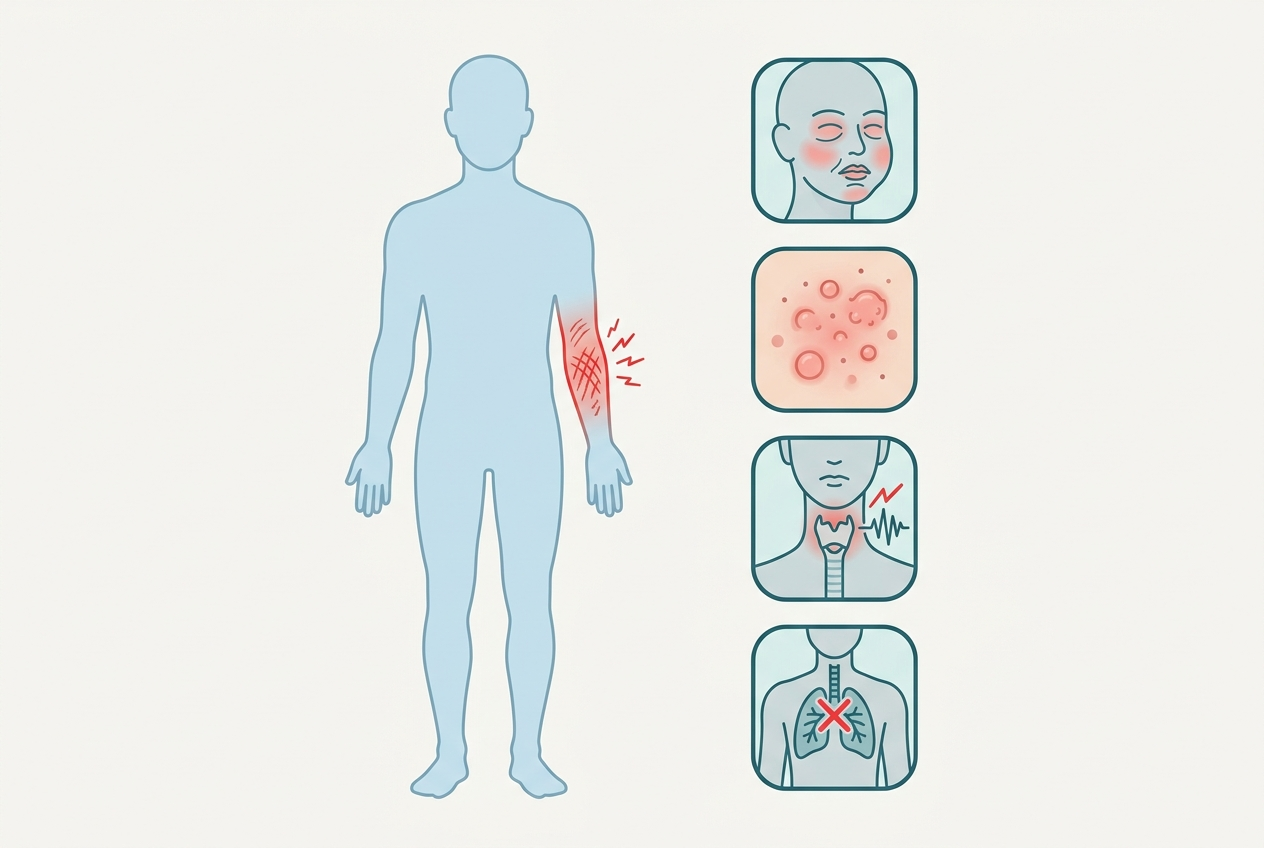
Contact a pharmacist or the clinician who recommended famotidine before the next dose when new itching has no clear alternative explanation. Provide the timing log, rash photos, dose, kidney history, and a complete medication list so the professional can assess risk and alternatives. People using prescription famotidine should not make a long-term medication change without contacting the prescriber, but suspected allergy symptoms require same-day guidance rather than waiting for a routine refill visit. Avoid adding an antihistamine, acid reducer, or supplement simply to cover the symptom until a pharmacist checks for duplication, sedation, and interactions. Cool compresses and fragrance-free skin care may reduce irritation from dry skin, but symptom relief does not establish the cause or make another dose safe. If itching spreads, hives appear, or any swelling, hoarseness, breathing trouble, dizziness, or blistering rash develops, move from routine advice to urgent or emergency evaluation.
What else can cause new itching while taking famotidine?
Medication timing can be misleading because itching has many common causes. Dry skin, eczema, contact with a new detergent or cosmetic, insect bites, food reactions, heat, and other medicines can all produce pruritus. MedlinePlus also lists pregnancy and some liver, kidney, thyroid, nervous-system, and other health conditions among possible causes of persistent or generalized itching (MedlinePlus itching overview). The location and appearance provide useful clues. A sharply bordered patch under a watch suggests contact irritation; raised migrating welts fit hives; widespread itching without a visible rash may need a broader medical review. Another new medicine is especially relevant, including antibiotics, pain relievers, and combination cold products. The practical goal is not to guess the cause from one symptom but to identify the full exposure pattern. Persistent, recurrent, widespread, or sleep-disrupting itching deserves clinical assessment even when it does not occur immediately after famotidine.
How should a suspected famotidine reaction be documented?
Document the generic name “famotidine,” the dose, formulation, date started, reaction description, onset time, treatment received, and outcome. Avoid recording only “allergy” without details because future clinicians need to distinguish mild isolated itching from hives, angioedema, breathing difficulty, or a severe skin reaction. Ask the evaluating clinician to add the reaction to the medical record and pharmacy profile when appropriate. Keep a personal copy in a medication list or health app. Serious or unexpected reactions can also be reported to the U.S. Food and Drug Administration through MedWatch. A report does not prove causation, but it contributes to postmarketing safety surveillance. If a clinician concludes that famotidine or another histamine-2 receptor antagonist caused a serious hypersensitivity reaction, the official label states that prior serious hypersensitivity to famotidine or another medicine in that class is a contraindication.
What questions do people ask about famotidine and itching?
Can itching start after several famotidine doses?
Yes, medication reactions do not always begin with the first dose. A clinician should review delayed or recurring itching, especially when a rash, hives, or swelling accompanies it.
Does itching prove I am allergic to famotidine?
No. Itching is compatible with a drug reaction but also has many unrelated causes, and timing alone cannot confirm an allergy.
Are hives different from ordinary itching?
Hives are raised, often itchy welts that may move or change shape. Hives after a medicine increase concern for hypersensitivity and warrant prompt clinical advice.
Can famotidine itself be used for allergic reactions?
Famotidine blocks histamine-2 receptors, but that fact does not prevent it from causing its own adverse or hypersensitivity reaction. It should not replace emergency treatment for anaphylaxis.
Should I take another dose to see if the itching returns?
Do not deliberately repeat a suspected trigger without guidance. A repeat exposure can produce a more serious reaction, and any challenge should be planned by a qualified clinician when appropriate.
What information should I tell a pharmacist?
Share the dose, dose times, symptom onset, rash photos, other medicines and supplements, kidney history, and any swelling or breathing symptoms. That detail is more useful than saying only that the medicine “felt wrong.”
When should persistent itching be checked?
Seek clinical assessment when itching is widespread, recurring, unexplained, or disruptive, even without a rash. Emergency symptoms require immediate care rather than a routine visit.
Famotidine is a possible cause of new itching, but the symptom needs context. Use the timing and associated signs to judge urgency, avoid unsupervised re-exposure, and get professional advice before continuing a suspected trigger.
Leave a Reply