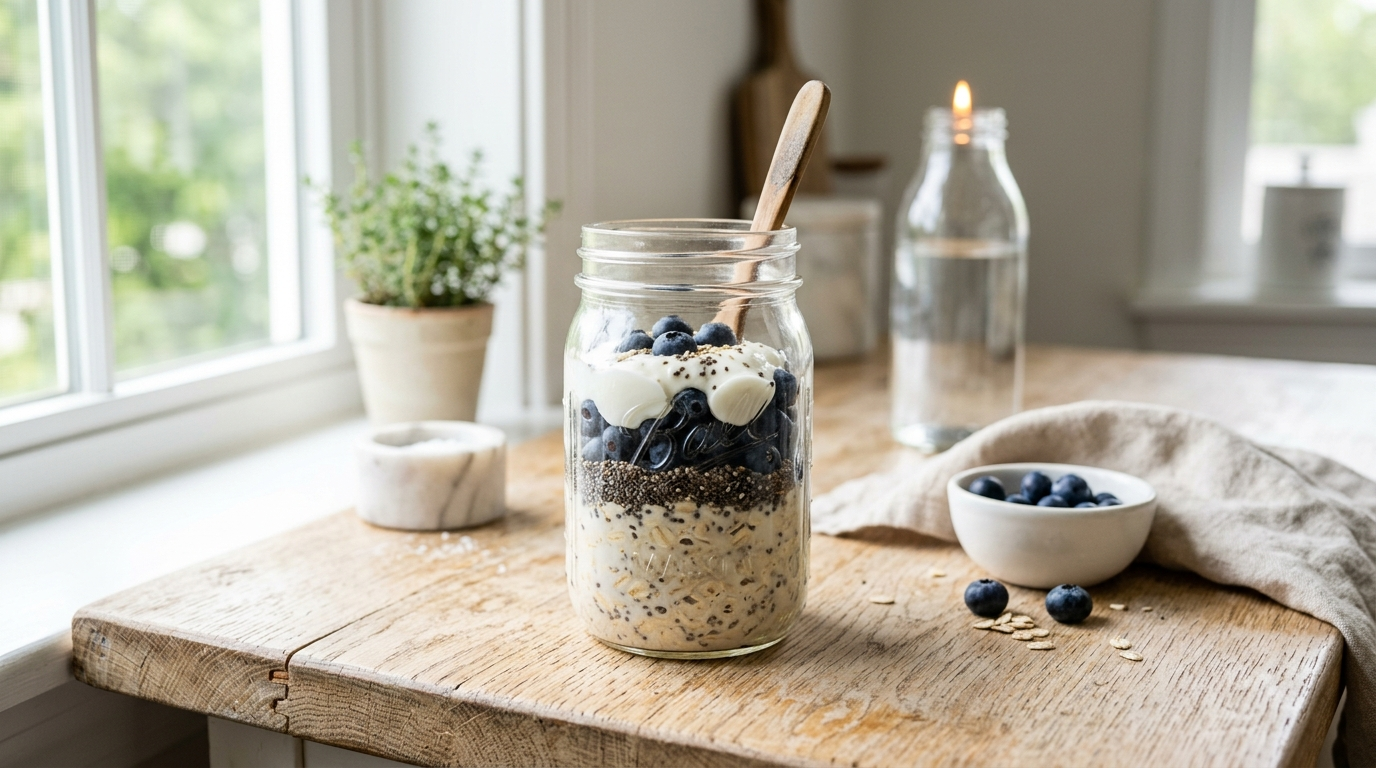
A probiotic-heavy overnight oats bowl with kefir can be a reasonable breakfast if your digestion already handles dairy and fermentable fiber well, but more is not automatically better. A large dose of kefir, oats, chia, fruit, and added probiotic foods can also raise lactose, fiber, and fermentable carbohydrate exposure in one sitting, which may increase gas or urgency for some people.
How we evaluated probiotic-heavy overnight oats with kefir
We prioritized human evidence on fermented dairy, fiber tolerance, and practical digestion habits over marketing claims. We looked for guidance from established sources such as the NIH, NIDDK, and peer-reviewed journals, and we excluded disease-treatment framing and anecdotal “miracle gut fix” logic. We also weighed dose, meal size, and ingredient stacking, because tolerance often depends more on the full bowl than on any single probiotic ingredient.
Is a probiotic-heavy overnight oats bowl with kefir actually a good idea?
A probiotic-heavy overnight oats bowl can make sense when the bowl is balanced, portioned, and matched to your tolerance. Kefir supplies live cultures, and fermented milk products have some evidence for supporting digestion in certain contexts, although strain counts alone do not guarantee a better outcome (NIH). Oats supply beta-glucan fiber, while chia seeds add soluble fiber and bulk. That combination can support regularity, but it also increases fermentation potential. The National Institute of Diabetes and Digestive and Kidney Diseases notes that gas can rise when fiber intake increases quickly (NIDDK). A practical rule works better than a “more probiotics equals better digestion” rule. Start with one cultured food, one major fiber source, and a moderate portion. The bowl becomes less predictable when kefir, yogurt, fruit, sweeteners, and added prebiotic powders all stack into the same serving.
What should you watch out for before making it a daily breakfast?
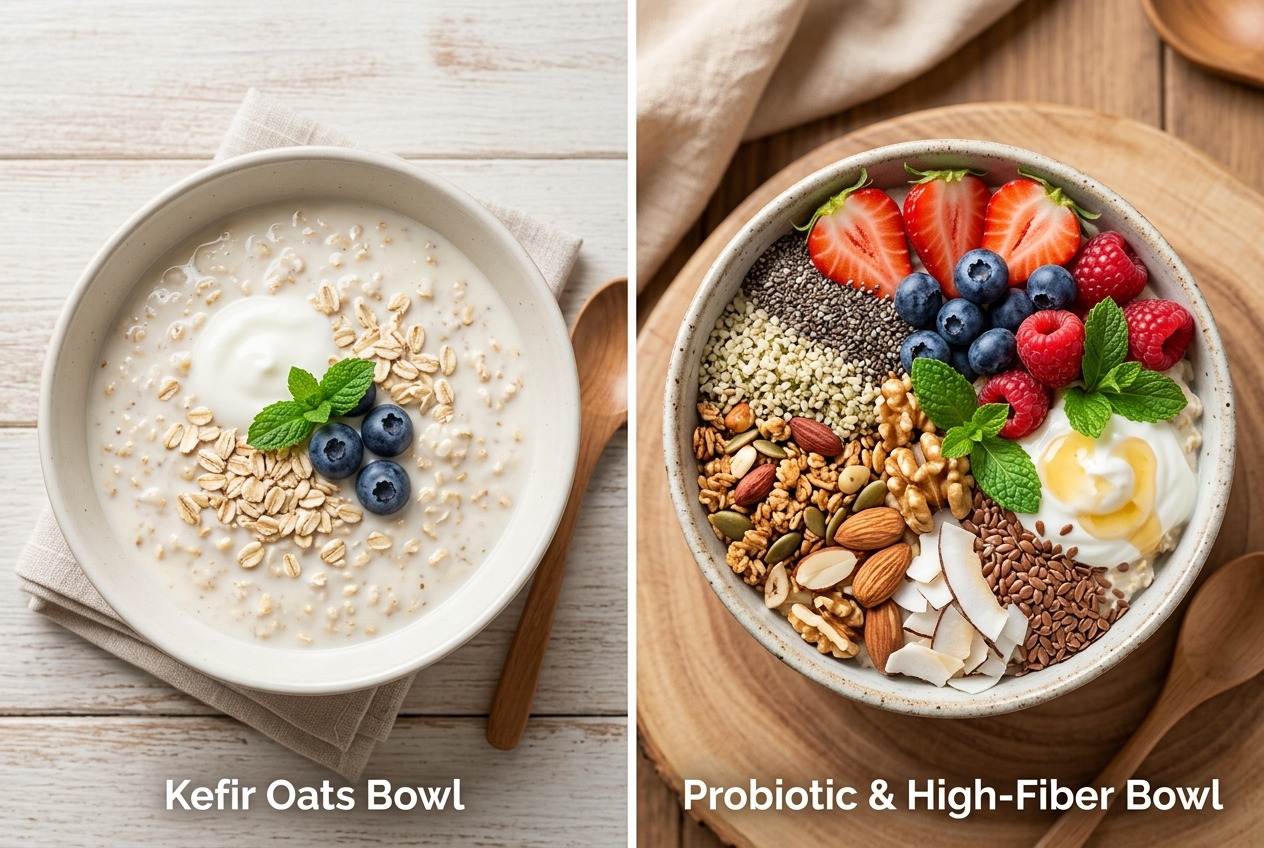
Tolerance depends on lactose load, fiber load, and ingredient layering. Kefir usually contains less lactose than regular milk because fermentation changes part of the sugar profile, but lactose is not eliminated completely, so dairy-sensitive people may still notice symptoms (Cleveland Clinic). Oats, chia, flax, apples, bananas, and inulin-rich add-ins can each be reasonable alone, yet the total bowl can become highly fermentable. The Monash University FODMAP framework shows that portion size often changes how tolerated foods feel in practice (Monash FODMAP). Texture also matters. Overnight oats are soft and easy to eat quickly, which can lead to larger portions before fullness signals catch up. A safer version keeps the bowl simple: plain kefir, rolled oats, one seed, and one fruit. If symptoms repeat, the useful question is not whether probiotics are “good” but which ingredient, serving size, or timing consistently pushes the meal past your comfort threshold.
What is a smarter way to build a breakfast like this?
A smarter build uses one fermented element, one main fiber source, and a small test portion for extras. For example, 1/2 cup rolled oats plus 1/2 to 3/4 cup kefir creates a clearer baseline than a large bowl with multiple toppings. If you want more texture or satiety, add chia or walnuts, not three new gut-active ingredients at once. The International Scientific Association for Probiotics and Prebiotics emphasizes that probiotic effects are strain-specific, which means a food becomes useful because it is tolerated and repeatable, not because it sounds microbiome-heavy (ISAPP). A food log can help identify patterns across dairy, fruit, sweeteners, and serving size. The best breakfast is the version you can repeat comfortably for a week. Consistency produces cleaner feedback than one oversized “healthy” bowl that leaves you guessing which ingredient caused the problem.
For a detailed comparison of specific products and strains, see Can You Ferment Probiotics in Oats? Starter Cultures, Kefir, and Supplements Compared.
What questions come up most often?
Is kefir always better than yogurt in overnight oats?
Not necessarily. Kefir and yogurt differ in cultures, texture, and lactose content. The better choice is the one you tolerate well in a realistic serving size.
Can too many probiotic foods at once backfire?
Yes. Combining kefir, yogurt, kimchi, kombucha, and high-fiber add-ins in the same day can raise fermentation load and make symptom patterns harder to read.
Are oats themselves a common problem?
Oats are well tolerated for many people, but portion size and add-ins matter. A bowl becomes harder to tolerate when dried fruit, apples, syrups, or extra fibers push total fermentable load too high.
Should you add a probiotic powder to kefir oats?
Usually not at first. A simpler bowl gives clearer feedback, and probiotic benefit depends on the specific strain and dose, not on stacking as many products as possible.
What is the best first adjustment if the bowl causes bloating?
Reduce the serving and remove one variable. Swapping to a smaller kefir portion or using fewer toppings is usually more informative than abandoning the whole idea at once.
When should you talk with a clinician?
Seek medical evaluation if bloating comes with weight loss, vomiting, GI bleeding, progressive pain, or persistent symptoms that do not improve with simple food changes. Those patterns deserve individualized assessment.
Leave a Reply