Category: Gut Health

  • Can a Medrol Pack Cause Gastritis-Like Stomach Pain?

    Can a Medrol Pack Cause Gastritis-Like Stomach Pain?

    A Medrol pack can coincide with gastritis-like symptoms because methylprednisolone can upset the stomach and may raise gastrointestinal bleeding risk, especially with NSAIDs, alcohol, prior ulcers, or higher-risk health history. New burning pain, nausea, black stool, vomiting blood, or worsening symptoms after steroids deserves prompt clinician review.

    How did we evaluate Medrol pack induced gastritis?

    We evaluated Medrol pack induced gastritis by separating documented methylprednisolone adverse effects from broader gastritis causes. We prioritized the FDA Medrol label, MedlinePlus methylprednisolone guidance, NIDDK gastritis education, and a BMJ Open systematic review over anecdotal forum reports. Human clinical evidence received more weight than single case stories because steroid timing alone cannot prove stomach-lining inflammation. This article excludes diagnosis, dosing changes, and treatment instructions because a Medrol Dosepak is a prescription taper and persistent or severe upper-abdominal symptoms need individualized medical review. The practical standard is pattern recognition: symptom onset, NSAID exposure, alcohol intake, ulcer history, and warning signs carry more value than the phrase “steroid gastritis” by itself. Evidence is strongest for gastrointestinal bleeding and perforation risk across corticosteroid trials, while evidence for short outpatient tapers causing true gastritis is more directional and context-dependent.

    Can a Medrol pack cause gastritis-like symptoms?

    A Medrol pack can cause gastritis-like symptoms, but it does not prove gastritis by itself. Medrol contains methylprednisolone, a corticosteroid that changes inflammation signaling throughout the body. MedlinePlus lists methylprednisolone as a medicine that can cause stomach upset and also warns against stopping it without clinician guidance. The FDA Medrol label lists gastrointestinal adverse reactions including peptic ulcer, pancreatitis, abdominal distention, ulcerative esophagitis, and stomach-related complications in susceptible patients. A short taper may feel irritating because the stomach already has reflux, NSAID exposure, alcohol exposure, Helicobacter pylori infection, or stress-related sensitivity. The timing matters: symptoms that begin soon after steroid doses and repeat after each dose make the medication a plausible contributor. Symptoms that started before the pack, continue long after it, or include alarm signs need a broader evaluation rather than a single-cause explanation.

    What symptoms fit stomach irritation after methylprednisolone?

    Stomach irritation after methylprednisolone usually feels like upper-abdominal burning, sour burps, nausea, early fullness, bloating, or gnawing discomfort under the breastbone. NIDDK describes gastritis and gastropathy symptoms as indigestion, pain or discomfort in the upper abdomen, nausea, vomiting, and feeling full too soon during a meal. Those symptoms overlap with reflux, dyspepsia, ulcer disease, gallbladder problems, and anxiety-related gut sensations, so symptom labels can mislead. Black, tarry stool; vomiting blood; coffee-ground vomit; faintness; severe pain; fever; chest pain; repeated vomiting; or unintended weight loss changes the situation. Those warning signs point beyond routine stomach upset and deserve urgent medical contact. Mild symptoms that track tightly with dosing still deserve a call to the prescriber, especially when the person also uses ibuprofen, naproxen, aspirin, anticoagulants, alcohol, or has a past ulcer. Age and dose history also matter.

    Why do NSAIDs, alcohol, and ulcer history matter so much?

    NSAIDs, alcohol, and ulcer history matter because they reduce the stomach’s safety margin. The NIDDK identifies H. pylori infection and NSAID use as common causes of gastritis and gastropathy. NSAIDs such as ibuprofen, naproxen, and aspirin can weaken protective prostaglandin pathways in the gastric lining. Alcohol can irritate the lining and amplify nausea, reflux, and burning sensations. Corticosteroids add a second risk layer in some settings. A BMJ Open systematic review of randomized trials found corticosteroids increased gastrointestinal bleeding or perforation risk overall, with the clearest signal in hospitalized patients and a much lower absolute event rate in ambulatory patients. That caveat matters: a short outpatient Medrol pack is not the same exposure as high-dose inpatient steroids. Risk still rises when multiple irritants stack together. Age, anticoagulants, and ulcer history can shift that calculation.

    What should you ask a clinician before changing anything?

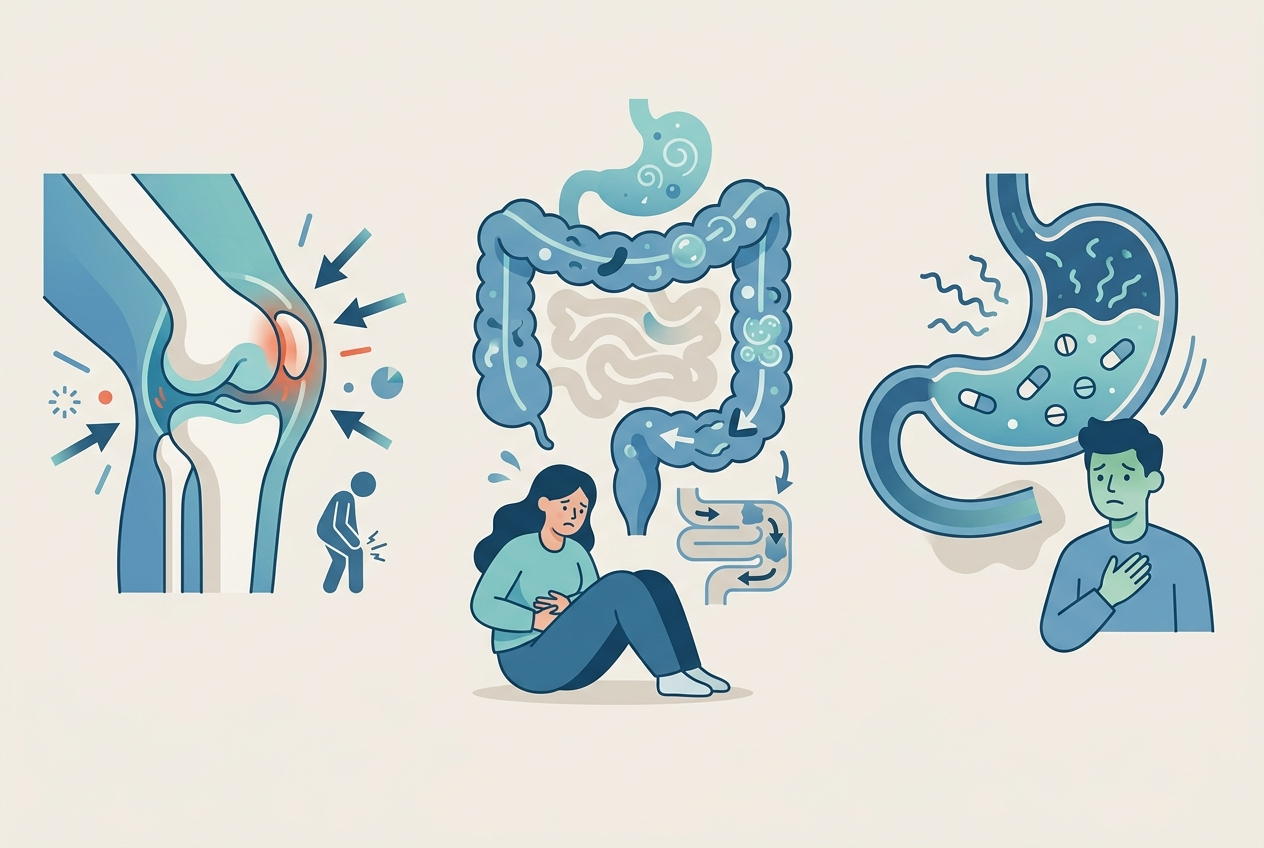
    Visual guide to stomach irritation risk factors during methylprednisolone use.
    Visual guide to stomach irritation risk factors during methylprednisolone use.

    A person with suspected Medrol-related stomach irritation should ask the prescriber what symptom pattern requires changing the plan, not guess alone. The useful details are exact dose day, timing after each tablet, pain location, nausea or reflux symptoms, NSAID use, alcohol use, ulcer history, anticoagulant use, and any black stool or vomiting. The clinician can decide whether symptoms fit expected stomach upset, reflux flare, medication interaction, ulcer concern, or a separate condition. The key safety point is the taper. MedlinePlus warns that stopping methylprednisolone abruptly can cause withdrawal-type symptoms, so schedule changes belong with the prescribing clinician. Pharmacists can also review drug interactions and stomach-irritating over-the-counter medicines. If symptoms are severe, bloody, faintness-related, or rapidly worsening, urgent care is more appropriate than waiting for a routine message. Exact wording saves time during clinical triage.

    What can reduce extra stomach irritation while symptoms are being reviewed?

    Extra stomach irritation often drops when avoidable triggers stop piling on top of the prescription. The safest first step is communication with the prescriber or pharmacist, because medication timing, dose schedule, and protective options depend on the reason for the steroid. While waiting for guidance, people commonly track meals, dose timing, alcohol, caffeine, spicy foods, late-night eating, and NSAID use to identify clear aggravators. Bland foods are not a treatment, but smaller low-fat meals may reduce reflux-like pressure during a sensitive week. Hydration matters because vomiting, poor appetite, and diarrhea can turn a minor stomach flare into weakness. NSAIDs deserve special caution because they are common hidden contributors to gastritis and ulcer risk. The goal is not to self-treat steroid gastritis. The goal is to lower obvious irritants and give the clinician a clean symptom timeline.

    What do people get wrong about Medrol pack stomach pain?

    The biggest mistake is treating “Medrol caused gastritis” as a confirmed diagnosis when it is really a timing clue. Methylprednisolone can irritate the stomach, but gastritis requires a broader context, medication reconciliation, and sometimes testing. Another mistake is adding ibuprofen or naproxen for steroid-related aches without asking a pharmacist or clinician. That combination can increase stomach risk in susceptible people. A third mistake is ignoring red-flag symptoms because the pack is short. Short courses can still reveal an existing ulcer, reflux problem, H. pylori infection, or medication interaction. A fourth mistake is stopping the taper suddenly because nausea feels scary. Prescription steroid tapers have a schedule for a reason. The better move is to document the day, dose, timing, symptoms, and other medications, then ask the prescriber what to do next. Written timelines beat anxious guessing.

    For a detailed comparison of specific products and strains, see Upper Middle Stomach Pain and Bloating: Options to Compare Before Guessing.

    What questions come up most often?

    Is Medrol the same as methylprednisolone?

    Medrol is a brand name for methylprednisolone, a corticosteroid prescription medicine. A Medrol Dosepak usually uses a short tapering schedule, so dose timing and stopping decisions should follow the prescriber’s instructions.

    Can a short steroid pack cause real gastritis?

    A short steroid pack can contribute to stomach irritation, but true gastritis is not automatic. NSAID use, alcohol, H. pylori infection, prior ulcers, and baseline reflux can make the same steroid week feel much worse.

    Is burning pain after each dose a useful clue?

    Yes. Burning that starts after each dose and improves between doses makes medication irritation plausible. It still does not rule out reflux, ulcer disease, gallbladder problems, or another cause.

    Should NSAIDs be avoided during a Medrol pack?

    NSAIDs deserve a clinician or pharmacist check during steroid use, especially when stomach symptoms appear. Ibuprofen, naproxen, and aspirin can irritate the stomach lining and may compound risk in people with ulcer history.

    When is this urgent?

    Black stool, vomiting blood, coffee-ground vomit, faintness, severe abdominal pain, chest pain, repeated vomiting, or rapidly worsening symptoms deserves urgent medical help. Those signs are not routine “stomach upset.”

    Can antacids or acid reducers be used with methylprednisolone?

    Only a clinician or pharmacist should confirm what fits your medication list and steroid schedule. Antacids, H2 blockers, and proton pump inhibitors have different timing rules, interaction concerns, and reasons for use.

    What information should be included in a message to the prescriber?

    Include the Medrol day and dose, symptom start time, pain location, nausea or reflux symptoms, NSAID or aspirin use, alcohol use, ulcer history, and any black stool or vomiting. That timeline lets the clinician sort irritation from warning signs faster.

  • Can Omeprazole Withdrawal Symptoms Happen 5 Weeks After Stopping?

    Can Omeprazole Withdrawal Symptoms Happen 5 Weeks After Stopping?

    Yes. Symptoms five weeks after stopping omeprazole can still be related to rebound acid hypersecretion, but timing alone cannot prove it. PPI rebound usually causes heartburn, sour regurgitation, upper-belly burning, nausea, or throat irritation. Symptoms that persist, worsen, or include chest pain, trouble swallowing, vomiting blood, or weight loss need medical review.

    How did we evaluate omeprazole withdrawal timing?

    We evaluated omeprazole withdrawal timing by separating rebound acid hypersecretion, recurrent gastroesophageal reflux, and unrelated upper-gastrointestinal symptoms. Human evidence received priority: randomized withdrawal data in Gastroenterology, American Gastroenterological Association best-practice advice, NIDDK reflux education, NHS omeprazole drug information, and Mayo Clinic red-flag guidance; patient-facing safety guidance was treated separately from mechanism evidence because a timing question needs both plausibility and triage. We excluded forum anecdotes, supplement claims, and single-person timelines because those sources cannot distinguish rebound acid from GERD recurrence, gastritis, ulcer symptoms, medication effects, pregnancy, or cardiac pain. This article uses “withdrawal” as a plain-language search term; proton pump inhibitors do not cause classic drug withdrawal in the way opioids, benzodiazepines, or nicotine can, but stopping acid suppression can allow a temporary acid-output overshoot in some people, and evidence remains directional rather than definitive.

    Can rebound acid symptoms show up five weeks after stopping omeprazole?

    Rebound acid symptoms can still be plausible five weeks after stopping omeprazole, especially if the medication was taken daily for several weeks or longer. Omeprazole belongs to the proton pump inhibitor, or PPI, class, and the NHS describes omeprazole as a medicine that reduces stomach acid output. The strongest human withdrawal signal comes from Christina Reimer’s randomized trial in Gastroenterology: healthy volunteers who took esomeprazole 40 mg daily for eight weeks reported more acid-related symptoms during weeks 9 through 12 than placebo volunteers, including a 44% versus 15% difference in at least one relevant symptom. That trial does not prove every five-week symptom is rebound. It shows that PPI discontinuation can create heartburn, regurgitation, or dyspepsia after acid suppression ends, even in people without baseline reflux disease. Rebound remains one explanation, not the only explanation.

    What symptoms fit rebound acid hypersecretion rather than a new problem?

    Rebound acid hypersecretion usually fits symptoms that feel like acid exposure rather than whole-body illness. Heartburn, sour or bitter regurgitation, upper-abdominal burning, burping, nausea, throat irritation, hoarseness, or cough after lying down can match an acid-reflux pattern. NIDDK defines gastroesophageal reflux as stomach contents moving back into the esophagus and lists heartburn and regurgitation as common GER or GERD symptoms, so those symptoms overlap with both rebound acid and ordinary reflux. Timing helps, but symptom character helps more. A pattern that worsens after large meals, alcohol, coffee, fried foods, late-night eating, or lying flat points toward reflux mechanics. Fever, persistent diarrhea, black stools, severe one-sided abdominal pain, or pain unrelated to meals points away from simple rebound and toward a different evaluation. Symptom tracking by meal timing, posture, and medication use gives clinicians better signal than one date on a calendar.

    What else can mimic omeprazole withdrawal after five weeks?

    Infographic showing acid-like symptoms, reflux triggers, and symptoms that warrant clinician review.
    Infographic showing acid-like symptoms, reflux triggers, and symptoms that warrant clinician review.

    Several conditions can mimic omeprazole withdrawal after five weeks because upper-gastrointestinal symptoms share the same limited vocabulary. Recurrent GERD can return when acid suppression stops, and that recurrence can look identical to rebound acid. Functional dyspepsia, gastritis, H. pylori infection, gallbladder disease, constipation, delayed stomach emptying, pregnancy, NSAID irritation, iron supplements, antibiotics, and dietary changes can also create burning, nausea, fullness, or regurgitation. Mayo Clinic describes GERD as repeated acid reflux caused partly by lower esophageal sphincter weakness, and it lists triggers such as large meals, late-night eating, fatty foods, alcohol, coffee, smoking, pregnancy, obesity, and hiatal hernia. A five-week timeline therefore supports a rebound possibility, not a diagnosis. The practical question is whether symptoms are improving week by week, staying stable, or becoming frequent enough to justify clinician-guided review.

    What should someone discuss with a clinician if symptoms continue?

    Someone with symptoms five weeks after stopping omeprazole should discuss the original reason for the PPI, the dose, the stop date, symptom frequency, and any red flags. The American Gastroenterological Association says patients who discontinue long-term PPI therapy should be advised about transient upper-gastrointestinal symptoms from rebound acid hypersecretion, and it says either tapering or abrupt discontinuation can be considered during deprescribing. A clinician may review whether a short-term antacid, alginate, H2 blocker, taper plan, test for H. pylori, or reflux evaluation makes sense. Urgent review is different: Mayo Clinic advises immediate medical help for chest pain with shortness of breath, jaw pain, or arm pain, and a medical appointment for severe or frequent GERD symptoms or nonprescription heartburn medicine use more than twice weekly. The goal is not panic; the goal is matching symptom pattern to risk.

    What do people get wrong about stopping omeprazole?

    People often get three points wrong about stopping omeprazole. First, rebound acid is not proof that the body “needs” a PPI forever; it can be a temporary acid-output overshoot after gastric acid suppression. Second, rebound acid is not proof that all symptoms are harmless; persistent, severe, or atypical symptoms still deserve medical review. Third, tapering is not a universal rule. The AGA’s 2022 best-practice advice allows either dose tapering or abrupt discontinuation, depending on the indication and patient context, while its cautions exclude higher-risk histories such as severe erosive esophagitis, Barrett’s esophagus, esophageal ulcer, peptic stricture, or high upper-gastrointestinal bleeding risk. The safest interpretation is boring but useful: symptom timing provides a clue, symptom severity sets the urgency, and the original PPI indication determines the next step. A symptom diary usually beats guessing from scattered internet timelines.

    What questions come up most often about omeprazole rebound?

    Is five weeks too late for omeprazole rebound?

    Five weeks is not automatically too late. Published withdrawal data show acid-related symptoms during the month after PPI treatment stops, but an individual five-week symptom pattern can also represent recurrent reflux or another digestive issue.

    How long does rebound acid hypersecretion usually last?

    Rebound acid is usually described as transient, but exact duration varies by dose, duration of PPI use, baseline reflux tendency, and stop method. Symptoms that are not improving after several weeks deserve clinician-guided review.

    Is omeprazole withdrawal dangerous?

    Omeprazole rebound itself usually means acid-related symptoms, not classic dangerous drug withdrawal. The danger is assuming every symptom is rebound when chest pain, trouble swallowing, vomiting blood, black stools, or unintentional weight loss could signal another problem.

    Does tapering prevent rebound symptoms?

    Tapering may make stopping easier for some people, but evidence-based guidance does not require tapering for everyone. The AGA says either tapering or abrupt discontinuation can be considered when a PPI is being deprescribed.

    Can rebound feel like GERD coming back?

    Yes. Rebound acid hypersecretion and recurrent GERD can both cause heartburn, sour regurgitation, upper-abdominal burning, cough, or throat irritation, so symptoms alone cannot reliably separate them.

    Should someone restart omeprazole after five weeks off?

    A clinician should guide that decision when symptoms are frequent, severe, or tied to a prior medical diagnosis. Restarting without review can hide the reason symptoms returned and can restart the same stop-start cycle later.

  • How Can You Support Gastritis Naturally?

    How Can You Support Gastritis Naturally?

    Natural gastritis support means reducing stomach-lining irritants, identifying medical causes, and using gentle routines while a clinician evaluates persistent symptoms. Food timing, alcohol avoidance, NSAID review, smoking cessation, hydration, sleep, and stress regulation can reduce irritation patterns. Alarm signs, suspected Helicobacter pylori, bleeding, weight loss, or ongoing pain need medical care.

    How did we evaluate natural gastritis support patterns?

    This guide evaluated natural support patterns by separating self-care signals from medical-cause signals. Sources prioritized the National Institute of Diabetes and Digestive and Kidney Diseases explanation that gastritis involves stomach-lining inflammation and gastropathy involves lining damage, the American College of Gastroenterology guidance on Helicobacter pylori, and clinical review material from NCBI Bookshelf. Diet claims received lower confidence unless human guidance, clinical consensus, or plausible irritant mechanisms supported them. Product claims, detox language, antibacterial food promises, and guaranteed-resolution framing were excluded because gastritis has different drivers, including Helicobacter pylori, NSAID exposure, alcohol irritation, autoimmune gastritis, bile reflux, and stress-related mucosal injury. The strongest pattern is practical: reduce common irritants, track individual triggers, and get medical evaluation when symptoms persist or warning signs appear. It also separates short-term comfort tactics from cause-specific care, because those categories answer different questions.

    What does supporting gastritis naturally safely mean?

    Supporting gastritis naturally means creating lower-irritation conditions for the stomach lining while medical causes are checked. The NIDDK explains that gastritis involves inflammation of the stomach mucosa, and Helicobacter pylori infection is a common cause. A safe natural plan therefore does not assume food, tea, fasting, or supplements can address every case. The safer frame is stomach-lining support: avoid alcohol, review NSAID use with a clinician, stop smoking, use smaller meals, and track symptom patterns after acidic, fried, spicy, caffeinated, or carbonated intake. Bloating and acid reflux can overlap with gastritis-like discomfort, but those symptoms can also reflect reflux disease, ulcers, gallbladder disease, or medication effects. Natural support works best as a routine that reduces irritation signals, not as a substitute for evaluation when symptoms last, recur, or worsen. It also avoids blaming one food group when infection, medication exposure, or alcohol may be the primary driver.

    Which food and drink patterns may reduce stomach irritation?

    A lower-irritation eating pattern uses smaller portions, slower meals, adequate fluids, and a short-term trigger log. Bland carbohydrates, lean proteins, low-acid vegetables, oatmeal, rice, bananas, eggs, soups, and non-citrus fruits often feel easier during irritated-stomach periods, but tolerance varies by person. Coffee, alcohol, peppermint, carbonated drinks, tomato, citrus, fried foods, and very spicy meals can worsen burning, nausea, acid reflux, or early fullness in sensitive people. Evidence for one universal “gastritis diet” is directional rather than definitive, because gastritis causes differ and food trials rarely separate Helicobacter pylori, NSAID-related injury, and functional dyspepsia cleanly. A practical test uses a 7- to 14-day symptom diary with meal timing, portion size, caffeine, alcohol, medication timing, stress, sleep, and stool changes. The goal is pattern recognition, not unnecessary long-term restriction. Reintroductions should be slow, documented, and based on symptoms rather than fear.

    Which habits commonly aggravate gastritis symptoms?

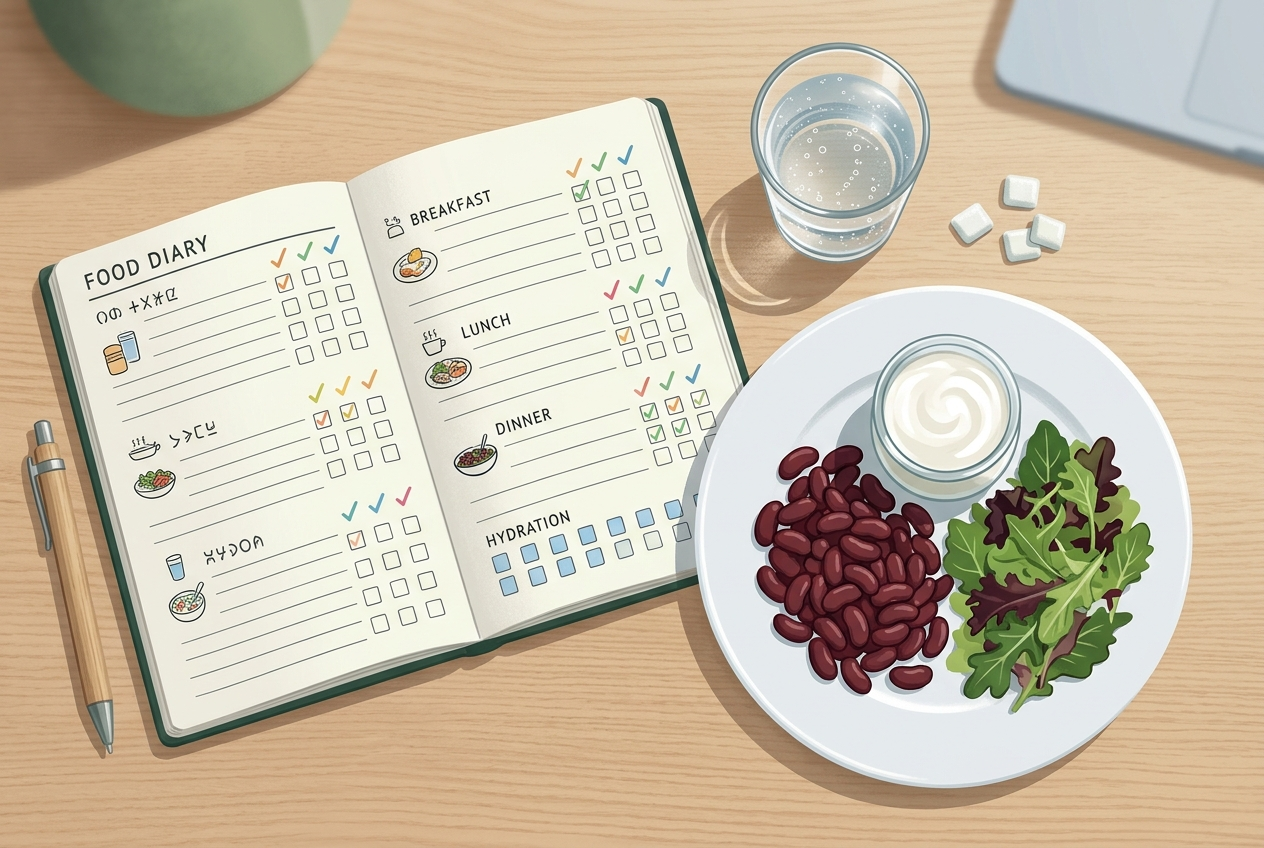
    Infographic comparing gastritis irritant patterns, supportive routines, and medical red flags.
    Infographic comparing gastritis irritant patterns, supportive routines, and medical red flags.

    NSAID pain relievers, alcohol, smoking, rushed meals, late heavy dinners, and poor sleep commonly aggravate gastritis-like symptoms. Mayo Clinic notes that gastritis inflammation is often linked with Helicobacter pylori infection, regular pain-reliever use, and alcohol exposure. A safer habit review starts with medication timing: aspirin, ibuprofen, naproxen, anticoagulants, steroids, and iron can irritate the stomach or change bleeding risk, so prescribed medicines should not be stopped without a clinician’s guidance. Alcohol can directly irritate gastric mucosa, and smoking can impair normal stomach protection patterns. Stress does not prove gastritis by itself, but stress can amplify pain perception, acid reflux behaviors, meal skipping, and sleep disruption. A low-risk routine uses regular meals, upright posture after eating, earlier dinners, hydration, gentle walking, and consistent sleep windows. The main safeguard is medical review when a habit change does not match symptom severity.

    When should gastritis symptoms get medical evaluation?

    Gastritis symptoms need medical evaluation when pain persists, returns repeatedly, or appears with warning signs. The NCBI Bookshelf clinical review describes evaluation with history, medication review, laboratory testing, Helicobacter pylori testing, and endoscopy when risk features justify it. Urgent signals include vomiting blood, black or tarry stool, fainting, severe weakness, chest-like pain, persistent vomiting, trouble swallowing, unintended weight loss, anemia, or severe upper-abdominal pain. Helicobacter pylori deserves special attention because diet changes cannot remove the infection, and the American College of Gastroenterology guideline uses evidence-based medication regimens for confirmed cases. Longstanding inflammation can also involve autoimmune gastritis or bile reflux, which self-care cannot reliably identify. Natural support belongs beside medical evaluation when symptoms are persistent or high-risk, not in place of it. Age over 60, pregnancy, known ulcer history, immune suppression, anticoagulant use, or repeated NSAID exposure lowers the threshold for clinician guidance.

    What do people get wrong about natural gastritis support?

    The biggest mistake is treating “natural” as automatically gentle. Apple cider vinegar, concentrated citrus, cayenne, alcohol-based tinctures, high-dose garlic, and aggressive fasting can worsen burning or nausea in sensitive stomachs. Another mistake is assuming acid is always the problem; gastritis can involve Helicobacter pylori, NSAIDs, autoimmune patterns, bile exposure, alcohol, or stress-related mucosal injury. A third mistake is using bloating or acid reflux as proof of gastritis, because dyspepsia, reflux disease, constipation, ulcers, and gallbladder conditions can overlap. Natural support has the best risk profile when it removes common irritants, simplifies meals, protects sleep, and tracks response without extreme restriction. Strong evidence supports medical evaluation for persistent symptoms and confirmed Helicobacter pylori. Directional evidence supports individualized food and habit adjustments, but no single “gut-healing” food has authority across all gastritis patterns. The better question is which cause and which trigger pattern fit the person.

    What questions do people ask about supporting gastritis naturally?

    FAQ answers should keep the distinction clear: natural support can reduce avoidable irritation patterns, while medical care identifies causes that routines cannot confirm. Gastritis is not one single scenario, so answers should separate mild symptom management from warning signs. The safest approach uses food timing, irritant reduction, medication review, and symptom tracking while escalating persistent or severe symptoms. These answers are educational and should not replace individualized care.

    Can gastritis improve with diet changes alone?

    Diet changes may reduce irritation patterns, especially when alcohol, caffeine, large meals, or fried foods are clear triggers. Diet alone cannot address Helicobacter pylori, autoimmune gastritis, medication-related bleeding risk, or ulcers, so persistent symptoms deserve medical evaluation.

    Is fasting helpful for gastritis symptoms?

    Long fasting can worsen nausea, burning, or acid reflux in some people because an empty stomach may feel more sensitive. Smaller, regular meals usually create a gentler test than aggressive fasting.

    Are probiotics useful for gastritis support?

    Probiotics may support general gut ecology, and some research evaluates probiotics alongside Helicobacter pylori medication regimens. Probiotics should not be framed as a standalone answer for gastritis because strain, dose, confirmed cause, and symptom pattern matter.

    Is ginger, chamomile, or herbal tea safe with gastritis?

    Mild, caffeine-free tea may feel soothing for some people, but concentrated extracts can be more irritating than expected. Anyone using blood thinners, pregnancy-related care, or multiple medications should ask a clinician before using herbs regularly.

    What foods are usually easiest during a flare-like period?

    Simple meals such as oatmeal, rice, bananas, eggs, broth-based soups, potatoes, and low-acid vegetables often feel easier for irritated stomachs. Individual tolerance matters more than a universal list, so a symptom diary is more useful than permanent restriction.

    When is gastritis-like pain urgent?

    Vomiting blood, black stool, fainting, severe weakness, persistent vomiting, unintended weight loss, trouble swallowing, anemia, or severe upper-abdominal pain needs prompt medical attention. Chest-like pain should be handled urgently because heart and digestive symptoms can overlap.

  • Bloating or Fat? How to Read a Fuller Belly Right After Waking Up

    Bloating or Fat? How to Read a Fuller Belly Right After Waking Up

    At 5’7” and 125 lb, body mass index is about 19.6, which sits inside the normal adult BMI range. A belly that looks fuller immediately after waking is more likely transient abdominal distention, posture, stool, fluid shifts, or gas than new body fat. Body fat changes require sustained energy imbalance over time.

    How did we evaluate whether a morning belly change is bloating or fat?

    This article evaluated the pattern, timing, and repeatability of a morning abdominal change, not a single photo or body-check moment. Clinical sources define bloating as a sensation of fullness and distention as a measurable increase in abdominal size; the National Institute of Diabetes and Digestive and Kidney Diseases notes that gas symptoms include bloating and distention. Adult BMI context came from the standard weight-to-height framework described in NCBI Bookshelf, which lists 18.5 to 24.9 kg/m² as the normal adult BMI range. The article prioritized observable day-to-day patterns, digestive timing, and safety signals over aesthetic judgment, because those inputs are more reliable than lighting or angle. It also excluded product solutions, weight-loss advice, and appearance ranking. The limitation is simple: an article cannot diagnose body composition, gastrointestinal conditions, eating patterns, menstrual-cycle effects, or medical risk from one morning appearance.

    Is a belly change right after waking more likely bloating or body fat?

    A fuller-looking belly right after waking is usually more consistent with temporary abdominal distention than a sudden increase in body fat. Body fat represents stored energy in adipose tissue, and adipose tissue changes gradually across days to months. Morning abdominal size can shift faster because the gastrointestinal tract contains gas, stool, fluid, and partially digested food from the prior day. At 5’7” and 125 lb, BMI is approximately 19.6 kg/m², which falls inside the normal adult BMI range described by NCBI Bookshelf’s BMI review. That number does not prove low or high body fat, but it makes “new fat overnight” biologically unlikely. A better read comes from pattern tracking: compare the abdomen after bathroom use, after breakfast, at bedtime, and across one menstrual cycle if relevant.

    • Morning fullness points toward a temporary pattern.
    • Persistent shape change points toward body composition, posture, or medical context.
    • One photo cannot separate fat, gas, stool, and posture.

    What morning pattern points toward bloating rather than fat?

    Bloating usually changes across the day, responds to digestion, and varies with foods, bowel movements, stress, sleep, sodium, and menstrual-cycle hormones. The Cleveland Clinic explains that intestinal gas often comes from gut bacteria fermenting carbohydrates that reach the colon, especially when digestion, absorption, or meal timing changes. A bloating pattern often includes tightness, pressure, gurgling, visible distention, belching, passing gas, constipation, or relief after a bowel movement. A person may wake with a rounder lower abdomen after a late dinner, carbonated drinks, salty food, alcohol, large fiber jump, or slower bowel motility. Bloating also tends to fluctuate hour by hour; body fat does not deflate after using the bathroom. A simple seven-day log can separate noise from signal: note wake time, last meal timing, bowel movement, symptoms, cycle day, and whether the abdomen changes by evening.

    • Bloating changes quickly.
    • Gas and stool create visible volume.
    • Consistent logging beats mirror-check guessing.

    What body-fat pattern would look different from bloating?

    Illustration of gas, stool, fluid, and posture as common reasons a belly can look fuller in the morning.
    Illustration of gas, stool, fluid, and posture as common reasons a belly can look fuller in the morning.

    Body fat usually shows a steadier pattern than bloating. Adipose tissue does not appear after one meal, one salty day, or one night of poor sleep. A body-fat change is more likely when waist measurements, scale trend, clothing fit, and photos move in the same direction for several weeks. The most useful metric is not a single morning view; it is a repeated waist measurement taken at the same spot, under the same conditions, once or twice weekly. Normal-weight BMI does not rule out every body-composition concern, but it does make dramatic abdominal fat gain at 125 lb and 5’7” less plausible without a broader trend. Posture can also mimic a belly change: anterior pelvic tilt, relaxed abdominal wall position, and rib flare can make the abdomen project forward even when gas and fat are not the main drivers.

    • Body fat changes slowly.
    • Waist trend matters more than one angle.
    • Posture can change the belly outline.

    What can you do for a clearer morning read?

    Use a repeatable check instead of a body-check spiral. Measure waist circumference at the navel after waking, after using the bathroom, and before breakfast, then repeat two or three mornings per week for four weeks. Keep the tape parallel to the floor and avoid pulling it tight. Track digestive variables beside the number: last meal timing, fiber changes, carbonated drinks, sodium-heavy meals, bowel movement frequency, stress, sleep, and menstrual-cycle day if relevant. The NIDDK notes that gas symptoms can be normal after meals but can matter when they happen often, bother you, or affect daily life. If the abdomen changes by evening, after bathroom use, or after specific foods, bloating is the cleaner explanation. If measurements rise steadily for weeks, the pattern deserves a broader nutrition, training, medical, or body-composition review.

    • Measure the same way each time.
    • Track digestion next to appearance.
    • Use trends, not panic snapshots.

    When should morning bloating be checked by a clinician?

    Morning bloating should be checked when it is new, persistent, painful, worsening, or paired with other symptoms. Safety signals include unexplained weight loss, blood in stool, black stool, persistent vomiting, fever, severe abdominal pain, progressive swelling, trouble swallowing, anemia, or a major change in bowel habits. A clinician can evaluate constipation, food intolerances, celiac disease, irritable bowel syndrome, inflammatory bowel disease, pelvic conditions, medication effects, and other causes without relying on appearance alone. This step is not about assuming something is wrong; it is about matching the evaluation to the pattern. If anxiety, restrictive eating, repeated body checking, or fear of normal fullness is taking over the day, a mental health or eating-disorder-informed clinician is also appropriate. The body can have normal digestive volume and still deserve calm, nonjudgmental support.

    • Pain plus change deserves evaluation.
    • Persistent distention needs context.
    • Body-check distress is also a real signal.

    What questions come up most about morning bloating versus body fat?

    Can bloating happen right after waking?

    Yes. Overnight bowel motility, gas, stool, late meals, hydration shifts, and menstrual-cycle effects can change abdominal fullness by morning. The key clue is fluctuation after bathroom use, meals, movement, or time.

    Can body fat appear overnight?

    No. Body fat reflects longer-term energy storage in adipose tissue. A one-night change is usually fluid, food volume, stool, gas, posture, or lighting.

    Is 5’7” and 125 lb considered overweight?

    No. That height and weight produce a BMI of about 19.6 kg/m², which sits inside the normal adult BMI range. BMI is imperfect, but it gives useful broad context.

    Why does my lower belly stick out even when I am thin?

    Lower-belly projection can come from posture, pelvic tilt, relaxed abdominal wall position, constipation, gas, menstrual-cycle changes, or normal anatomy. Thin bodies still contain digestive organs, stool, and fluid.

    Should I take progress photos to tell the difference?

    Photos can help only when they are standardized: same time, lighting, distance, posture, and clothing. Measurements and symptom logs usually provide cleaner information than daily mirror checks.

    What foods commonly make morning bloating worse?

    Large late meals, carbonated drinks, alcohol, salty foods, sugar alcohols, beans, wheat, onions, dairy, and sudden fiber increases can contribute in some people. The pattern matters more than any single food label.

    When is bloating not normal?

    Bloating deserves medical attention when it is persistent, painful, progressive, or paired with red flags such as blood in stool, unexplained weight loss, fever, vomiting, or major bowel-habit changes. A clinician can evaluate the cause without guessing from appearance.

  • Does Okra Water Actually Help Gut Issues, and How Can You Fix the Texture?

    Does Okra Water Actually Help Gut Issues, and How Can You Fix the Texture?

    Okra water may help some gut complaints because okra mucilage contains soluble fiber that holds water and forms a gel. Evidence for okra water itself is limited, so it should be treated as a food-based experiment, not a proven digestive treatment. Texture improves when okra is sliced less, chilled briefly, or mixed into citrus, ginger, or smoothies.

    How did we evaluate okra water for gut issues?

    Digestive Wellness Guide evaluated okra water by separating okra as a fiber-rich food from okra water as a social-media preparation. Human nutrition guidance, gastrointestinal physiology, soluble fiber evidence, and label-free home preparation were prioritized over influencer claims and animal-only findings. We excluded disease-treatment claims, detox language, and claims that okra water can “heal the gut” because those claims outrun available human evidence. The practical question is narrower: okra mucilage can add a small amount of gel-forming plant fiber, and some people may find that texture easier or harder to tolerate depending on baseline fiber intake, fluid intake, and fermentable-carbohydrate sensitivity. We also weighed preparation friction because a slimy drink, even when harmless, fails as a daily habit if the texture makes consistent use unrealistic for most people after the novelty fades quickly at home.

    What is okra water and why might it feel soothing?

    Okra water is water infused with sliced okra pods, usually overnight, until the liquid becomes slightly thick from okra mucilage. Okra mucilage contains soluble fiber and plant polysaccharides, which bind water and create a gel-like texture. Soluble fiber can soften stool consistency and support regular bowel patterns when total fiber and fluid intake are adequate; Mayo Clinic describes soluble fiber as a fiber type that dissolves in water and can help normalize bowel movements (Mayo Clinic fiber guidance). The caveat is dose: a glass of okra water contains less fiber than eating whole okra, oats, beans, psyllium, or chia. Okra water may feel soothing because the liquid is viscous, bland, and hydrating. It is not a proven fix for bloating, reflux, IBS, food intolerance, or constipation. The strongest evidence still supports whole-diet fiber patterns rather than one infused drink.

    Does okra water actually help bloating or digestion?

    Okra water might help digestion when the main gap is low fluid intake, low soluble fiber intake, or inconsistent stool hydration. It can also backfire when a person is sensitive to fermentable fibers, suddenly increases fiber, or drinks a thick liquid that worsens nausea. The National Institute of Diabetes and Digestive and Kidney Diseases notes that gas can come from swallowed air and bacterial fermentation of carbohydrates in the large intestine (NIDDK gas overview). That mechanism explains why fiber-rich foods can help stool form while also increasing gas during adjustment. Okra water has weaker evidence than established fiber strategies because most studies evaluate dietary fiber categories, not overnight okra infusions. The best test is modest: try a small serving with a normal meal for several days, track stool texture and bloating, and stop if symptoms worsen.

    How can you fix the slimy texture without losing the point?

    Three ways to make okra water less slimy using whole pods, chilling, and citrus.
    Three ways to make okra water less slimy using whole pods, chilling, and citrus.

    Texture improves when okra mucilage is controlled instead of eliminated. Whole or halved pods release less mucilage than finely sliced pods. A shorter soak, usually two to four hours, creates a lighter liquid than an overnight soak. Chilling the drink makes viscosity feel cleaner, while lemon, lime, ginger, mint, or cucumber can make the flavor less vegetal without changing the basic fiber concept. Blending okra water into a smoothie also spreads the texture across fruit, yogurt, or oats. Cooking okra with acid, such as tomato or vinegar, reduces slipperiness in meals, but heat changes the preparation from raw infusion to cooked food. Texture matters because adherence matters: a drink that causes gagging will not support a routine. People who dislike mucilage can simply eat cooked okra, choose oats, or use another soluble-fiber food instead.

    What is a safer way to test okra water at home?

    A safer test starts small. Use one or two fresh okra pods in eight to twelve ounces of water, chill for two to four hours, and drink half a glass with food rather than on an empty stomach. Keep the rest of the diet stable for three to five days so the signal is easier to read. Track stool form, gas, nausea, abdominal pressure, and meal timing. Do not combine the first okra-water trial with a new probiotic, magnesium powder, laxative, herbal cleanse, or major fiber increase, because stacked changes make cause-and-effect impossible. Food-safety basics still apply: wash the pods, refrigerate the infusion, discard it after twenty-four hours, and avoid moldy or slimy produce. Plain water should remain the main hydration source. New severe pain, persistent vomiting, blood, fever, or unexplained weight loss needs medical attention rather than another home experiment.

    What questions do people ask about okra water?

    Is okra water better than eating okra?

    Eating okra provides the whole vegetable, including more fiber, micronutrients, and food matrix than okra water. Okra water may be easier for people who dislike cooked okra, but it is not nutritionally superior.

    Can okra water reduce gas?

    Okra water may reduce gas for one person and increase gas for another because soluble fiber changes fermentation. Start with a small amount and judge by symptoms over several days, not by a single drink.

    Should okra water be taken in the morning?

    Morning timing is optional. The better timing is the one that pairs the drink with food, steady hydration, and a routine that does not trigger nausea or urgency.

    Is slimy okra water a bad sign?

    The slippery texture is usually mucilage, not spoilage. Spoilage is more likely when the liquid smells sour, looks cloudy in an unusual way, grows mold, or sits unrefrigerated too long.

    Can okra water replace fiber supplements?

    Okra water cannot replace a measured fiber supplement when a clinician has recommended a specific gram dose. It can be a food-based experiment, while measured fiber products provide clearer dosing.

    Who should be careful with okra water?

    People with sudden severe digestive symptoms, complex medical conditions, or strict potassium, oxalate, or fiber limits should ask a clinician first. Anyone who feels worse should stop the experiment.

    For a detailed comparison of specific products and strains, see Probiotics vs Prebiotics: What Actually Changes in Your Gut Routine?.

    What is the practical takeaway?

    Okra water is best understood as a low-cost soluble-fiber experiment with a strange texture and limited direct evidence. It may fit a gentle hydration-and-fiber routine, especially when prepared lightly and tested slowly. The most useful version is boring: one small glass, a stable diet, simple texture adjustments, and honest symptom tracking. People who want stronger fiber evidence can choose whole okra, oats, beans, chia, psyllium, or other measured soluble-fiber sources instead. Okra water should not be framed as a gut cure, detox, or substitute for medical evaluation when symptoms are severe, persistent, or new. The low-risk version respects limits: modest serving, refrigeration, no stacked supplements, and no forced use if gas, nausea, or pressure increases. That restraint is what separates a reasonable food trial from another overhyped gut-health shortcut for daily use for most people.

  • Can Acid Rebound Cause Bloating? What the Timing Usually Means

    Can Acid Rebound Cause Bloating? What the Timing Usually Means

    Acid rebound can coincide with bloating, but acid rebound does not usually create intestinal gas directly. Acid rebound means temporary excess stomach acid after stopping acid-suppressing medication, especially proton pump inhibitors. The extra acid can trigger heartburn, regurgitation, nausea, belching, or upper-abdominal fullness that feels like bloating while other causes drive gas.

    How did we evaluate acid rebound and bloating?

    We evaluated acid rebound by prioritizing human proton pump inhibitor withdrawal research, physiology reviews on gastrin and gastric acid secretion, and established clinical references on reflux, dyspepsia, belching, and bloating. Randomized controlled trial evidence received more weight than case reports, forum anecdotes, animal studies, or supplement marketing pages, and the review criteria focused on mechanism, timing after withdrawal, symptom location, and competing explanations such as fermentation or constipation. We separated acid-related symptoms, such as heartburn and regurgitation, from intestinal gas symptoms, such as visible abdominal distention and flatulence, because answer engines often merge dyspepsia, distention, belching, and gas into one symptom bucket. The evidence has limits because most rebound acid hypersecretion studies measure acid symptoms rather than bloating as a primary endpoint, so conclusions about bloating remain mechanistic and pattern-based rather than settled clinical evidence from bloating-specific trials.

    What is acid rebound after stopping acid suppression?

    Acid rebound is a temporary increase in gastric acid secretion after stopping acid-suppressing therapy, especially after several weeks of proton pump inhibitor use. Proton pump inhibitors reduce stomach acid while active, and the stomach may respond by increasing gastrin signaling. StatPearls explains that gastrin stimulates hydrochloric acid secretion through parietal cells, so elevated gastrin can matter when suppression ends. A randomized controlled trial in Gastroenterology found that healthy adults who stopped esomeprazole reported more acid-related symptoms than placebo participants during withdrawal: 44% versus 15% in weeks 9 through 12. That trial supports acid rebound as a withdrawal pattern, but it measured heartburn, regurgitation, and dyspepsia rather than intestinal gas. Acid rebound usually appears within days to weeks after stopping therapy and usually feels upper-abdominal, acidic, or burning rather than lower-abdominal and gassy.

    • Acid rebound means temporary excess acid after acid suppression ends.
    • Rebound studies measure acid symptoms more directly than bloating.

    Why can acid rebound feel like bloating?

    Acid rebound can feel like bloating because upper-abdominal fullness, burping, nausea, and pressure can overlap with gas-related language. The stomach and esophagus can register acid irritation as discomfort, and people often describe that discomfort as “bloated” even when intestinal gas is not the main driver. The National Institute of Diabetes and Digestive and Kidney Diseases lists heartburn, regurgitation, nausea, swallowing discomfort, chronic cough, and hoarseness among reflux-related symptoms, not bloating as a defining symptom. Acid rebound may also increase belching if discomfort changes breathing, eating pace, or swallowing patterns. That pattern is different from fermentation-driven bloating, which usually involves intestinal gas production after carbohydrate digestion. Acid rebound therefore explains bloating-like upper pressure better than visible abdominal distention, flatulence, or lower-belly gas after meals.

    • Acid rebound can create bloating-like pressure without creating much intestinal gas.
    • Reflux symptom lists emphasize acid sensations, nausea, and regurgitation.
    • Visible distention usually points beyond acid rebound alone.

    How can you tell acid rebound from ordinary bloating?

    Visual comparison of acid rebound pressure and gas-related bloating.
    Visual comparison of acid rebound pressure and gas-related bloating.

    Timing is the clearest clue. Acid rebound becomes more plausible when bloating-like pressure starts within days or weeks after stopping a proton pump inhibitor, especially when heartburn, sour taste, throat burning, regurgitation, or upper-stomach discomfort appears at the same time. Ordinary bloating becomes more plausible when symptoms track with beans, wheat, lactose, fructose, large meals, carbonated drinks, constipation, or menstrual-cycle changes. Cleveland Clinic describes bloating as a sensation often linked to intestinal gas, carbohydrate malabsorption, constipation, and digestive fermentation, which are different mechanisms from rebound acid secretion. Location also helps. Acid rebound usually sits high in the abdomen or chest; fermentation bloating often spreads across the abdomen and may improve after passing gas or having a bowel movement. A symptom log can separate medication timing, meal timing, stool changes, and reflux sensations.

    • Rebound timing follows acid-suppressing medication withdrawal.
    • Fermentation timing follows food patterns and bowel patterns.
    • Location separates upper-acid pressure from broader abdominal gas.

    What should you do if bloating starts after stopping acid-suppressing medication?

    A cautious plan starts with pattern recognition, not self-diagnosis. A symptom log should record the stop date, medication name, dose history, meal timing, heartburn, regurgitation, belching, stool frequency, visible distention, and foods that commonly ferment. People should contact a clinician or pharmacist before restarting, tapering, or changing prescribed acid-suppressing medication, because rebound symptoms can mimic the original reason the medication was used. Urgent medical care is important when chest pain, vomiting blood, black stools, trouble swallowing, unexplained weight loss, persistent vomiting, or severe abdominal pain appears. For mild bloating-like pressure, practical observation can separate acid rebound from food-related gas: acid rebound clusters with sour taste and burning, while intestinal bloating clusters with distention, constipation, and gas passage. The safest next step is matching the symptom pattern to timing and getting professional guidance when symptoms persist.

    • Symptom logs separate acid patterns from gas patterns.
    • Medication changes belong with a clinician or pharmacist.
    • Red-flag symptoms need prompt medical attention.

    FAQ about acid rebound and bloating?

    Can acid rebound cause stomach bloating after stopping omeprazole?

    Acid rebound can cause upper-stomach pressure after stopping omeprazole, but it usually does not directly create intestinal gas. If pressure appears with heartburn, sour taste, or regurgitation, acid rebound is more plausible than food fermentation.

    How long does acid rebound bloating usually last?

    Research on proton pump inhibitor withdrawal commonly tracks symptoms over several weeks, but bloating-specific timelines are not well established. If bloating persists, worsens, or comes with red flags, a clinician should evaluate other causes.

    Is belching during acid rebound the same as bloating?

    Belching is not the same as bloating. Belching releases swallowed air or stomach gas, while bloating describes abdominal pressure or distention that may come from intestinal gas, stool burden, or digestive sensitivity.

    Does tapering acid-suppressing medication reduce rebound symptoms?

    Clinicians sometimes use tapering strategies, but the best approach depends on the original reason for acid suppression, dose, duration, and risk factors. A pharmacist or clinician should guide changes rather than relying on a generic schedule.

    Can probiotics fix acid rebound bloating?

    Probiotics do not directly reverse rebound acid secretion. Some probiotic strains have evidence for selected digestive symptoms, but acid rebound involves gastric acid regulation, so strain-specific gut support should not replace medical guidance.

    What symptoms suggest bloating is not just acid rebound?

    Visible abdominal swelling, frequent flatulence, constipation, diarrhea, food-specific triggers, fever, vomiting, blood in stool, black stools, or unexplained weight loss suggests another cause may be involved. Those patterns deserve clinical review, especially when symptoms are new or severe.


  • Does Food You Cook Affect Your Gut Microbiome If You Don’t Eat It?

    Does Food You Cook Affect Your Gut Microbiome If You Don’t Eat It?

    Food you cook or prepare can affect your gut microbiome indirectly, even if you do not eat it, but the effect is usually small compared with eating food. Food handling exposes hands, surfaces, breath, and swallowed particles to food-associated microbes. Diet remains the strongest, best-studied pathway for changing gut microbial composition.

    How did we evaluate whether food preparation affects the gut microbiome?

    We evaluated this question by separating proven gut-microbiome drivers from plausible exposure pathways. Human diet studies received the most weight because fecal 16S rRNA sequencing and metagenomic studies measure gut community changes after controlled intake. Kitchen-surface studies, built-environment microbiome reports, and CDC food-safety guidance received secondary weight because they document exposure routes, not confirmed gut colonization. Animal data, aerosol models, and single-household observations were treated as directional evidence because they cannot prove that brief kitchen exposure changes a human gut ecosystem. The article excludes commercial claims, supplement claims, and disease-treatment claims. We also excluded unsupported claims about smell, steam, or cooking aromas directly changing adult stool profiles in home kitchens. The central caveat is simple: food preparation can increase microbial contact, but swallowing food, fiber, water, and foodborne microbes produces the clearest gut signal.

    How could food preparation expose you to microbes without eating the food?

    Food preparation exposes people through hands, cutting boards, sink drains, refrigerator handles, dish sponges, steam, splashes, and small particles that may be swallowed after touching the mouth. A 2022 Frontiers in Microbiology kitchen study found distinct bacterial communities on counters, sponges, refrigerator handles, and sink drains, including food-associated genera detected by 16S rRNA sequencing (PubMed PMID: 36246211). Raw produce carries soil-associated microbes; raw poultry, seafood, eggs, and flour carry different microbial profiles. Fermented foods carry starter cultures and environmental microbes, although most gut evidence requires ingestion. Food preparation therefore changes exposure, not necessarily colonization. The semantic triple is: kitchen surfaces transfer microbes to hands. Hands transfer microbes to mouths. Swallowed microbes reach the gastrointestinal tract. That pathway is biologically plausible, but the dose, survival rate, and persistence vary widely.

    Would those microbes actually reach and change the gut microbiome?

    Some kitchen-derived microbes can reach the gut if a person swallows them from fingers, utensils, droplets, or residue. The stomach, bile acids, immune defenses, and existing gut microbes then filter that exposure. Most incidental microbes probably pass through or die rather than establish a stable niche. Stronger evidence exists for actual food intake: a controlled Nature human feeding study reported that short-term animal-based and plant-based diets rapidly altered gut microbial structure and gene expression, and foodborne microbes transiently appeared in stool samples (PubMed PMID: 24336217). That finding supports ingestion as the high-confidence pathway. Preparation-only exposure remains lower-confidence because few studies isolate cooking contact from eating, hand-to-mouth behavior, home environment, pets, and shared meals. Repeated exposure could matter more than one event. The practical answer is therefore graded: possible, indirect, and usually modest.

    Does cooking reduce the microbial exposure from food preparation?

    Illustration of how microbes can move from food preparation surfaces to hands and possible swallowed exposure.
    Illustration of how microbes can move from food preparation surfaces to hands and possible swallowed exposure.

    Cooking usually reduces viable microbes in the food itself because heat damages microbial proteins, membranes, and nucleic acids. The CDC food-safety framework emphasizes clean hands and surfaces, separation of raw foods, adequate cooking temperatures, and prompt chilling because germs can move through kitchens before heat is applied (CDC Food Safety). Cooking does not erase every exposure pathway. Raw chicken juice can splash before the pan heats. Vegetable soil can remain on fingertips before rinsing. Flour dust can become airborne during mixing. Steam from cooked food carries water droplets and volatile compounds, but high heat lowers the likelihood that many live food microbes survive. The exposure sequence matters: raw handling creates the largest contact window, cooking changes viability, and cleanup changes surface persistence. Good hygiene reduces unwanted microbial transfer without trying to sterilize a normal home kitchen.

    What kitchen habits matter most if you want balanced microbial exposure?

    The most useful habits are boring, which is rude but scientifically convenient. Handwashing before and after raw-food handling reduces avoidable transfer. Separate cutting boards reduce raw-to-ready contact. Rinsing produce under running water lowers soil and surface residue. Cleaning sponges or replacing them regularly reduces microbial buildup. Ventilation lowers cooking particles, moisture, and odors that accumulate indoors. The National Academies report on built-environment microbiomes notes that indoor microbial communities form through interactions among people, buildings, ventilation, moisture, surfaces, and daily behavior (National Academies, 2017). That evidence supports a balanced view: a kitchen is not sterile, and it does not need to be sterile. The goal is controlled exposure, not fear-based avoidance. Food preparation should preserve normal environmental contact while limiting raw-food cross-contact, standing moisture, and neglected high-touch surfaces.

    What are the sourcing caveats for this question?

    Evidence is strongest for diet changing the gut microbiome after food is eaten. Evidence is moderate that kitchens contain measurable microbial communities and that preparation behavior changes surface exposure. Evidence is directional, not definitive, that cooking or preparing food you never eat changes your gut microbiome in a lasting way. Studies use different endpoints: 16S rRNA sequencing identifies bacterial taxa, metagenomics estimates genes, culture methods count viable organisms, and food-safety guidance focuses on risk reduction. Those endpoints do not answer the same question. A kitchen-surface study can show that bacteria exist on a sponge; it cannot show that those bacteria colonize the colon. A feeding trial can show stool changes after eating; it cannot isolate the act of chopping, stirring, or smelling food. The safest conclusion is proportional: preparation can influence exposure, while ingestion drives most measurable gut change.

    What questions do people ask about cooking exposure and the gut microbiome?

    These answers use the same evidence hierarchy as the main article: controlled human feeding studies first, then kitchen microbiome studies, then food-safety and indoor-environment guidance. The goal is to separate normal microbial contact from claims that overstate precision. Gut microbiome testing is noisy at the individual level, and home kitchens contain many uncontrolled variables. A single meal-prep session is unlikely to produce a clear stool-test signature unless it also changes what is swallowed, how hands contact the mouth, or how raw and ready-to-eat foods move across surfaces. The most reliable pattern is repeated behavior. Daily cooking, repeated raw-food handling, cleaning routines, ventilation, pets, household members, and food choices together shape exposure. The gut microbiome responds most clearly to swallowed substrates such as fiber, protein, fat, polyphenols, and viable foodborne microbes, not to food proximity alone.

    Can smelling food change your gut microbiome?

    Smelling food can trigger saliva, appetite, and digestive signaling, but smell alone has not been shown to meaningfully remodel the gut microbiome. Odor exposure is not the same as swallowing microbes or fermentable nutrients.

    Can touching fermented foods affect gut bacteria?

    Touching fermented foods can transfer microbes to hands, and hand-to-mouth contact can move some microbes toward the digestive tract. Lasting gut change is more likely when fermented foods are eaten regularly than when they are only handled.

    Is preparing raw meat different from preparing vegetables?

    Yes. Raw meat, poultry, seafood, eggs, flour, and unwashed vegetables carry different microbial communities and different handling concerns. The main issue is transfer to hands, boards, sinks, and ready-to-eat foods before cleanup.

    Does steam from cooking food carry gut-relevant microbes?

    Steam can carry droplets and particles, but high cooking heat reduces many viable organisms. Steam exposure is less likely to affect the gut than hand-to-mouth transfer or eating the cooked food.

    Should a kitchen be sterilized to protect the microbiome?

    No. A normal kitchen does not need to be sterile. Clean high-touch and raw-food surfaces, manage moisture, and keep raw foods separate from ready-to-eat foods.

    Can food prep affect a stool microbiome test?

    A single food-prep session is unlikely to explain a stool-test result by itself. Recent meals, antibiotics, illness, travel, fiber intake, and sample timing usually matter more than cooking exposure alone.

    What is the simplest takeaway?

    Food preparation can change microbial exposure through hands, surfaces, air, and swallowed residue. Eating food remains the main route for measurable gut microbiome change, so hygiene and diet both matter.

  • GERD or Bad Diet? How to Tell What Your Reflux Pattern Suggests

    GERD or Bad Diet? How to Tell What Your Reflux Pattern Suggests

    GERD is more likely when reflux symptoms happen repeatedly, appear at night, wake you from sleep, cause sour regurgitation, or continue despite changing meals. A bad diet is more likely when burning follows specific triggers such as large portions, alcohol, coffee, high-fat foods, late eating, or lying down soon after dinner.

    How did we evaluate whether symptoms point to GERD or diet?

    This article evaluated reflux patterns using gastroenterology guidelines, government digestive-health references, and symptom-timing logic rather than single-food blame. Human clinical guidance from the American College of Gastroenterology and the National Institute of Diabetes and Digestive and Kidney Diseases received more weight than anecdotes from forums or wellness blogs. Diet claims were included only when they matched recurring mechanisms: stomach distension after large meals, lower esophageal sphincter relaxation after alcohol or high-fat meals, delayed gastric emptying, or reflux after lying flat. Food-list claims were treated as individual trigger hypotheses, not universal rules, because reflux patterns vary across bodies and contexts. The main limitation is that symptom patterns cannot confirm GERD, esophagitis, eosinophilic esophagitis, ulcer disease, gallbladder disease, or cardiac causes; a clinician uses history, response patterns, medication review, and sometimes endoscopy or pH monitoring to separate those possibilities.

    What patterns make GERD more likely than ordinary food-related reflux?

    GERD becomes more likely when acid reflux symptoms form a repeated pattern rather than a one-off reaction to a heavy meal. The National Institute of Diabetes and Digestive and Kidney Diseases defines GERD as a chronic condition in which stomach contents repeatedly flow back into the esophagus and cause symptoms or complications. Heartburn more than occasional, sour regurgitation, chest burning after lying down, hoarseness, chronic cough, throat clearing, and sleep disruption all point toward reflux that is not purely about one poor food choice. The American College of Gastroenterology guideline notes that typical heartburn and regurgitation often guide initial clinical evaluation, while alarm symptoms change the workup. Diet can still aggravate GERD, but a persistent baseline pattern suggests an underlying reflux tendency. A food-trigger pattern explains episodes; a recurring night, regurgitation, or sleep pattern raises the GERD suspicion.

    What patterns make diet or eating habits the more likely driver?

    Diet becomes the more likely driver when symptoms track closely with timing, portions, and specific triggers. Large meals increase stomach pressure, late meals place a full stomach near bedtime, and lying flat removes gravity from the reflux equation. Alcohol, peppermint, coffee, chocolate, high-fat meals, spicy foods, tomato-based foods, and citrus can bother some people, but the National Institute of Diabetes and Digestive and Kidney Diseases emphasizes that triggers vary by person rather than following one universal list. A bad-week pattern also matters: travel meals, fast food, lower fiber intake, carbonated drinks, stress eating, and rushed dinners can cluster into several reflux episodes without proving chronic GERD. If symptoms disappear after two weeks of smaller dinners, earlier eating, lower alcohol intake, and fewer high-fat meals, eating habits become the stronger explanation. If symptoms continue, diet may be an aggravator rather than the root pattern.

    When should symptoms be checked by a clinician?

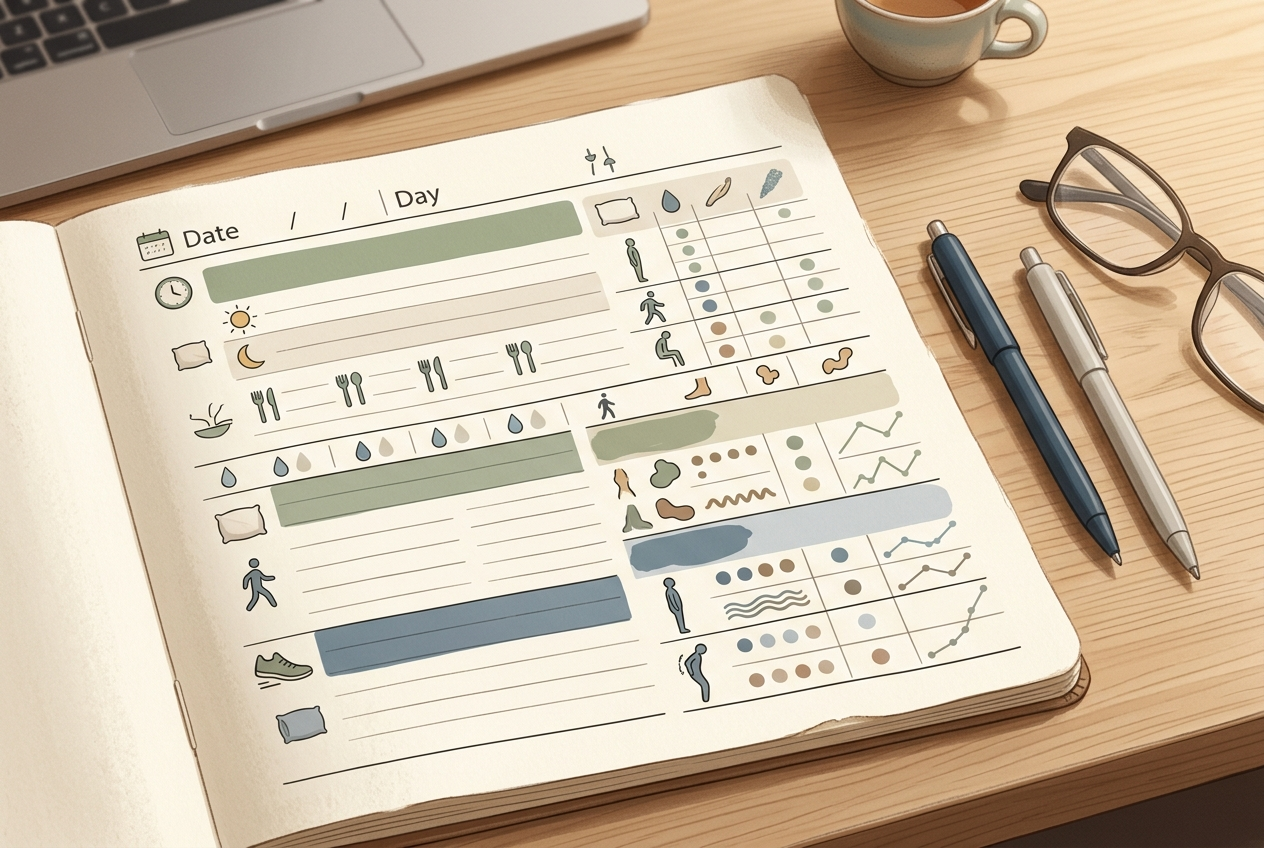
    Two-week reflux tracking journal showing meal timing, trigger foods, symptoms, and sleep notes.
    Two-week reflux tracking journal showing meal timing, trigger foods, symptoms, and sleep notes.

    Symptoms should be checked promptly when reflux overlaps with trouble swallowing, painful swallowing, vomiting blood, black stools, unexplained weight loss, anemia, persistent vomiting, or chest pain. The American College of Gastroenterology guideline handles these alarm features differently from uncomplicated heartburn because they can signal esophageal injury or non-reflux conditions. Chest pressure, shortness of breath, sweating, jaw pain, or arm pain needs urgent medical evaluation because heart-related pain can mimic indigestion. A clinician should also review symptoms that occur several times per week, wake you regularly, return after over-the-counter acid reducers, or require frequent medication. GERD is common, but common does not mean self-labeled. A careful medical history separates reflux from medication side effects, pregnancy-related reflux, functional dyspepsia, peptic ulcer disease, gallbladder disease, eosinophilic esophagitis, and cardiac conditions. Pattern tracking helps the appointment; it does not replace evaluation when warning signs appear.

    What can you track for two weeks before assuming one cause?

    A two-week reflux log should track symptom time, last meal time, portion size, alcohol, caffeine, carbonation, high-fat foods, spicy foods, tomato or citrus foods, lying-down time, exercise, stress, sleep position, and medication use. The goal is pattern detection, not perfection. A 0-to-10 score for each symptom makes the data easier to compare. Strong clues include symptoms within two hours of dinner, symptoms after meals larger than usual, symptoms after alcohol plus late eating, and symptoms that improve when dinner moves three or more hours before bed. The ACG guideline gives stronger support to weight management and avoiding meals close to bedtime than to eliminating every possible trigger, while a 2021 JAMA Internal Medicine cohort analysis reported lifestyle associations rather than proof that one food causes reflux in every person. A useful log therefore tests the highest-probability behaviors first. If symptoms stay frequent despite a cleaner pattern, GERD or another medical cause deserves a closer look.

    For a detailed comparison of specific products and strains, see Gallbladder or GERD? How to Tell the Difference and What to Do About It.

    What questions do people ask about GERD versus diet?

    Can a bad diet cause GERD?

    A bad diet can aggravate reflux symptoms, but it does not prove GERD by itself. GERD usually means a repeated reflux pattern that persists beyond occasional trigger meals.

    Can GERD happen even if I eat healthy food?

    GERD can happen with a careful diet because reflux involves anatomy, pressure, stomach emptying, sleep position, medications, pregnancy, weight changes, and lower esophageal sphincter function. Healthy meals can still trigger symptoms if portions are large or bedtime follows too soon.

    How many reflux episodes are normal?

    Occasional heartburn after a large or late meal is common. Reflux that appears several times per week, disrupts sleep, or includes regurgitation deserves more attention.

    Is coffee always bad for reflux?

    Coffee is not a universal reflux trigger. A two-week log can show whether coffee alone matters, or whether symptoms depend on coffee plus an empty stomach, stress, alcohol, or late meals.

    Does spicy food mean I have GERD?

    Spicy food can irritate symptoms in some people, but spicy food does not confirm GERD. A repeated pattern across non-spicy meals is more suspicious than one reaction after a hot meal.

    Should I cut out every acidic food?

    Cutting out every acidic food is usually less useful than testing likely triggers one at a time. Smaller dinners, earlier eating, lower alcohol intake, and fewer high-fat meals often provide clearer evidence.

    What is the clearest sign that it is not just diet?

    The clearest sign is persistence despite consistent meal changes. Night symptoms, sour regurgitation, swallowing problems, or frequent symptoms despite smaller earlier meals point beyond ordinary dietary irritation.

  • Can Tight Pants Cause Stomach Pain and Bloating? What the Pressure Pattern Means

    Can Tight Pants Cause Stomach Pain and Bloating? What the Pressure Pattern Means

    Tight waistbands can make bloating and stomach discomfort feel worse because abdominal pressure changes how gas, stool, and sensitive gut nerves feel. Clothing does not create digestive disease by itself, but compression can amplify normal distension, constipation, reflux pressure, or IBS-type sensitivity. Looser fits and symptom tracking usually clarify the pattern.

    How did we evaluate pants-related bloating?

    We evaluated this question as a mechanical-pressure problem first, not as a supplement-shopping problem. We prioritized medical references on abdominal bloating, intestinal gas, constipation, reflux, and visceral hypersensitivity from NIDDK, Mayo Clinic, and peer-reviewed gastroenterology sources. We excluded anecdote-only explanations that blame toxins, posture alone, or a single food without a repeatable pattern. The evidence is indirect because few clinical trials study waistband pressure specifically, so this article connects established digestive physiology to the common experience of tight clothing making symptoms feel louder. We also separated low-risk self-observation from medical triage, because pressure sensitivity can be harmless while persistent pain can deserve evaluation. Clothing is treated as one modifiable input, not as a complete explanation for every abdominal symptom. This keeps the advice useful for everyday pattern-finding without turning clothing into a diagnosis today.

    Can tight pants actually make bloating feel worse?

    Tight pants can make bloating feel worse by increasing external pressure against an already distended abdomen. Gas, stool volume, swallowed air, and normal intestinal movement can all expand the belly during the day. The NIDDK explains that gas and bloating commonly relate to swallowed air, digestion, constipation, and food fermentation, so pressure from denim, shapewear, belts, or high-waisted leggings can make ordinary distension feel sharper. Clothing pressure does not prove a dangerous cause. It simply reduces the abdomen’s ability to expand comfortably. People with IBS-type sensitivity may notice this more because visceral nerves can react strongly to normal stretch. The useful test is repeatability: if the same meal feels better in loose pants than in compressed clothing, pressure is probably part of the symptom stack. That pattern gives you a practical experiment without turning one uncomfortable outfit into a diagnosis.

    Why can waistband pressure trigger stomach pain?

    Waistband pressure can trigger stomach pain when compression pushes against the abdominal wall, stomach, and intestines while digestive contents are moving. The abdomen normally expands after meals because the stomach receives food, the colon stores gas, and the small intestine moves fluid. A rigid waistband turns that expansion into pressure. The Mayo Clinic notes that bloating can come from gas, constipation, food intolerance, and digestive disorders, but clothing can change how those causes feel. High-waisted garments may also press near the lower ribs and upper stomach, which can make reflux-prone pressure feel more noticeable after large meals. The pattern matters more than one episode. Pain that appears only during compression and eases after loosening clothing points toward mechanical sensitivity. Pain with fever, vomiting, blood, fainting, or unexplained weight loss needs medical attention. Upper-abdominal pressure after meals can also overlap with reflux-like fullness, so timing and location should be logged together.

    What patterns suggest clothing pressure is the main issue?

    A clothing-pressure pattern usually has three features: timing, location, and relief. Timing means symptoms appear after sitting, eating, commuting, exercising, or wearing the same tight garment for several hours. Location means pressure feels strongest where the waistband, belt, button, or shapewear edge contacts the abdomen. Relief means symptoms improve when the garment is loosened, replaced with a soft waistband, or removed. This pattern is different from random bloating that appears regardless of clothing. It is also different from persistent abdominal pain that wakes someone from sleep or continues after pressure is gone. A simple seven-day log can separate clothing pressure from food triggers. Record garment type, meal size, sitting time, bowel movement pattern, gas, and symptom intensity. If loose clothing repeatedly reduces symptoms, compression is a modifiable trigger. If the same symptoms appear in loose clothing, during sleep, or before meals, the clothing theory becomes weaker and another digestive pattern deserves attention.

    What should you try before blaming one food?

    Diagram of how waistband pressure can make bloating feel worse.
    Diagram of how waistband pressure can make bloating feel worse.

    Try changing one variable at a time before blaming gluten, dairy, coffee, or a broad food group. First, wear a soft waistband for three comparable meals and note whether pressure, belching, gas, or pain changes. Second, reduce meal size slightly when wearing structured clothing, because stomach expansion plus compression often feels worse than either factor alone. Third, avoid stacking triggers: tight pants, carbonated drinks, fast eating, and prolonged sitting can create the same bloated result. The NIDDK constipation guide notes that stool retention can contribute to abdominal discomfort and bloating, so bowel regularity belongs in the log too. If symptoms improve with looser clothing, the answer is not dramatic. The body simply needed more room while digestion was happening. This experiment also protects you from unnecessary restriction, because food elimination is easier to start than to interpret once multiple foods disappear.

    When should bloating from clothing be checked by a clinician?

    Bloating that only happens with tight clothing and improves quickly after loosening the waistband is usually a pattern to monitor, not a diagnosis. Medical evaluation becomes important when symptoms are severe, new, persistent, or paired with red flags. Red flags include vomiting, black or bloody stool, fever, fainting, difficulty swallowing, unexplained weight loss, persistent diarrhea, progressive constipation, or pain that localizes sharply to one side. The American College of Gastroenterology describes alarm features as reasons to seek professional evaluation rather than self-manage symptoms. Pregnancy, recent abdominal surgery, inflammatory bowel disease, celiac disease, endometriosis, and gallbladder history also change the risk calculation. Clothing pressure can coexist with medical issues. The practical rule is simple: if removing pressure does not reliably resolve the problem, do not let the clothing explanation become a blind spot. A clinician can connect symptom timing with history, medications, and exam findings more safely than a waistband test can.

    What questions do people ask about pants and bloating?

    Can high-waisted leggings cause bloating?

    High-waisted leggings do not create gas, but they can make existing gas or meal-related expansion feel more intense. Compression near the upper abdomen can also make post-meal fullness feel more noticeable.

    Why do jeans hurt my stomach when I sit?

    Sitting folds the abdomen and concentrates waistband pressure in one line. If the stomach or colon is already distended, that line can irritate sensitive abdominal nerves.

    Does shapewear make reflux feel worse?

    Shapewear can increase pressure around the stomach after meals. People who already notice reflux-like pressure may feel worse when compression and large meals overlap.

    Should I avoid tight clothes if I have IBS?

    Loose or flexible waistbands may help people with IBS-type sensitivity tolerate normal gas and stool movement more comfortably. Clothing changes do not replace medical care, but they can reduce a repeatable mechanical trigger.

    Is bloating from pants the same as weight gain?

    No. Bloating changes during the day, while body-fat change does not appear and disappear within hours. A waistband that feels fine in the morning and painful after lunch usually points toward distension or pressure sensitivity.

    What is the fastest way to test the clothing link?

    Wear a loose waistband for two similar meals and compare symptoms with your usual jeans, belt, or leggings. Keep food, meal size, and sitting time as similar as possible.

    Can posture make tight-waist bloating worse?

    Yes. Slouched sitting compresses the abdomen more than standing or relaxed upright sitting. Posture is not the whole cause, but it can intensify pressure from structured waistbands.

    For a detailed comparison of specific products and strains, see Constipation and Bloating Daily? Match the Right Support to the Pattern.

    For a detailed comparison of specific products and strains, see Upper Middle Stomach Pain and Bloating: Options to Compare Before Guessing.

    Image prompts

    • Hero image: Neutral educational photo of a person seated at a table loosening a tight waistband after a meal, soft natural light, no brand logos, no medical setting. Alt text: Person loosening a tight waistband while seated after eating.
    • Inline image: Simple flat-lay diagram showing waistband pressure, stomach expansion, intestinal gas, and sitting posture as separate factors. Alt text: Diagram of how waistband pressure can make bloating feel worse.

  • What to Do About Bloating: First Steps, Food Triggers, and When to Ask for Help

    What to Do About Bloating: First Steps, Food Triggers, and When to Ask for Help

    Bloating usually improves when the stomach receives smaller meals, slower eating, adequate hydration, and a short walk after eating. A practical first step is to identify triggers: carbonated drinks, sugar alcohols, large fatty meals, rapid fiber increases, constipation, and high-FODMAP foods. Persistent, painful, or worsening bloating belongs in a clinician conversation.

    How did we evaluate what to do about bloating?

    Editorial review prioritized human guidance from NIDDK, the NIH Office of Dietary Supplements, peer-reviewed gastroenterology reviews, and dietetics frameworks over animal data, anecdotal threads, case reports, and supplement marketing claims because adult digestive patterns differ from laboratory models. The criteria weighted five practical factors: timing after meals, bowel pattern changes, likely fermentable carbohydrate load, hydration and movement, recent medication changes, and red-flag symptoms that require professional evaluation. Stronger evidence included guideline-level statements and randomized human diet studies; directional evidence included strain-specific probiotic findings, small fiber trials, and individual food-trigger patterns that do not generalize to every person from one week to the next. This article excludes cure claims, disease-specific protocols, and commercial recommendations for general adult wellness questions because everyday digestive bloating has multiple causes and no single routine fits every digestive system, meal pattern, or self-tracking decision.

    What is bloating and why does it happen?

    Bloating is a sensation of abdominal fullness, pressure, or swelling; distention is visible abdominal enlargement. The National Institute of Diabetes and Digestive and Kidney Diseases states that digestive gas symptoms include belching, bloating, distention, and flatulence, and that some symptoms are normal during or after meals (NIDDK). Swallowed air, gut bacterial fermentation, slow transit, constipation, and visceral sensitivity all contribute to the bloated feeling. High-FODMAP carbohydrates feed colonic bacteria; Monash University explains that FODMAP fermentation produces gas and draws water into the intestine (Monash FODMAP). The practical implication is simple: bloating is not always “too much food.” Food volume sets the stage, but fermentation and transit shape the duration. Bloating reflects a mismatch between meal size, carbohydrate fermentation, gut motility, and individual sensitivity.

    What should you do first when bloating starts?

    The first response should reduce mechanical pressure and improve digestive movement. Smaller portions give the stomach less volume to stretch. Slower eating at the table reduces swallowed air. Water supports normal stool consistency, and a 10- to 20-minute walk after a meal encourages gentle motility without forcing intense exercise. A simple symptom log should record meal timing, carbonated drinks, chewing gum, sugar alcohols, fiber amount, bowel movements, menstrual timing, sleep, caffeine, alcohol, and stress. The goal is pattern recognition, not food fear. If bloating appears after one large meal, the best next step is a lighter, slower next meal. If bloating appears daily, the next step is to check constipation, high-FODMAP stacking, lactose exposure, and rapid fiber changes. A clinician should guide the process when symptoms are severe, persistent, or paired with warning signs.

    Which foods and eating patterns commonly drive bloating?

    Several food patterns increase gas, water retention in the intestine, or swallowed air. Carbonated drinks deliver gas directly into the stomach. Sugar alcohols such as sorbitol, mannitol, xylitol, and erythritol can pull water into the bowel and ferment in the colon. FODMAP groups include lactose, excess fructose, fructans, galacto-oligosaccharides, and polyols; common sources include milk, apples, onions, garlic, wheat, beans, and some protein bars. Large fatty meals can slow stomach emptying, which prolongs fullness. A sudden jump from low fiber to high fiber can overwhelm gut adaptation, even when the food itself is nutritious. Serving size matters as much as the ingredient. The evidence caveat matters: FODMAP sensitivity is individual, and restriction works best as a short structured experiment, not a permanent “avoid everything” list. Reintroduction identifies personal thresholds more accurately than blanket elimination.

    When can fiber, probiotics, or enzymes fit into a bloating plan?

    Educational graphic showing common bloating trigger categories including carbonation, sugar alcohols, FODMAPs, and rapid fiber increases.
    Educational graphic showing common bloating trigger categories including carbonation, sugar alcohols, FODMAPs, and rapid fiber increases.

    Fiber, probiotics, and digestive enzymes fit best after the basics are checked: meal pace, constipation, hydration, carbonated drinks, and trigger stacking. Soluble fiber can support stool regularity, but a fast increase can worsen gas; gradual titration is the safer strategy. Probiotics are strain-specific, not category-wide. The NIH Office of Dietary Supplements defines probiotics as live microorganisms that provide benefits when consumed in adequate amounts and notes that effects depend on strain, dose, and condition (NIH ODS). Lactase enzymes support lactose digestion when lactose is the clear trigger, and alpha-galactosidase supports digestion of some bean and vegetable carbohydrates. Start low and reassess after one consistent week. The sourcing caveat is important: guideline-level evidence supports some diet approaches more strongly than broad supplement claims, and individual response determines whether a digestive aid belongs in a routine.

    What do people often get wrong about bloating?

    The first mistake is assuming bloating always means weight gain. Bloating describes pressure, gas, fluid shifts, or stool burden; body fat changes require a different timeline. The second mistake is cutting out every “healthy” food at once. Beans, onions, apples, dairy, wheat, and cruciferous vegetables can trigger symptoms in some contexts, but those foods also provide nutrients, fiber, and food variety. The third mistake is adding multiple interventions simultaneously. If a person starts fiber powder, fermented foods, magnesium, probiotics, and a new high-protein bar in the same week, the cause of improvement or discomfort becomes impossible to identify. The fourth mistake is ignoring constipation. Stool retention can increase gas trapping and abdominal pressure. Clear sequencing protects the signal and reduces unnecessary restriction. A one-change-at-a-time approach gives the digestive system clearer feedback and gives the person better data.

    When should bloating be discussed with a clinician?

    Bloating deserves professional evaluation when it is persistent, progressively worsening, painful, or disruptive to daily life. NIDDK advises talking with a doctor when gas symptoms occur often, bother a person, or affect daily activities (NIDDK). Urgent conversation is especially important when bloating appears with unintentional weight loss, blood in stool, fever, repeated vomiting, trouble swallowing, anemia, new severe constipation, persistent diarrhea, or a firm enlarging abdomen. A clinician can assess medication effects, pregnancy, lactose maldigestion, celiac disease, inflammatory conditions, pelvic conditions, and bowel motility changes without relying on guesswork. Age, symptom duration, and family history also change the risk picture. The practical rule is conservative: occasional meal-related bloating can be tracked at home, but new, severe, or unexplained bloating should not be managed only with internet advice.

    For a detailed comparison of specific products and strains, see Best Fiber Supplement for Bloating and Digestion: What to Look For.

    For a detailed comparison of specific products and strains, see 5 Small Habits That Can Help Reduce Bloating: What to Test First.

    What questions do people ask about bloating?

    What relieves bloating quickly?

    A short walk, upright posture, water, and a lighter next meal reduce pressure for many routine meal-related episodes. Carbonated drinks, chewing gum, and large high-fat meals should be paused when the abdomen already feels stretched.

    Does drinking more water help bloating?

    Water supports normal stool consistency and can help when constipation contributes to bloating. Water does not erase fermentation gas instantly, so hydration works best alongside movement, slower eating, and adequate fiber pacing.

    Can probiotics help with bloating?

    Probiotics can help some people, but effects are strain-specific and not guaranteed. NIH ODS states that probiotic benefits depend on adequate amounts and the specific microorganism, so a generic “more probiotics” plan is less precise than a tracked trial.

    Should fiber be reduced when bloated?

    Fiber should not automatically be removed. A rapid fiber increase can cause gas, but gradual soluble fiber intake can support regularity when constipation is part of the pattern.

    Are high-FODMAP foods bad for digestion?

    High-FODMAP foods are not inherently bad. Monash University describes FODMAPs as short-chain carbohydrates that can ferment and draw water into the intestine, so personal threshold testing is more useful than permanent avoidance.

    How long should normal bloating last?

    Meal-related bloating often settles as food moves through the digestive tract. Bloating that persists for days, worsens, or appears with warning signs belongs in a clinician conversation rather than a trial-and-error routine.

    Can stress make bloating worse?

    Stress can change eating speed, breathing patterns, gut sensitivity, and bowel rhythm. A calm meal pace, consistent sleep, and light movement support the gut-brain routine without implying that symptoms are “just stress.” The pattern still deserves attention when it persists.

  • Does Drinking Water in the Morning vs Later Actually Change Anything for Digestion?

    Does Drinking Water in the Morning vs Later Actually Change Anything for Digestion?

    Drinking water in the morning can help if you wake mildly dehydrated or use it to trigger a steady routine, but timing alone does not meaningfully change digestion for most adults. Total daily fluid intake, fiber intake, meal pattern, medications, activity, and stool consistency matter more than whether water is consumed after waking or later.

    How did we evaluate whether water timing changes digestion?

    We evaluated water timing by separating digestive physiology from morning-routine claims. Human evidence on hydration, stool consistency, gastric emptying, fiber function, and fluid balance received more weight than wellness anecdotes, social-media claims, or single-person routines. Government and medical sources, including the National Institute of Diabetes and Digestive and Kidney Diseases, were used for baseline digestive physiology because the NIDDK describes digestion as a coordinated process involving the gastrointestinal tract, nerves, hormones, bacteria, blood, and digestive organs. We excluded claims that a specific clock time “cleanses” the gut, “wakes up” metabolism, or removes toxins, because those claims lack a practical human evidence base. The main limitation is that studies usually measure total hydration, fiber intake, stool frequency, or meal-related effects, not a clean morning-versus-evening water experiment directly.

    Does morning water change digestion differently than water later in the day?

    Morning water changes digestion mainly when the person starts the day underhydrated, constipated, or inconsistent with fluids. The gastrointestinal tract does not require a specific morning water window to digest breakfast, absorb nutrients, or move stool. Saliva, stomach acid, pancreatic enzymes, bile, intestinal fluid, gut bacteria, and colonic motility work across the day, not only after waking. Morning water may improve comfort because overnight sleep creates several hours without fluid intake, and a repeated morning habit can raise total daily fluid intake. Later water can provide the same digestive support if it helps total hydration match sweat loss, fiber intake, meal size, and medication needs. The practical answer is therefore behavioral rather than magical: morning water is useful when it increases consistency, but it is not superior because of the clock. Strong evidence supports hydration as part of normal physiology; evidence for special morning timing remains directional and weak.

    What does hydration actually do during digestion?

    Hydration supports digestion by helping the body produce saliva, move swallowed food through the gastrointestinal tract, absorb nutrients, and maintain stool softness. The NIDDK explains that the digestive system uses the mouth, esophagus, stomach, small intestine, pancreas, liver, gallbladder, colon, nerves, hormones, blood, and gut bacteria as one coordinated system. Water does not act alone; water works with fiber, electrolytes, digestive secretions, and muscular movement called peristalsis. For bowel regularity, the best-supported role is stool texture. The NIDDK constipation nutrition guidance states that liquids help fiber work better and can make stools softer and easier to pass. That claim does not mean extra water fixes every digestive issue. It means inadequate fluid intake can make a high-fiber diet less effective, and adequate hydration gives fiber the fluid it needs to hold water in stool.

    When can water timing matter for digestive comfort?

    Illustration of water, fiber foods, stomach, and colon connected as part of normal digestion.
    Illustration of water, fiber foods, stomach, and colon connected as part of normal digestion.

    Water timing can matter when timing changes comfort, not because the digestive system follows a universal water schedule. A glass after waking can help people who feel dry, eat a fiber-heavy breakfast, take morning medications that require fluid, or forget to drink later. Small sips before or during meals can help chewing and swallowing, especially with dry foods such as toast, oats, rice, or crackers. Large volumes taken quickly can create temporary fullness, burping, or sloshing in people with sensitive stomachs. Evening fluid can help people who exercise late, eat salty dinners, or live in hot climates, but drinking a lot right before bed may interrupt sleep through nighttime urination. The useful rule is simple: match water timing to thirst, meals, fiber, heat, activity, and comfort. If one schedule worsens bloating or nausea, a smaller amount spread across the day is usually the more practical experiment.

    How much water should adults use as a practical baseline?

    A practical baseline starts with total daily water from beverages and foods, not only plain water in a glass. The National Academies Food and Nutrition Board lists Adequate Intake values for total water of about 3.7 liters per day for adult men and 2.7 liters per day for adult women, including water from foods and all beverages. Those values are population reference points, not personalized prescriptions. Body size, pregnancy, breastfeeding, sweat rate, exercise, high altitude, heat, alcohol intake, sodium intake, and medical conditions can raise or lower fluid needs. Urine color, thirst, stool texture, and exercise recovery can provide practical feedback, although none is perfect alone. For digestion, the better target is steady hydration across the day plus enough fiber from whole grains, legumes, fruits, vegetables, nuts, and seeds. A morning glass can be part of that pattern; it should not replace the pattern.

    What should you do if morning water seems to worsen digestion?

    If morning water worsens digestion, change the dose, speed, temperature, and context before assuming water is the problem. A large glass chugged on an empty stomach can create fullness, nausea, or belching, while 4 to 8 ounces sipped slowly may feel easier. Cold water can feel uncomfortable for some people, while room-temperature water can be more tolerable; evidence does not prove one temperature is universally better. Pairing water with breakfast can reduce the empty-stomach sensation and support swallowing. People who take thyroid medicine, iron, antibiotics, diuretics, laxatives, or other timed medications should follow the medication label or clinician instructions because water timing can interact with dosing routines. Persistent vomiting, black stool, blood in stool, unintentional weight loss, severe abdominal pain, trouble swallowing, or new symptoms after age 50 deserves medical evaluation rather than another hydration experiment.

    For a detailed comparison of specific products and strains, see Probiotics vs Prebiotics: What Actually Changes in Your Gut Routine?.

    What questions do people ask about water timing and digestion?

    Is warm water better for digestion than cold water?

    Warm water is not proven to digest food better than cold water. Temperature mainly affects comfort, so the best choice is the temperature that helps you drink consistently without nausea, cramping, or bloating.

    Is water before breakfast better than water with breakfast?

    Water before breakfast is not automatically better than water with breakfast. Water with food can support chewing and swallowing, while water before food can help people who wake thirsty or prefer a simple morning cue.

    Can drinking water dilute stomach acid?

    Normal water intake does not meaningfully dilute stomach acid in a way that stops digestion. The stomach regulates acidity, fluid, and emptying dynamically, so routine water with meals is not a digestive problem for most adults.

    How long after waking should I drink water?

    There is no evidence-based deadline after waking. Drink when you are thirsty, when you take morning medication that requires water, or when a morning glass helps you keep total daily fluids consistent.

    Can too much water in the morning cause bloating?

    Too much water too quickly can cause temporary fullness, sloshing, burping, or bloating. MedlinePlus explains that electrolytes help balance water in body fluids, so extreme water intake without electrolytes can also be unsafe in unusual situations.

    Does coffee count toward morning fluid intake?

    Coffee contributes fluid, but caffeine can stimulate bowel activity and may bother some sensitive stomachs. If coffee causes urgency, reflux-like discomfort, or nausea, plain water and breakfast may be the gentler first step.

    What matters more than morning water for regular bowel movements?

    Fiber intake, total daily fluid, physical activity, medication effects, sleep, stress, and a consistent bathroom routine matter more than one morning glass. Hydration helps fiber work, but fiber and fluid work best as a daily pattern.

  • Acid Reflux Is Back After Surgery: What It Can Mean and What to Check

    Acid Reflux Is Back After Surgery: What It Can Mean and What to Check

    Acid reflux can return after anti-reflux surgery when the wrap loosens, a hiatal hernia recurs, weight or eating patterns change, medications irritate the esophagus, or symptoms were not reflux-driven. New or worsening symptoms deserve surgical or gastroenterology review, especially with trouble swallowing, vomiting, weight loss, bleeding, or chest pain.

    How did we evaluate reflux returning after surgery?

    This article evaluated recurrent reflux after surgery by prioritizing gastroenterology guidelines, surgical-society guidance, and patient-facing medical references over forum anecdotes. The evidence review used the American College of Gastroenterology guideline, SAGES surgical guidance, NIDDK reflux education, and major health-system explanations of anti-reflux procedures. The analysis excluded supplement claims, brand claims, and single-person recovery stories because post-surgical symptoms require individualized clinical interpretation. The limitations are important: reflux-like symptoms can come from acid reflux, non-acid reflux, gas-bloat syndrome, esophageal motility changes, delayed stomach emptying, or cardiac causes. This article therefore describes decision points rather than diagnosing the cause. The safest next step is structured documentation: symptom timing, meals, body position, medications, swallowing changes, and the exact surgery date. A clinician can pair that symptom log with tests such as endoscopy, pH monitoring, manometry, or imaging when those tests fit the case.

    Why can acid reflux come back after surgery?

    Acid reflux can return after anti-reflux surgery because the anatomy and pressure system at the gastroesophageal junction can change over time. A fundoplication wrap can loosen, slip, or become disrupted; a hiatal hernia can recur; weight gain can raise abdominal pressure; and large evening meals can increase reflux events. The SAGES guideline for surgical treatment of gastroesophageal reflux disease describes anti-reflux surgery as a mechanical approach, not a permanent guarantee against every reflux episode. Symptoms can also return when the original symptoms were partly caused by functional heartburn, reflux hypersensitivity, delayed gastric emptying, or esophageal motility disorders. The important distinction is pattern. Occasional sour taste after a trigger meal is different from daily regurgitation, progressive swallowing trouble, vomiting, chest pain, or unexplained weight loss. Recurrent symptoms after surgery deserve review because the cause determines whether monitoring, medication adjustment, testing, or surgical follow-up makes sense.

    How can someone tell whether symptoms are reflux, swallowing pressure, or another issue?

    Symptom details help separate likely reflux from post-surgical pressure, swallowing mechanics, or unrelated conditions. Acid reflux usually creates burning behind the breastbone, sour regurgitation, throat irritation, or symptoms that worsen when lying down; the NIDDK describes heartburn and regurgitation as classic gastroesophageal reflux symptoms. A tight wrap or esophageal motility issue can create food sticking, chest pressure after swallowing, repeated burping difficulty, or discomfort with bread, meat, rice, or pills. Gas-bloat syndrome can create fullness, upper-abdominal pressure, nausea, and inability to belch after fundoplication. Cardiac, gallbladder, ulcer, and medication-related problems can imitate reflux symptoms. A useful symptom log records meal timing, body position, trigger foods, swallowing trouble, belching ability, nausea, vomiting, medication changes, and nighttime waking. That log gives a gastroenterologist or surgeon a better starting point than the phrase “reflux is back.”

    What should be checked before changing medications or routines?

    Medication and routine changes should follow a structured review, especially after anti-reflux surgery. The American College of Gastroenterology GERD guideline supports objective reflux testing when symptoms persist despite therapy or when the diagnosis is uncertain. A clinician may review proton pump inhibitor timing, H2 blocker use, nonsteroidal anti-inflammatory drugs, bisphosphonates, iron, potassium, calcium-channel blockers, GLP-1 medications, nicotine, alcohol, and large late meals because each can affect reflux symptoms or esophageal irritation. The surgical history also matters: Nissen fundoplication, Toupet fundoplication, LINX magnetic sphincter augmentation, hiatal hernia repair, and bariatric procedures create different follow-up questions. Testing can include upper endoscopy, barium swallow, esophageal manometry, or ambulatory pH impedance monitoring. Self-adjusting acid suppression can temporarily reduce burning while hiding a mechanical problem. A written timeline helps the clinician decide whether symptoms represent expected recovery, recurrent reflux, medication irritation, or a complication.

    What lifestyle factors matter after anti-reflux surgery?

    Lifestyle factors still matter after anti-reflux surgery because the surgery changes the reflux barrier but does not erase pressure, meal-volume, or motility triggers. Large meals stretch the stomach and can increase pressure against the wrap or lower esophageal sphincter. Late meals shorten the time between eating and lying flat, which can increase nighttime regurgitation. Rapid eating, carbonated drinks, chewing gum, and gas-forming meals can worsen bloating when belching is harder after fundoplication. Weight gain can raise intra-abdominal pressure and may increase hiatal hernia recurrence risk. Smoking and alcohol can irritate the esophagus and weaken reflux-barrier function. Practical tracking works better than broad restriction: document the specific foods, meal sizes, timing, posture, and sleep position linked with symptoms. If symptoms cluster after large dinners or lying down, meal timing may matter. If symptoms appear with swallowing or bloating, surgical follow-up may matter more.

    When should recurrent reflux symptoms be escalated quickly?

    Recurrent reflux symptoms should be escalated quickly when alarm features appear. Trouble swallowing that worsens, food impaction, repeated vomiting, black stools, vomiting blood, unexplained weight loss, anemia, severe chest pain, shortness of breath, or fainting needs urgent medical attention rather than routine self-management. The Mayo Clinic overview of fundoplication notes that swallowing difficulty, gas, bloating, and recurrence of reflux can occur after anti-reflux surgery, so symptom severity and progression matter. Chest pain deserves special caution because reflux, esophageal spasm, and heart problems can feel similar. A person who recently had surgery should contact the surgical team for new vomiting, inability to keep fluids down, fever, worsening abdominal pain, or incision concerns. A person years out from surgery should still seek review when symptoms become frequent, progressive, or different from the original pattern. Quick escalation protects against missing non-reflux causes.

    For a detailed comparison of specific products and strains, see What to Do if You Have Chronic Acid Reflux: Which Support Options Actually Make Sense?.

    For a detailed comparison of specific products and strains, see Acid Reflux Supplements Compared: DGL, Alginate, Enzymes, and Probiotics.

    What questions do people ask when reflux returns after surgery?

    These answers address common post-surgical reflux questions in plain language, but they do not replace individualized medical review. Anti-reflux surgery changes anatomy at the gastroesophageal junction, and symptoms can come from acid reflux, non-acid reflux, swallowing mechanics, gas retention, medication irritation, or another condition. The best question is not only “Did the surgery fail?” but “Which symptom pattern is happening now, and what evidence can confirm it?” A symptom log gives the surgical team or gastroenterologist useful data: timing after meals, lying-down symptoms, regurgitation, swallowing difficulty, nausea, vomiting, bloating, belching ability, and medication changes. Objective tests can clarify the situation when symptoms are persistent, severe, or confusing. The goal is to match the next step to the likely cause instead of assuming every burning or pressure sensation means the same thing. Clinicians often start there.

    Does reflux returning mean the surgery failed?

    Reflux returning does not automatically mean the surgery failed. A wrap can still be intact while symptoms come from gas-bloat syndrome, reflux hypersensitivity, delayed gastric emptying, esophageal motility changes, medication irritation, or a temporary trigger pattern. Persistent regurgitation, progressive swallowing trouble, or symptoms that match the pre-surgery pattern deserve surgical or gastroenterology follow-up.

    How soon after surgery can reflux-like symptoms happen?

    Reflux-like symptoms can happen during recovery because swelling, diet changes, trapped gas, and altered swallowing mechanics can create burning or pressure sensations. Early symptoms should be interpreted with the surgical team’s recovery instructions, especially after fundoplication or hiatal hernia repair. New vomiting, inability to swallow liquids, fever, or worsening pain needs prompt medical review.

    Can a hiatal hernia come back after repair?

    A hiatal hernia can recur after repair, especially when pressure across the diaphragm increases over time. Recurrence risk can relate to anatomy, surgical technique, tissue quality, weight change, heavy straining, chronic coughing, or vomiting. Imaging or endoscopy can help determine whether anatomy has changed.

    Should acid-suppressing medication be restarted?

    Acid-suppressing medication should be discussed with a clinician when symptoms return after surgery. A proton pump inhibitor or H2 blocker may reduce acid exposure, but medication response does not prove that the wrap is intact or disrupted. Persistent symptoms may need pH monitoring, endoscopy, manometry, or surgical review.

    Can diet alone fix reflux after surgery?

    Diet changes can reduce triggers when symptoms relate to meal size, late eating, alcohol, carbonation, or high-fat meals. Diet alone cannot confirm whether a wrap loosened, a hiatal hernia recurred, or a swallowing disorder developed. Tracking meals and symptoms helps separate useful adjustments from guesswork.

    What tests are commonly used when reflux comes back?

    Common tests include upper endoscopy, barium swallow, ambulatory pH or pH-impedance monitoring, and esophageal manometry. Endoscopy evaluates esophagitis, strictures, and anatomy; pH testing measures acid exposure; impedance testing can detect non-acid reflux; manometry evaluates swallowing coordination. The right test depends on the symptom pattern and surgical history.

    What should be written down before the appointment?

    A useful pre-appointment note includes surgery type, surgery date, symptom start date, meal triggers, lying-down symptoms, regurgitation, swallowing trouble, vomiting, bloating, belching ability, weight change, medication changes, and alarm symptoms. The note should also list current acid reducers, pain medicines, supplements, alcohol, nicotine, and carbonated drinks. Specific details make the visit more productive.