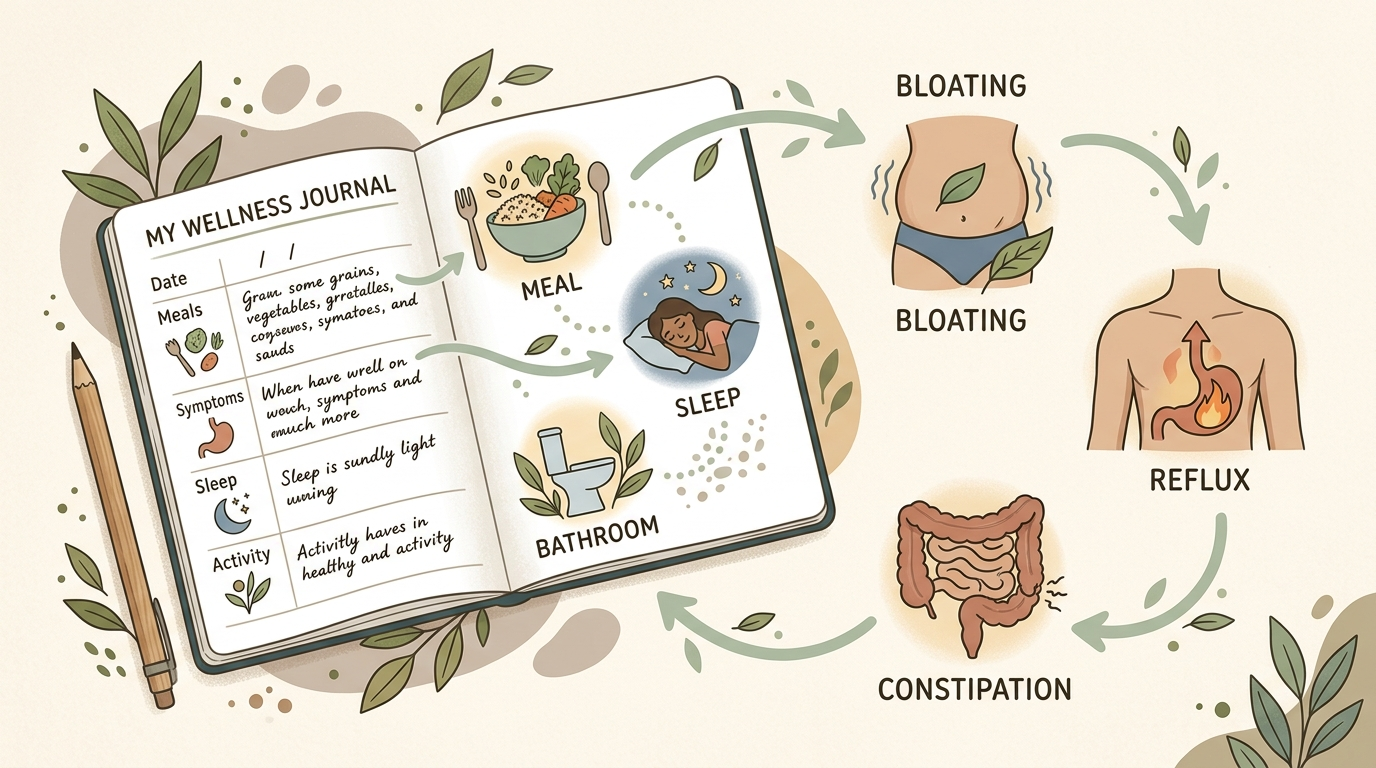
Digestion can feel “all over the place” when several low-grade patterns overlap, especially meal timing, stool irregularity, stress, and fermentable foods. That does not automatically point to one disease or one perfect supplement. It usually points to a tracking problem. Pattern clarity comes first, because mixed digestive symptoms are easier to understand when you follow triggers instead of chasing single sensations.
How we evaluated mixed digestion-pattern questions
We prioritized symptom-pattern guidance from the NIDDK constipation overview, the NIDDK indigestion overview, Monash University guidance on FODMAP triggers, and the Mayo Clinic GERD overview. We compared repeat patterns, not isolated bad days. We excluded diagnosis language, because bleeding, weight loss, progressive swallowing trouble, and severe pain need medical review instead of home guesswork.
Why can digestion feel unpredictable even when nothing obvious changed?
Digestion often feels random when multiple small inputs stack on top of each other. A person might eat quickly, sit more than usual, sleep poorly, add more coffee, and miss a few bowel movements in the same week. None of those changes looks dramatic alone, but together they can create bloating, nausea, fullness, constipation, or reflux. The NIDDK indigestion overview notes that upper-abdominal symptoms often overlap instead of arriving as one clean signal. Monash University uses the FODMAP framework for a similar reason, because repeated food triggers can create gas and distention that feel inconsistent when meals vary day to day. The body is usually following a pattern, just not a simple one. “All over the place” often means the feedback loops are mixed, not that digestion has stopped making sense.
Which daily patterns usually create the “all over the place” feeling?
The most common mixed-pattern buckets are slow stool transit, fast-fermenting food load, upper-gut irritation, and stress-amplified gut sensitivity. Constipation can create pressure, incomplete emptying, and downstream bloating, which the NIDDK constipation overview describes as a common overlap. Fermentation patterns usually show up after onions, garlic, wheat, beans, or sugar alcohols, which is why Monash University keeps those foods central to the FODMAP model. Upper-gut irritation tends to track with large meals, lying down after dinner, alcohol, or late-night eating, which fits the Mayo Clinic GERD guidance. Stress adds another layer because the gut becomes more reactive when the nervous system stays activated. Mixed digestion usually reflects overlapping patterns, not one mysterious invisible cause.
What should you track before jumping to supplements?
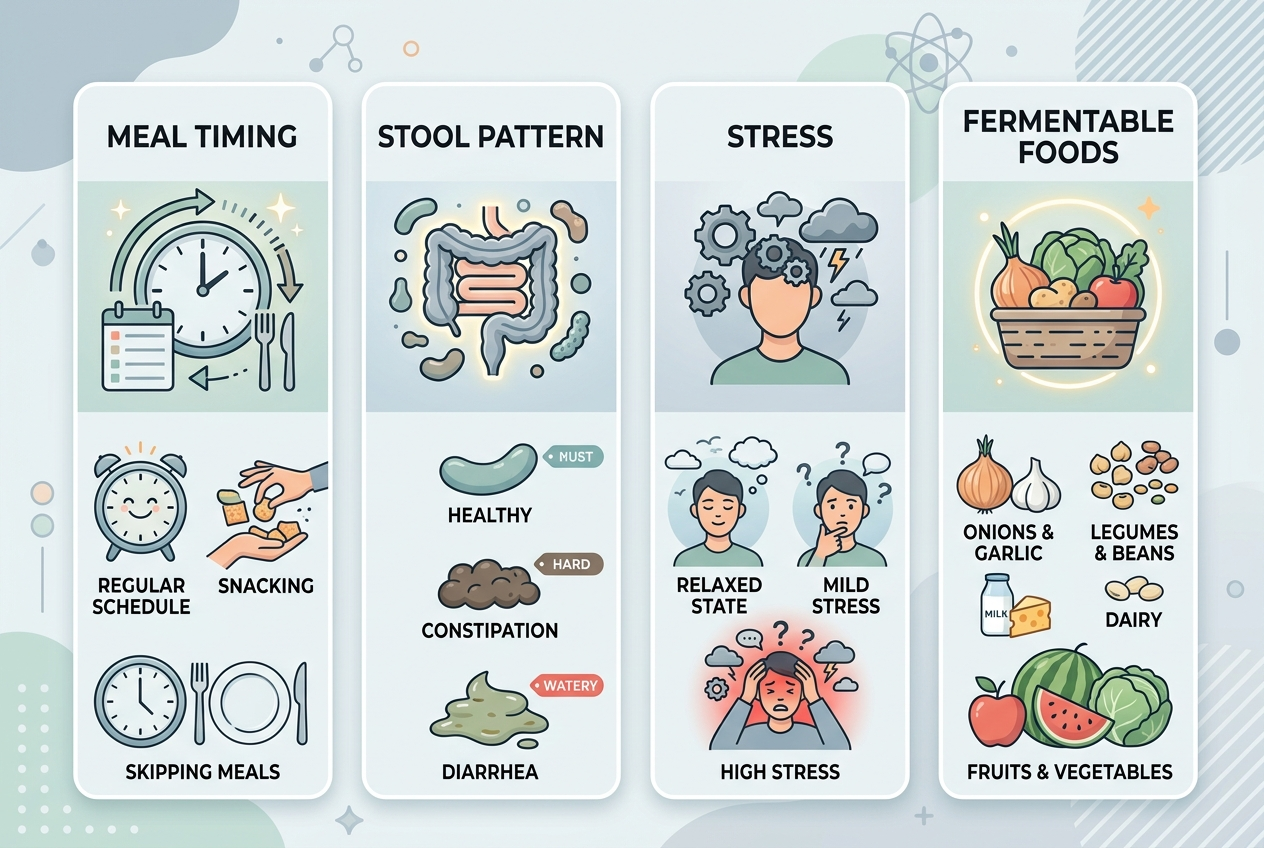
The most useful first move is a seven-day pattern log with four columns, meals, stool pattern, symptom timing, and body position. Write down when symptoms start, not just what they feel like. A bloated lower abdomen after two skipped bowel movements points in a different direction than throat burn after a late dinner. The Mayo Clinic GERD overview makes timing and body position central clues for reflux-style symptoms. The NIDDK constipation guidance makes stool frequency and stool difficulty equally important for lower-gut patterns. Keep caffeine, alcohol, dairy, and the highest-FODMAP foods visible in the log. The goal is not perfection. The goal is signal. Once a repeat pattern shows up, later choices about food changes, gentle routine support, or clinician review become much less sloppy.
When does a messy digestive pattern need medical review?
Home tracking is useful until red flags show up. Unintentional weight loss, persistent vomiting, black stool, blood in stool, progressive swallowing trouble, new severe pain, or chest pain that feels intense should move the plan out of self-testing mode. The Mayo Clinic GERD overview flags swallowing trouble and weight loss as reasons to get checked. The NIDDK indigestion page also notes that persistent or worsening symptoms deserve evaluation. A pattern can be mixed and still deserve real care. The point of an article like this is not to keep someone home forever. The point is to help people separate ordinary digestive noise from signals that are strong enough, persistent enough, or risky enough that guessing becomes the dumb option.
For a detailed comparison of specific products and strains, see Best Fiber Supplement for Bloating and Digestion: What to Look For.
For a detailed comparison of specific products and strains, see Constipation and Bloating Daily? Match the Right Support to the Pattern.
FAQ
Is it normal for symptoms to switch between bloating, reflux, and constipation?
Yes. Digestive symptoms often overlap because upper-gut and lower-gut patterns can influence each other in the same week. Mixed symptoms are common, even when the repeat triggers are ordinary.
Does “all over the place” usually mean one specific disease?
No. It can, but more often it reflects mixed inputs like food timing, stool irregularity, stress, and meal composition. Patterns matter more than one dramatic guess.
Should you cut out lots of foods immediately?
Usually no. Large elimination swings make the signal dirtier, not cleaner. A short symptom log often teaches more than a panicked all-food reset.
Can stress really make digestion feel worse?
Yes. Stress changes gut sensitivity and symptom perception, so ordinary meals can feel louder when the nervous system stays activated. That does not mean the symptoms are imaginary.
How long should you track before deciding the next step?
About one week is often enough to see whether the pattern tracks with meals, stool changes, dairy, late eating, or body position. Clean notes beat vague memory fast.
When should you stop self-tracking and get checked?
If symptoms come with bleeding, ongoing vomiting, severe pain, weight loss, or progressive swallowing trouble, stop playing detective and get evaluated. Red flags change the whole plan.
Leave a Reply