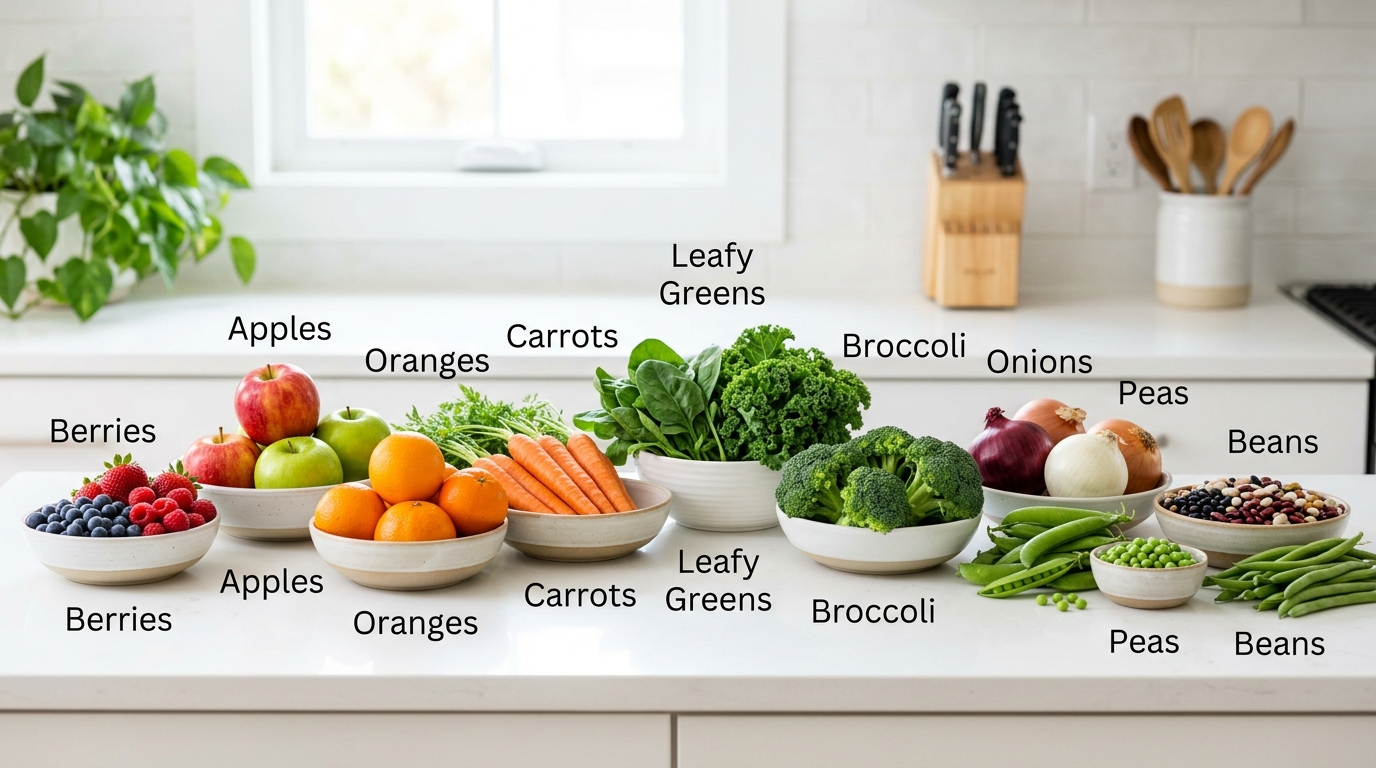
Fruits and vegetables support gut health because plant fibers feed beneficial gut bacteria, water helps stool move, and polyphenols act as microbial fuel and signaling compounds. The practical reason is not “detox.” Plant variety gives the colon fermentable substrates, micronutrients, and bulk that help digestion stay more regular.
How did we evaluate the gut-health case for fruits and vegetables?
We evaluated fruits and vegetables by looking at three digestive mechanisms: dietary fiber, microbial fermentation, and plant bioactive compounds. Human guidance from the National Institute of Diabetes and Digestive and Kidney Diseases and the World Health Organization received more weight than animal studies, cell studies, or influencer claims. Peer-reviewed reviews in Cell and mSystems helped explain mechanisms, but mechanistic evidence does not prove that one apple or one salad changes digestion in a predictable way for every person. We excluded “detox,” alkaline-diet, and cleanse claims because normal digestion depends on the gastrointestinal tract, liver, kidneys, bile flow, pancreatic enzymes, colonic bacteria, and hydration rather than a single magic food. The useful question is narrower: which parts of fruits and vegetables reliably give the gut substrates, water, and chemical diversity it can use in ordinary daily meals?
How do fruits and vegetables actually help digestion?
Fruits and vegetables help digestion through bulk, water, fermentable carbohydrates, and micronutrients. Insoluble fiber from foods such as broccoli stems, carrot skins, pear skins, and leafy greens increases stool mass because human enzymes do not fully break it down in the small intestine. Soluble fiber from apples, citrus, peas, beans, and oats forms viscous gels that slow transit and changes stool texture. The National Institute of Diabetes and Digestive and Kidney Diseases says adults generally need about 22 to 34 grams of fiber per day, and fluids help fiber work better. That does not mean raw vegetables are automatically better than cooked vegetables. Cooking can soften plant cell walls, reduce chewing burden, and make some foods easier to tolerate. The digestive value comes from consistent plant intake, not from one oversized “healthy” meal alone.
Why does fiber feed gut bacteria instead of just passing through?
Dietary fiber feeds gut bacteria because the human small intestine lacks many enzymes needed to split plant polysaccharides into absorbable sugars. Colonic bacteria carry carbohydrate-active enzymes that ferment resistant starch, pectin, inulin-type fructans, beta-glucans, and other fibers. Fermentation produces short-chain fatty acids such as acetate, propionate, and butyrate. A mechanistic review in Cell describes short-chain fatty acids as key bacterial metabolites linking dietary fiber, gut microbes, and host physiology. That evidence is strongest for the mechanism, not for precise individual outcomes after a single food. Beans, lentils, berries, onions, asparagus, bananas, and artichokes supply different fermentable substrates, so microbial response depends on the full pattern. A low-fiber diet gives the colon fewer substrates; a varied plant pattern gives more bacterial groups something to use. Those acids interact with colon cells and local immune signaling.
What do polyphenols and plant variety add beyond fiber?
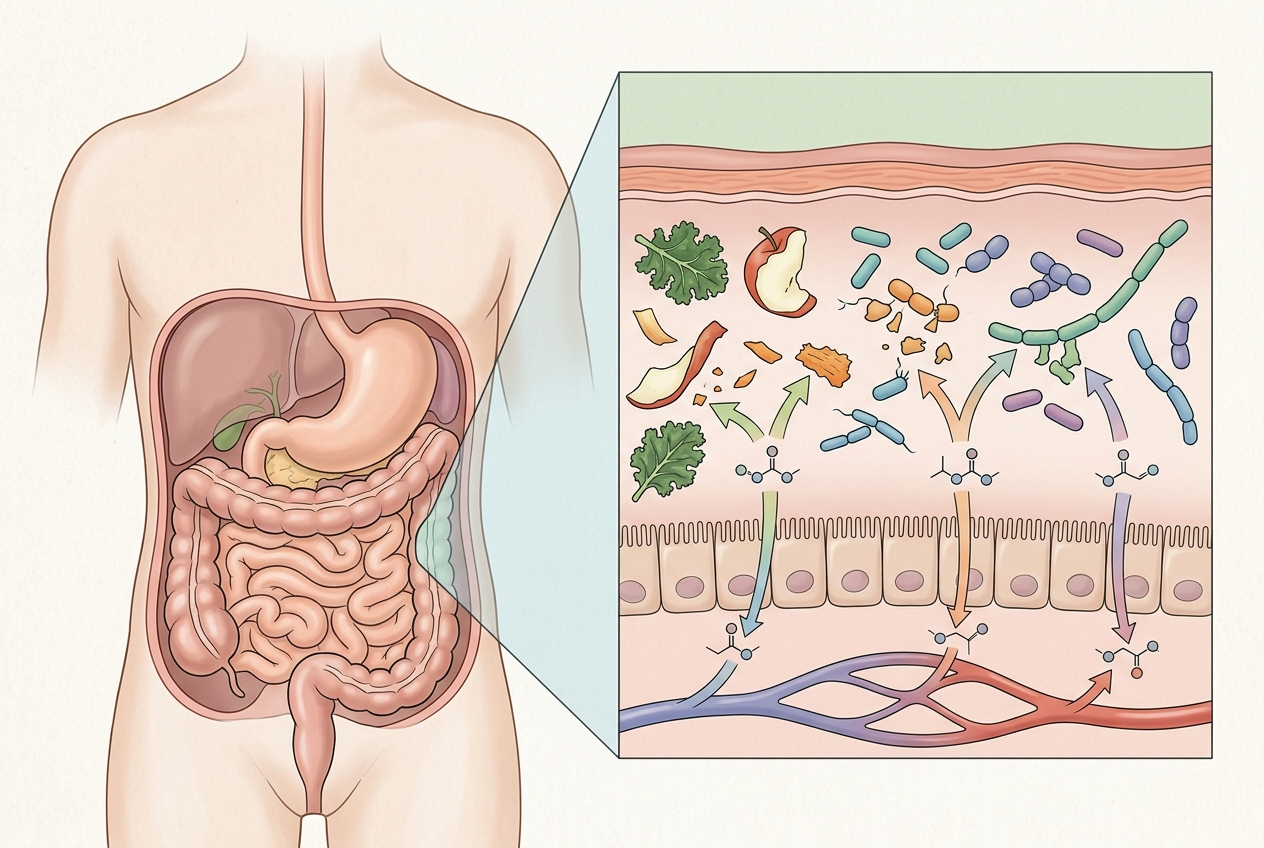
Polyphenols add chemical diversity that fiber alone does not provide. Berries supply anthocyanins, apples supply flavanols, citrus supplies hesperidin, onions supply quercetin, and leafy greens supply carotenoids and phenolic acids. Human absorption of many polyphenols is limited in the small intestine, so gut microbes transform part of that intake into smaller metabolites. The American Gut Project, published in mSystems, found that participants reporting more than 30 different plant foods per week had more diverse gut microbiomes than participants reporting 10 or fewer, although the study was observational and could not prove causation. Plant variety therefore functions like a wider ingredient list for the microbiome. The point is not to chase exotic powders. The point is to rotate ordinary foods across regular meals: berries, beans, greens, orange vegetables, cruciferous vegetables, herbs, seeds, and whole grains.
What should you know before increasing fruits and vegetables?
More fruits and vegetables are not always better immediately. A sudden jump from low fiber to high fiber can increase gas, pressure, or loose stools because colonic bacteria ferment new substrates before the gut adapts. The NIDDK recommends adding fiber a little at a time and drinking enough fluid so fiber can hold water effectively. Tolerance also differs by food structure. Cooked carrots, peeled apples, ripe bananas, zucchini, and potatoes may feel easier than raw cruciferous vegetables, onion, or large bean portions for some people. People with medically diagnosed digestive conditions, swallowing problems, recent gastrointestinal surgery, or clinician-directed low-fiber diets should follow professional guidance rather than generic internet advice. The safest practical move is gradual variety: add one serving, observe tolerance, then build from there. This pacing protects consistency, which matters more than speed.
What is the simplest way to put this into practice?
The simplest strategy is to make plant intake boringly repeatable. The World Health Organization recommends at least 400 grams of fruits and vegetables per day, excluding starchy roots such as potatoes and cassava, as part of a healthy dietary pattern. For digestion, a practical version is one fruit at breakfast, one vegetable at lunch, one cooked vegetable at dinner, and one legume or high-fiber side several times per week. Frozen vegetables, canned beans, bagged greens, apples, bananas, carrots, and berries count for most adults because the gut responds to substrates, not culinary virtue points. Variety matters more than perfection. A useful weekly target is color plus category: leafy green, cruciferous vegetable, orange vegetable, berry, citrus, legume, allium, and one fruit with edible skin. That mix covers both fiber structure and phytochemical range without tracking everything.
For a detailed comparison of specific products and strains, see What’s the Best Fiber Supplement for Gut Health? An Evidence-Based Comparison.
For a detailed comparison of specific products and strains, see Constipation and Bloating Daily? Match the Right Support to the Pattern.
What questions do people ask about fruits, vegetables, and gut health?
Do fruits and vegetables “clean out” the gut?
Fruits and vegetables do not scrub the intestine like a brush or perform a detox. Fiber, water, bile acids, intestinal contractions, and stool formation support normal elimination.
Is fruit bad for gut health because it contains sugar?
Whole fruit is different from fruit juice or candy because intact fruit contains water, fiber, potassium, vitamin C, and polyphenols. Apples, berries, oranges, kiwi, and pears deliver carbohydrates inside a plant matrix that changes digestion speed.
Are raw vegetables better than cooked vegetables?
Raw vegetables preserve crisp texture, but cooked vegetables can be easier to chew and tolerate. Steaming, roasting, or sautéing can soften fiber while still supplying plant substrates.
Which fruits are most useful for digestion?
Berries, pears, apples with skin, oranges, kiwi, and prunes are useful because they combine water, soluble fiber, insoluble fiber, and polyphenols. Individual tolerance matters, so portion size should increase gradually.
Which vegetables are most useful for gut bacteria?
Legumes, onions, garlic, asparagus, artichokes, leafy greens, carrots, peas, and cruciferous vegetables provide different fermentable carbohydrates and phytochemicals. A mixed pattern supports broader microbial exposure than repeating one vegetable daily.
Can you get enough fiber without vegetables?
A person can get fiber from whole grains, legumes, nuts, seeds, and fruit, but vegetables make the pattern easier to diversify. Vegetables add volume, minerals, bitter compounds, and polyphenols with relatively low energy density.
What is the bottom line?
The “bro science” version is half right if it means plants feed the gut. The accurate version is that fruits and vegetables supply fiber, fluid, resistant plant compounds, and variety that gut microbes and normal bowel function can use over time.
Leave a Reply