Blog

  • CT vs Ultrasound vs Scope: Which Digestive Test Shows What?

    CT vs Ultrasound vs Scope: Which Digestive Test Shows What?

    CT, ultrasound, and endoscopy answer different digestive questions. CT shows cross-sectional abdominal structures, ultrasound is often used for gallbladder and liver questions, and upper endoscopy directly views the esophagus, stomach, and duodenum. The best test depends on symptoms, exam findings, red flags, and clinician suspicion.

    How did we evaluate CT, ultrasound, and endoscopy?

    We evaluated these tests by separating what each tool can see, what it cannot see, and when clinicians commonly choose it. We prioritized radiology references, NIDDK endoscopy guidance, and gastroenterology guidelines over forum anecdotes. We excluded cost rankings because insurance coverage, urgency, facility fees, sedation, and geography change pricing too much for a stable answer. This guide is educational only; a clinician must decide the correct test based on pain location, reflux symptoms, labs, pregnancy status, radiation considerations, alarm symptoms, and prior results.

    What does a CT scan show for digestive symptoms?

    A CT scan uses X-rays and computer processing to create cross-sectional images of the abdomen and pelvis. It can show bowel obstruction, diverticulitis patterns, appendicitis, kidney stones, masses, abscesses, inflammation, free air, fluid collections, and some complications that ultrasound or endoscopy might miss. RadiologyInfo describes abdominal and pelvic CT as a tool that helps evaluate abdominal pain, infection, injury, and many internal organs. CT does not directly measure acid reflux, does not biopsy stomach lining, and does not show subtle mucosal irritation as clearly as endoscopy. CT also uses ionizing radiation, and some exams use IV or oral contrast. That matters for pregnancy, kidney function, allergy history, and repeat imaging. A clinician usually chooses CT when the question is broad, urgent, deep, or structural rather than limited to the esophagus lining.

    What does an ultrasound show for digestive symptoms?

    Ultrasound uses sound waves, not ionizing radiation, to image organs and fluid-filled structures. Abdominal ultrasound is commonly used for gallstones, gallbladder inflammation, bile duct dilation, liver abnormalities, fluid, some kidney findings, and pregnancy-compatible abdominal evaluation. RadiologyInfo describes abdominal ultrasound as a test that evaluates organs such as the liver, gallbladder, spleen, pancreas, kidneys, and blood vessels. Ultrasound has limits: bowel gas can block views, body habitus can reduce image quality, and ultrasound does not inspect the inside lining of the esophagus or stomach. It also cannot rule out every cause of abdominal pain. Ultrasound is often a first-line test when the pain pattern points toward the right upper abdomen, fatty-meal symptoms, gallbladder disease, or a question where avoiding radiation is important. It is less useful for proving GERD or diagnosing microscopic inflammation.

    What does an endoscopy or scope show?

    Upper endoscopy, also called EGD, uses a flexible camera to view the esophagus, stomach, and duodenum directly. The NIDDK explains that clinicians can use upper endoscopy to investigate symptoms, take biopsies, and sometimes treat findings during the same procedure. Endoscopy can identify erosive esophagitis, ulcers, narrowing, bleeding sources, Barrett’s esophagus, gastritis patterns, celiac-related biopsy findings, and some structural problems. It cannot evaluate the entire abdomen, gallbladder, appendix, kidneys, or deep pelvic structures the way imaging can. Endoscopy often requires fasting, sedation planning, a ride home, and procedure-specific risk discussion. For reflux symptoms, endoscopy is most helpful when alarm features exist, symptoms persist despite appropriate care, or a clinician needs to inspect tissue directly. A normal endoscopy does not always exclude reflux because non-erosive reflux can require pH testing.

    How do CT, ultrasound, and scope compare?

    Infographic comparing CT scan, abdominal ultrasound, and upper endoscopy by what each test can evaluate.
    Infographic comparing CT scan, abdominal ultrasound, and upper endoscopy by what each test can evaluate.

    The simplest comparison is anatomical. CT looks broadly across abdominal structures, ultrasound focuses well on selected organs without radiation, and endoscopy inspects the upper digestive lining from inside the tract. The 2022 American College of Gastroenterology GERD guideline distinguishes endoscopy from reflux monitoring because GERD testing depends on the clinical question. A person with right upper abdominal pain after fatty meals may need ultrasound first. A person with severe unexplained abdominal pain, fever, or suspected complication may need CT. A person with trouble swallowing, bleeding, persistent reflux alarm features, or suspected ulcer may need endoscopy. No single test is the universal “best.” The better question is: what problem is the clinician trying to rule in or rule out today?

    Test Best at seeing Weak at seeing Common reason it is chosen
    CT abdomen/pelvis Deep abdominal structures, complications, broad causes Subtle lining irritation and acid exposure Severe, unclear, or urgent abdominal pain
    Abdominal ultrasound Gallbladder, bile ducts, liver, fluid, selected organs Esophagus lining, stomach lining, gas-blocked views Gallbladder-pattern pain or radiation avoidance
    Upper endoscopy Esophagus, stomach, duodenum lining, biopsies Gallbladder, appendix, kidneys, whole abdomen Alarm reflux features, ulcers, bleeding, swallowing symptoms

    What should you ask before agreeing to a test?

    Ask what question the test is meant to answer, what result would change the plan, and what risks or limitations apply. Ask whether bloodwork, stool tests, medication review, pregnancy status, kidney function, contrast allergy, or prior imaging changes the best next step. Ask whether the symptom pattern suggests gallbladder evaluation, reflux evaluation, bowel inflammation, obstruction, infection, ulcer, or another category. Ask whether the test is urgent or can be scheduled routinely. Ask what red flags should trigger emergency care before the appointment. Good questions make testing more precise: “Are we looking for gallstones, reflux damage, bleeding, obstruction, inflammation, or something else?” If the answer is vague, ask for the clinical reason in plain language. A test should answer a specific medical question, not merely satisfy anxiety.

    What questions do people ask about CT, ultrasound, and scope?

    Can a CT scan diagnose GERD?

    CT is not the standard test for GERD. It may show complications or other abdominal problems, but reflux evaluation usually relies on symptoms, endoscopy in selected cases, or reflux monitoring.

    Can ultrasound see acid reflux?

    No. Abdominal ultrasound does not directly see acid reflux in the esophagus. It is more useful for gallbladder, liver, bile duct, kidney, and fluid-related questions.

    Is endoscopy better than CT?

    Endoscopy is better for seeing the upper digestive lining and taking biopsies. CT is better for broad abdominal structures and complications outside the lining.

    Which test is safest?

    Safety depends on the person and the question. Ultrasound avoids radiation, CT uses radiation and sometimes contrast, and endoscopy involves sedation and procedure-specific risks.

    Why would a doctor order ultrasound before endoscopy?

    Doctors may choose ultrasound first when pain location, labs, or meal-triggered symptoms suggest gallbladder or liver involvement. Endoscopy answers a different question about the upper digestive lining.

    What symptoms make testing more urgent?

    Severe pain, chest pain, fainting, persistent vomiting, black stool, blood in stool, fever, dehydration, trouble swallowing, or unexplained weight loss should prompt urgent medical guidance.

    What is the bottom line?

    CT, ultrasound, and endoscopy are not interchangeable. CT gives a broad structural look inside the abdomen, ultrasound is strong for gallbladder and selected organ questions without radiation, and endoscopy directly inspects the upper digestive lining. The best next test is the one that answers the clinician’s actual concern.

    Image prompts:

    • Hero image: Neutral medical education flat lay with an abstract CT image, ultrasound probe silhouette, endoscopy diagram card, clipboard, and stethoscope on a clean desk, no patient, no brand logos. Alt text: Medical desk comparing CT scan, ultrasound, and endoscopy for digestive symptoms.
    • Inline image: Clean comparison infographic with three columns labeled CT scan, abdominal ultrasound, and upper endoscopy, showing what each test sees and does not see, calm clinical colors, readable labels. Alt text: Infographic comparing CT scan, abdominal ultrasound, and upper endoscopy by what each test can evaluate.

  • Gut Issues a Week After IV Antibiotics: What Can Happen Next?

    Gut Issues a Week After IV Antibiotics: What Can Happen Next?

    Gut issues one week after IV antibiotics can happen because antibiotics disrupt intestinal bacteria, bile acid metabolism, stool water balance, and short-chain fatty acid production. Mild changes often improve gradually, but severe diarrhea, fever, blood, dehydration, intense pain, or worsening symptoms after recent antibiotics should prompt medical care.

    How did we evaluate gut issues after IV antibiotics?

    We evaluated this question by prioritizing gastroenterology references on antibiotic-associated diarrhea, Clostridioides difficile risk, microbiome recovery, hydration, and gradual diet reintroduction. Human studies and public-health guidance received more weight than supplement claims or personal anecdotes. We separated common short-term disruption from warning signs because a one-week timeline can still include clinically important complications. This article is educational only; it cannot identify the antibiotic used, the original infection, hospital exposure, immune status, or medication factors that change risk.

    Why can gut issues start a week after IV antibiotics?

    Antibiotics can change the gut ecosystem within days, and symptoms may appear after the hospital visit rather than during it. Broad-spectrum IV antibiotics can reduce susceptible gut bacteria, lower microbial diversity, alter fermentation, and change how bile acids move through the colon. The CDC notes that C. diff can occur after antibiotic exposure because antibiotics can disturb normal intestinal bacteria. That does not mean every post-antibiotic symptom is C. diff, but it explains why timing matters. Loose stool, extra gas, cramping, appetite changes, nausea, and irregular bowel movements can reflect temporary microbiome disruption, diet changes, stress, pain medication, acid reducers, or the original illness. The key distinction is trajectory. Symptoms that slowly improve are different from symptoms that intensify, cause dehydration, include blood, or appear with fever after recent antibiotic treatment.

    What symptoms are common, and what symptoms are red flags?

    Common post-antibiotic symptoms include softer stools, urgency, mild cramping, gas, bloating, appetite changes, and temporary food sensitivity. These symptoms are nonspecific because antibiotics, infection recovery, hospital meals, IV fluids, opioids, NSAIDs, proton pump inhibitors, and stress can all affect gut motility. Red flags deserve a different response: watery diarrhea three or more times per day, fever, blood or black stool, severe abdominal pain, repeated vomiting, dizziness, dehydration, confusion, or symptoms that worsen after initially improving. Mayo Clinic describes antibiotic-associated diarrhea as diarrhea that occurs while taking antibiotics or soon after, and it advises medical review for severe symptoms or possible C. diff features. A recent IV-antibiotic history raises the importance of caution because hospital exposure, strong antibiotics, and underlying infection can change risk.

    What should you do first if symptoms are mild?

    For mild symptoms, the first step is stabilizing hydration, meals, and tracking before adding complicated interventions. Oral fluids, soups, and electrolyte drinks can help replace water and sodium if stool is loose. Bland, tolerable foods such as rice, oats, bananas, potatoes, toast, eggs, yogurt if tolerated, and cooked vegetables can reduce guesswork while the gut settles. The NIDDK recommends replacing fluids and electrolytes during diarrhea, especially when symptoms are prolonged. A simple log should record stool frequency, stool form, fever, pain, meals, medicines, and hydration for several days. Avoid alcohol, very greasy meals, large amounts of sugar alcohols, and abrupt high-fiber loading while symptoms are active. If symptoms escalate instead of settling, stop self-managing and contact the clinician who prescribed or administered the antibiotic.

    How long can the gut take to feel normal again?

    Diagram explaining how antibiotics can affect gut bacteria, stool changes, hydration, and red flags.
    Diagram explaining how antibiotics can affect gut bacteria, stool changes, hydration, and red flags.

    Recovery time varies because antibiotic type, duration, dose, baseline microbiome, diet, infection severity, and hospital exposure all matter. Some people feel steadier within several days after the antibiotic course ends. Others notice irregular stool, gas, or food sensitivity for several weeks. A human microbiome study in Cell found that probiotic response and post-antibiotic microbiome recovery can be highly individualized, which means timelines are not universal. A practical expectation is to watch the direction of change rather than demanding a perfect day immediately. Improving stool frequency, better appetite, less cramping, and stable hydration are reassuring signals. New fever, worsening diarrhea, nighttime symptoms, blood, dehydration, or severe pain are not normal recovery milestones. Recent IV antibiotics should lower the threshold for calling a clinician, especially if the antibiotic name is unknown.

    What should you ask your clinician after IV antibiotics?

    A focused call or message should include the antibiotic name if known, the reason for treatment, the date of the last dose, stool frequency, fever status, pain level, hydration status, and any blood or mucus. Ask whether symptoms fit expected antibiotic-associated diarrhea, whether C. diff testing is appropriate, and whether any current medications could be worsening the gut pattern. Ask before taking anti-diarrheal medication if diarrhea is frequent, severe, bloody, or paired with fever because slowing the bowel can be inappropriate in some infections. Ask whether follow-up is needed if symptoms persist beyond several days. The goal is not to panic after every loose stool. The goal is to give the clinician enough detail to separate ordinary recovery from a complication that needs testing or treatment.

    What questions do people ask about gut issues after antibiotics?

    Can IV antibiotics upset your stomach a week later?

    Yes. Gut symptoms can appear during antibiotics or after the course because the microbiome, bile acids, stool water, diet, and motility can shift after exposure. The timeline matters most when symptoms are severe or worsening.

    Is diarrhea after antibiotics always C. diff?

    No. Antibiotic-associated diarrhea has multiple causes, and many cases are mild. C. diff becomes a bigger concern when diarrhea is frequent, watery, worsening, associated with fever or pain, or follows high-risk antibiotic or hospital exposure.

    Should I take anti-diarrhea medicine?

    Ask a clinician first if diarrhea is severe, bloody, feverish, or connected to recent IV antibiotics. Anti-diarrhea medicine may be inappropriate when an infection or C. diff is possible.

    What foods are easiest during recovery?

    Plain starches, bananas, oats, potatoes, toast, soups, eggs, and cooked vegetables are common low-friction options. Reintroduce higher-fiber foods gradually because sudden fiber increases can worsen gas.

    Can probiotics help after antibiotics?

    Some probiotic evidence is strain-specific, but results are not universal. Ask a clinician first if you are immunocompromised, severely ill, pregnant, buying for a child, or dealing with significant post-antibiotic diarrhea.

    When should I seek urgent care?

    Seek urgent care for severe abdominal pain, repeated vomiting, dehydration, confusion, bloody stool, black stool, high fever, fainting, or rapid worsening. Those symptoms sit outside normal self-care.

    For a detailed comparison of specific products and strains, see Best Probiotics After a Long Course of Antibiotics: Strain and Product Guide.

    What is the bottom line?

    Gut issues a week after IV antibiotics can be a temporary microbiome and motility disruption, but the same timeline can also overlap with antibiotic-associated diarrhea or C. diff risk. Track stool frequency, fever, pain, hydration, and medication timing. Mild symptoms can be supported with fluids and simple meals, while red flags require medical contact.

    Image prompts:

    • Hero image: Calm educational health flat lay with a glass of water, simple soup bowl, medication schedule card with no readable drug names, and a symptom tracking notebook on a neutral kitchen table, no brand logos. Alt text: Water, soup, and a symptom tracking notebook for gut issues after antibiotics.
    • Inline image: Clean editorial diagram showing antibiotic exposure, microbiome disruption, stool changes, hydration, and clinician red flags as connected steps, medical education style, no product imagery. Alt text: Diagram explaining how antibiotics can affect gut bacteria, stool changes, hydration, and red flags.

  • Do You Need Lactase With Lactose-Free Milk?

    Do You Need Lactase With Lactose-Free Milk?

    Most people do not need extra lactase with properly labeled lactose-free milk because the milk has already been treated with lactase enzyme. Some people still use lactase if the product contains residual lactose, the serving is large, symptoms are severe, or the discomfort is caused by another issue such as milk protein sensitivity, fat load, or reflux.

    How did we evaluate lactase and lactose-free milk?

    We evaluated this question by separating lactose digestion from other milk-related symptoms, then reviewing clinical explanations from government and medical sources. The highest weight went to sources that explain lactase enzyme, lactose-free dairy processing, and common symptom patterns in lactose intolerance. We excluded unsupported claims that lactose-free milk is always symptom-free or that lactase tablets fix every dairy reaction. The main limitation is that product labeling, serving size, and personal tolerance vary, so a small serving test is more useful than assuming every carton or every enzyme tablet works identically. We also treated persistent pain, weight loss, vomiting, blood in stool, or new symptoms as reasons to seek medical guidance instead of running repeated food experiments. This approach keeps the answer practical without turning a food-tolerance question into a diagnosis or a product-shopping checklist.

    Why does lactose-free milk usually not need extra lactase?

    Lactose-free milk usually does not need extra lactase because the manufacturer adds lactase enzyme before packaging, and lactase splits lactose into glucose and galactose. The NIDDK explains that lactose intolerance happens when the small intestine makes too little lactase to digest lactose. Lactose-free milk changes that equation before the milk reaches the gut. The milk may taste sweeter because glucose and galactose taste sweeter than intact lactose, even when no table sugar has been added. A person who tolerates lactose-free milk in small servings usually does not gain extra benefit from another lactase tablet. A person who reacts to lactose-free milk should check the label, serving size, expiration handling, and whether the symptom pattern matches lactose rather than milk fat, casein, whey, or reflux pressure. Refrigeration and freshness still matter because spoiled milk can cause symptoms unrelated to lactose.

    When might lactase still help with lactose-free milk?

    Lactase may still help when a product is reduced-lactose rather than truly lactose-free, when the serving is unusually large, or when the person has very low lactase activity. Some countries and brands use different thresholds for “lactose-free,” so label wording matters. The MedlinePlus lactose intolerance overview notes that symptoms can include bloating, cramps, gas, nausea, and diarrhea after lactose intake, but symptom severity depends on the amount of lactose consumed and the person’s lactase level. A lactase tablet cannot remove lactose from milk protein, milk fat, carrageenan, gums, coffee, cereal, or other foods eaten with the milk. If the same person tolerates hard cheese or yogurt but not a large glass of lactose-free milk, total volume, meal timing, and reflux pressure may explain more than lactose alone. Repeating the same test with a smaller serving can separate dose from ingredient sensitivity.

    What else could cause symptoms after lactose-free milk?

    Diagram showing lactase enzyme breaking lactose into glucose and galactose.
    Diagram showing lactase enzyme breaking lactose into glucose and galactose.

    Symptoms after lactose-free milk can come from lactose, but they can also come from milk protein sensitivity, cow’s milk allergy, high-fat dairy, rapid drinking, carbonated coffee drinks, reflux, irritable bowel sensitivity, or additives. A StatPearls clinical review distinguishes lactose intolerance from immune-mediated milk allergy, which involves a different mechanism. Adults often describe “lactose intolerance” whenever dairy feels bad, but lactose is only one variable. Lactose-free whole milk still contains fat, casein, whey, minerals, and sometimes stabilizers. Skim lactose-free milk changes fat load but not protein exposure. Plant milks remove lactose and dairy protein but may contain gums, fibers, or sweeteners. A clean test uses one small serving, plain milk, no coffee, no cereal, no late-night timing, and a symptom log for gas, stool change, nausea, and reflux sensation. That log prevents one bad mixed meal from being blamed entirely on milk.

    How should someone test lactose-free milk safely?

    A cautious test starts with a small serving, such as 2 to 4 ounces, with a simple meal earlier in the day. The person should avoid stacking new variables like coffee, protein powder, cereal, fiber supplements, or large dinner portions during the same test window. If the small serving is tolerated, the next test can increase the amount gradually while keeping the product brand, timing, and meal context consistent. If the small serving causes symptoms, a lactase tablet with the same serving can help clarify whether residual lactose is the likely trigger. If symptoms persist despite lactase, the problem is less likely to be lactose alone. A clinician should evaluate severe symptoms, persistent diarrhea, unexpected weight loss, blood in stool, vomiting, or reactions that include hives, wheezing, swelling, or dizziness. Written timing notes are useful because lactose symptoms usually follow a meal pattern.

    What questions do people ask about lactase and lactose-free milk?

    Is lactose-free milk completely lactose free?

    Lactose-free milk is treated with lactase to break down lactose, but exact residual amounts depend on product standards and testing. People with extreme sensitivity should read labels and test small servings rather than assuming every brand feels identical.

    Does lactose-free milk contain lactase enzyme?

    Many lactose-free milk products are made by adding lactase enzyme during processing. The enzyme changes lactose into simpler sugars before the milk is consumed.

    Why does lactose-free milk taste sweeter?

    Lactose-free milk tastes sweeter because lactase splits lactose into glucose and galactose. Those two sugars taste sweeter on the tongue than intact lactose.

    Can lactase pills stop all dairy symptoms?

    Lactase pills only help digest lactose. They do not address milk protein allergy, fat-related fullness, reflux timing, additives, or symptoms caused by another digestive condition.

    Should lactase be taken before or after milk?

    Lactase works best when it is present as lactose reaches the small intestine, so product directions usually place it at the first bite or sip. Directions vary by tablet, chewable, or drop format.

    Can lactose intolerance get worse over time?

    Lactase activity can decline with age, and symptoms can shift after gut infections, diet changes, or changes in serving size. A sudden major change should be discussed with a clinician rather than assumed to be normal.

    Is plant milk better than lactose-free milk?

    Plant milk removes lactose and dairy protein, but it introduces different ingredients such as gums, oils, added sugars, or plant fibers. The better choice is the one that matches nutrition needs and is tolerated in a controlled serving test.

    For a detailed comparison of specific products and strains, see Lactase Pills Compared: How to Choose the Right Lactase Enzyme.

    For a detailed comparison of specific products and strains, see Lactase Pills Stopped Working? How to Compare Dose, Timing, and Better Options.

    What is the practical bottom line?

    Extra lactase is usually unnecessary with true lactose-free milk, but it can be a useful experiment when labels are unclear or sensitivity is high. If lactose-free milk still causes symptoms after a careful small-serving test, the next step is to evaluate non-lactose causes rather than taking more enzyme by default. Serving size, fat content, protein sensitivity, reflux timing, and mixed-meal ingredients often explain symptoms that look like lactose intolerance at first glance. A controlled test protects the person from overusing tablets while missing the real trigger.

    Image prompts:

    • Hero image: Clear glass of lactose-free milk beside a lactase enzyme tablet blister pack and a simple dairy tolerance checklist, bright neutral kitchen setting, no brand logos. Alt text: Lactose-free milk, lactase tablets, and a tolerance checklist on a kitchen counter.
    • Inline image: Clean educational diagram showing lactase splitting lactose into glucose and galactose before digestion, simple medical editorial style. Alt text: Diagram showing lactase enzyme breaking lactose into glucose and galactose.

  • Which Probiotic Strains Can Permanently Colonize the Gut?

    Which Probiotic Strains Can Permanently Colonize the Gut?

    Most probiotic strains do not permanently colonize the adult gut. Lactobacillus rhamnosus GG, Bifidobacterium longum, and some other strains may persist briefly in stool or mucosa, but durable engraftment depends on the person’s existing microbiome, diet, antibiotics, host factors, and strain traits.

    How did we evaluate probiotic colonization?

    We evaluated probiotic colonization by separating survival through the gastrointestinal tract from temporary persistence, mucosal attachment, and permanent engraftment. We prioritized human mucosal sampling studies, strain-specific persistence trials, ISAPP scientific commentary, and NIH-indexed reviews over marketing claims that use “colonizes” loosely. We treated stool detection as an incomplete signal because a strain can appear in stool without establishing a stable niche in the intestinal mucosa. We excluded animal-only claims when answering the human question unless they explained a mechanism such as colonization resistance. The practical standard was strict: a strain would need repeat detection after dosing stops, evidence of niche fit, and reproducible persistence across people before anyone should call it permanent. We also separated strain codes from generic species names because colonization evidence rarely applies to an entire genus or product category broadly.

    Do probiotic strains permanently colonize the gut?

    Probiotic strains generally do not permanently colonize the adult gut. ISAPP explains that probiotics usually do not colonize the digestive tract in the long-term sense of weeks, months, or years after intake stops. A strain can survive stomach acid, pass through the intestine, appear in stool, and still fail to become a resident member of the microbiome. The adult gut already contains dense microbial communities that compete for nutrients, mucus binding sites, oxygen gradients, and immune tolerance. This colonization resistance protects the ecosystem, but it also makes newcomer strains hard to establish permanently. Some strains show short-term persistence after dosing, especially during or after disruption, but that is different from stable engraftment. The best interpretation is conservative: probiotics can interact with the gut while consumed, and some may persist temporarily, but permanent colonization is the exception rather than the expectation.

    Which strains have evidence for temporary persistence?

    Lactobacillus rhamnosus GG has classic evidence for temporary mucosal attachment. A human colonic mucosa study indexed in PubMed reported that strain GG attached in vivo and remained detectable for more than a week after administration, but the authors described the attachment as temporary. Lactobacillus casei rhamnosus Lcr35 also has older human data showing survival through the gastrointestinal tract and short persistence after dosing, according to a study available through NIH PubMed Central. Bifidobacterium strains can sometimes be detected after supplementation, but results vary by strain, person, diet, and baseline microbiome. These examples support transient persistence, not guaranteed permanent residence. The strain name matters because “Lactobacillus” or “Bifidobacterium” at genus level is too broad for colonization claims. Duration also matters; days after washout is not the same as months of independent residence in adults either.

    Why do some people resist probiotic colonization?

    People resist probiotic colonization because the existing gut microbiome creates ecological barriers. A 2018 human study in Cell found personalized gut mucosal colonization resistance after empiric probiotic use; baseline microbiome and host features helped predict whether probiotic strains appeared in mucosal sites. That means the same probiotic blend can behave differently in two people. A diverse resident microbiome can block newcomer microbes through nutrient competition, antimicrobial compounds, pH effects, bile acid metabolism, and immune signaling. Recent antibiotic use can reduce colonization resistance, but it can also make the ecosystem unstable. Diet matters because fiber, polyphenols, resistant starch, and habitual food patterns feed resident microbes. Colonization is therefore not just a strain property; it is a match between strain, host, diet, microbial neighborhood, and timing. This explains why universal colonizer lists age badly online quickly.

    Is stool detection the same as gut colonization?

    Visual comparison of probiotic transit, temporary attachment, and long-term colonization.
    Visual comparison of probiotic transit, temporary attachment, and long-term colonization.

    Stool detection is not the same as gut colonization. Stool testing can show that a probiotic strain survived transit or was shed after supplementation, but it cannot prove that the strain attached to mucosa, reproduced in a niche, or changed the resident ecosystem. Mucosal biopsies, repeated sampling after washout, strain-level sequencing, and functional markers provide stronger evidence than a single stool result. The distinction matters because many supplement claims imply “it showed up” equals “it moved in.” A 2021 review on probiotic gastrointestinal transit and colonization in NIH PubMed Central describes colonization as competition for nutrients and adhesion sites, not simple passage through the intestine. If a strain disappears soon after dosing stops, the evidence supports temporary exposure rather than permanent residence. Stool data can be useful, but it is only one layer of evidence.

    What should people look for instead of permanent colonization?

    People should look for strain-specific evidence, realistic persistence language, and a clear reason for use instead of permanent colonization promises. A trustworthy probiotic discussion names the full strain, such as Lactobacillus rhamnosus GG or Bifidobacterium longum 35624, rather than only the genus and species. It also explains whether evidence comes from human trials, stool detection, mucosal sampling, or mechanistic studies. Permanent residence is not required for a probiotic to interact with the gut during consumption. Short-term metabolic effects, immune signaling, competition with microbes, and changes in fermentation can happen without lifelong engraftment. The cleaner question is “what strain has evidence for this use and what outcome was measured?” rather than “which strain stays forever?” That framing protects readers from overstated colonization claims and keeps expectations aligned with microbiome ecology, washout periods, and strain-level evidence.

    Can diet help beneficial microbes stay longer?

    Diet can support resident beneficial microbes more reliably than a single probiotic strain can permanently move in. Fermentable fibers, resistant starch, legumes, oats, fruits, vegetables, nuts, seeds, and polyphenol-rich foods provide substrates that resident microbes use to make short-chain fatty acids. The effect is ecological: food changes the available nutrients inside the gut, and microbes adapted to those nutrients can expand. Prebiotic fibers do not guarantee probiotic engraftment, but they can shape the environment that determines whether certain microbial groups thrive. Antibiotic exposure, low fiber intake, highly restrictive diets, illness, and major diet changes can shift the ecosystem in the opposite direction. For most adults, the practical route is not chasing a permanently colonizing capsule. It is building repeatable dietary inputs that favor a resilient resident microbiome over time, then judging changes by tolerance and consistency.

    For a detailed comparison of specific products and strains, see Which Probiotic Strains Are Best for Inflammation?.

    For a detailed comparison of specific products and strains, see Starting a New Probiotic? What to Expect, What to Compare, and What Usually Goes Wrong.

    For a detailed comparison of specific products and strains, see Best Probiotic for Bloating in Women Over 40: Strains, Formats, and Evidence.

    For a detailed comparison of specific products and strains, see Best Daily Probiotics Compared: Which Strains and Formats Are Actually Worth Taking?.

    For a detailed comparison of specific products and strains, see Any Probiotic Actually Helped Your Gut? What to Compare Before You Buy.

    For a detailed comparison of specific products and strains, see Best Probiotic for IBS-C Support? 4 Options Compared by Strain, Format, and Routine Fit.

    What questions do people ask about permanent probiotic colonization?

    Can any probiotic stay in the gut forever?

    Current human evidence does not support a simple list of probiotic strains that reliably stay forever in adults. Some strains persist briefly, and some people are more permissive than others, but permanent engraftment is not the normal expectation.

    Is Lactobacillus rhamnosus GG a permanent colonizer?

    Lactobacillus rhamnosus GG has evidence for temporary mucosal attachment and short persistence. That evidence is stronger than generic genus-level claims, but it still does not prove permanent colonization.

    Do probiotics need to colonize to work?

    No. Probiotics can interact with microbes, immune signaling, fermentation, and gut barrier biology while they are being consumed, even if they do not become permanent residents.

    Why do probiotics disappear after I stop taking them?

    They may disappear because the adult gut already has occupied niches, competing microbes, and diet-shaped nutrient flows. Once dosing stops, the newcomer strain often loses the repeated input that kept it detectable.

    Are soil-based probiotics more likely to colonize permanently?

    Soil-based probiotic claims should be evaluated strain by strain. The phrase “soil-based” does not prove human mucosal engraftment, safety, or long-term residence.

    Can antibiotics make colonization easier?

    Antibiotics can reduce colonization resistance, so some strains may appear more easily after disruption. That does not automatically mean the result is beneficial or permanent, and post-antibiotic microbiome recovery can be complex.

    What is the safest expectation?

    The safest expectation is temporary interaction, not permanent replacement. A probiotic is better judged by strain-specific human evidence, tolerance, and measured outcome than by whether it claims to move in forever.

    Bottom line: Permanent probiotic colonization is uncommon in adults. Strains such as Lactobacillus rhamnosus GG can persist temporarily, but durable engraftment depends on the host microbiome, diet, timing, antibiotic history, and strain traits. Look for strain-specific evidence and avoid products that treat “colonization” as a guaranteed permanent event.

  • Can Staying Hydrated Help Acid Reflux? What Water Can and Cannot Do

    Can Staying Hydrated Help Acid Reflux? What Water Can and Cannot Do

    Hydration can support normal digestion, saliva flow, stool consistency, and meal tolerance, but water does not neutralize or cure acid reflux. For reflux-prone people, the useful goal is steady fluids across the day, smaller sips with meals, and avoiding patterns that combine large meals, late eating, carbonation, and lying down.

    How did we evaluate hydration and reflux?

    We evaluated hydration and reflux by separating fluid balance, meal timing, and gastroesophageal reflux physiology. We prioritized government medical references, dietary guidance, and nutrition consensus reports over social-media claims that water “flushes acid” or instantly stops reflux. We treated hydration as a support habit because MedlinePlus defines dehydration as a state where the body lacks as much water and fluid as it needs, while GERD involves stomach contents moving into the esophagus. We excluded cure language, alkaline-water claims, and supplement claims because hydration may influence comfort, saliva, constipation, and meal rhythm without proving reflux control. We also separated plain water from carbonated, caffeinated, acidic, and alcoholic drinks because beverage type can matter as much as fluid volume, personal tolerance, and timing.

    Can drinking water help acid reflux?

    Water can help reflux-prone digestion indirectly, but it is not an acid-reflux treatment. Small sips may clear the mouth and esophagus, support saliva, and reduce dry-throat irritation after a reflux episode. Steady hydration may also support stool consistency, which matters because constipation and abdominal pressure can worsen fullness or bloating. The National Institute of Diabetes and Digestive and Kidney Diseases describes GERD as stomach contents flowing back into the esophagus when the lower esophageal sphincter weakens or relaxes when it should not. Water does not fix that barrier. Large volumes of fluid with a heavy meal may expand stomach volume and feel uncomfortable for some people. The practical strategy is boring: sip water consistently, keep meals moderate, stay upright after eating, and track whether carbonation, late fluids, or large servings change symptoms.

    • Best use of water: steady sipping across the day.
    • Weakest claim: water cures reflux.
    • Pattern to track: large drinks plus large meals.

    What hydration pattern is usually gentlest for reflux-prone digestion?

    A gentler hydration pattern spreads fluids across the day instead of forcing most water at dinner or bedtime. Morning fluids can help replace overnight losses. Midday fluids can support normal energy, saliva, and stool consistency. Evening fluids should fit sleep and reflux patterns because some people feel worse when they drink large amounts close to lying down. The NIDDK GERD nutrition guidance says people with nighttime symptoms may improve by eating at least 3 hours before lying down or going to bed. The same timing logic can help with fluids: avoid combining a large late meal, large drink, and flat posture. Plain water is usually easier to assess than flavored drinks because caffeine, citrus, peppermint, carbonation, alcohol, and high-acid beverages can add separate variables.

    How much water do adults usually need?

    Common drinks arranged for comparing hydration and acid reflux triggers.
    Common drinks arranged for comparing hydration and acid reflux triggers.

    Fluid needs vary by body size, activity, heat exposure, pregnancy, lactation, medication use, illness, sweating, and diet. The National Academies’ Dietary Reference Intakes for water and electrolytes set adequate intake values for total water from foods and beverages, not just plain drinking water. Public summaries often cite approximately 3.7 liters per day for men and 2.7 liters per day for women, but those are population-level adequate intakes, not personal prescriptions. Fruits, vegetables, soups, milk, tea, coffee, and other beverages all contribute fluid. The safer self-checks are thirst, urine color, urination frequency, heat exposure, exercise, and dizziness. People with kidney disease, heart failure, liver disease, diuretic use, or fluid restrictions should follow clinician guidance instead of generic water targets. More water is not automatically better.

    What drinks commonly confuse reflux tracking?

    Carbonated water, coffee, alcohol, citrus drinks, peppermint tea, high-sugar drinks, and very cold or very hot beverages can confuse reflux tracking because each drink adds a separate variable. Carbonation can increase belching and stomach pressure for some people. Coffee contains caffeine and other compounds that may affect tolerance differently by person. Citrus adds acidity. Alcohol can affect lower-esophageal-sphincter tone and sleep quality. Peppermint can feel soothing in the mouth but may bother some reflux-prone people. A clean tracking method keeps plain water stable while testing one drink category at a time. If symptoms change, the person can compare timing, serving size, meal size, posture, and sleep position. The goal is not a universal forbidden-drink list. The goal is to identify which beverage pattern repeatedly matches symptoms for one person across at least several similar meals.

    What questions do people ask about hydration and reflux?

    Is cold water bad for acid reflux?

    Cold water is not universally bad for acid reflux. Some people prefer room-temperature water because very cold drinks feel uncomfortable, but personal tolerance matters more than a rule.

    Does alkaline water stop reflux?

    Alkaline water should not be treated as a proven reflux fix. If someone uses it, they should track symptoms and still address meal timing, posture, trigger drinks, and medical red flags.

    Should I drink water with meals or between meals?

    Most people can drink water with meals, but large volumes may feel uncomfortable with large meals. Smaller sips during meals and steadier fluids between meals are easier to test.

    Can dehydration make digestion feel worse?

    Dehydration can contribute to thirst, dry mouth, dizziness, and reduced fluid available for normal body functions. Low fluid intake can also make constipation patterns harder, which may increase bloating or pressure.

    Is sparkling water okay for reflux?

    Sparkling water is a personal-tolerance question. Carbonation may increase belching or pressure for some reflux-prone people, so compare still water and sparkling water at the same meal size.

    What symptoms mean hydration is not the main issue?

    Trouble swallowing, vomiting, black stools, unexplained weight loss, severe chest pain, fever, or persistent symptoms need medical review. Hydration tracking should not delay care for red-flag symptoms.

    Can drinking water before bed trigger reflux?

    A small sip before bed is usually different from drinking a large bottle and lying flat. Nighttime reflux tracking should include dinner timing, fluid volume, pillow elevation, alcohol, caffeine, and late snacks.

    What is the simplest hydration plan for reflux-prone days?

    The simplest plan is to drink plain water steadily from morning through early evening, use smaller sips with meals, and avoid testing multiple beverage changes at once. Keep carbonation, caffeine, citrus, alcohol, and peppermint stable while checking whether timing or volume matters. If nighttime symptoms are the problem, shift most fluids earlier and avoid pairing a large late drink with a large late meal. Hydration supports normal physiology, but reflux patterns still depend on meal size, posture, anatomy, medication context, and individual triggers. A one-week log can clarify whether fluids are helping, hurting, or simply unrelated. The most useful notes are time, drink type, drink volume, meal size, lying-down time, belching, heartburn, throat symptoms, stool pattern, and sleep quality. If the log shows no pattern, hydration probably belongs in the background habit category rather than the main reflux trigger category.

  • Why Is My Lower Belly Bloated? Common Causes and Safer Clues

    Why Is My Lower Belly Bloated? Common Causes and Safer Clues

    Lower belly bloating usually comes from gas distribution, stool burden, slow transit, swallowed air, menstrual-cycle fluid shifts, food fermentation, or abdominal-wall tension. The location feels specific, but the cause is often a whole-digestion pattern. Persistent pain, vomiting, blood in stool, fever, unexplained weight loss, or pregnancy-related symptoms need clinician review.

    How did we evaluate lower belly bloating causes?

    We evaluated lower belly bloating by separating common digestive patterns from red-flag symptoms that need medical assessment. We prioritized gastroenterology reviews, government health references, and consensus-style clinical guidance over anecdotes because bloating has many overlapping causes. We treated lower-abdominal location as a clue, not a diagnosis, because gas, stool, pelvic organs, and abdominal muscles can all create pressure in the same region. We excluded cure claims, supplement-first framing, and single-cause explanations because most bloating patterns require context: meal timing, bowel frequency, menstrual cycle, medication use, stress, and symptom duration.

    Why does bloating show up in the lower belly?

    Lower belly bloating often appears when the colon contains extra gas, stool, fluid, or distension. The lower abdomen includes the sigmoid colon, rectum, bladder, pelvic floor, and reproductive organs, so pressure in this area can come from digestion or non-digestive anatomy. Fermentable carbohydrates can reach the colon and become gas when colonic bacteria metabolize them. Constipation can make the lower abdomen feel firm because stool slows transit and stretches the bowel wall. Swallowed air can move through the intestines and collect as pressure hours after eating. The National Institute of Diabetes and Digestive and Kidney Diseases lists gas, constipation, and food intolerances among common causes of bloating and abdominal fullness. Location helps describe the sensation, but timing, stool pattern, meal triggers, and red flags identify the safer next step.

    • Most common digestive clues: gas, constipation, meal timing, and stool pattern.
    • Most important safety clue: new, severe, persistent, or worsening symptoms.
    • Best first record: food, bowel movement, cycle timing, and symptom duration.

    What digestive patterns commonly cause lower belly bloating?

    Constipation, high-fermentation meals, lactose malabsorption, fructose malabsorption, carbonated drinks, large fat-heavy meals, and irregular bowel timing commonly create lower abdominal bloating. Constipation matters because retained stool can trap gas and slow normal gas movement through the colon. A 2020 review in Gastroenterology and Hepatology describes bloating as a symptom influenced by visceral sensitivity, gas handling, gut motility, and diet. Fermentable oligosaccharides, disaccharides, monosaccharides, and polyols can increase gas in sensitive people, but tolerance differs by dose and food matrix. Lactose intolerance can create bloating, gas, and diarrhea when lactase activity does not match lactose intake. A lower-belly focus can also appear after rapid fiber increases because microbes ferment new substrates before bowel habits adapt.

    Could stress, posture, or breathing change belly shape?

    Stress, posture, and breathing can change how bloating feels and looks because the gut-brain axis, diaphragm, abdominal wall, and pelvic floor coordinate pressure. Some people experience visible distension when the diaphragm moves downward and the abdominal wall relaxes forward, even when measured intestinal gas is not dramatically higher. A clinical review in Clinical Gastroenterology and Hepatology describes abdominophrenic dyssynergia as one mechanism behind visible distension in functional bloating. Stress can also heighten visceral sensitivity, so a normal amount of gas feels larger or sharper. Slumped sitting can compress the abdomen and make post-meal fullness feel lower. This does not mean symptoms are imaginary; it means nerve sensitivity, muscle coordination, and digestion can amplify each other.

    When should lower belly bloating be checked by a clinician?

    Food and bowel habit tracking tools for identifying lower belly bloating patterns.
    Food and bowel habit tracking tools for identifying lower belly bloating patterns.

    Lower belly bloating should be checked urgently when it comes with severe or worsening pain, persistent vomiting, fever, black stool, blood in stool, fainting, chest pain, pregnancy concerns, inability to pass stool or gas, or rapid abdominal swelling. A non-urgent appointment is also reasonable when bloating is new after age 50, lasts more than a few weeks, follows unexplained weight loss, or disrupts eating and sleep. The Mayo Clinic advises medical evaluation for persistent bloating with concerning symptoms such as weight loss, diarrhea, vomiting, fever, or blood in stool. Menstrual-cycle bloating can be common, but pelvic pain, abnormal bleeding, or a sudden change from baseline deserves professional review. A symptom diary helps a clinician see whether the pattern points toward constipation, food intolerance, medication effects, pelvic conditions, or another cause.

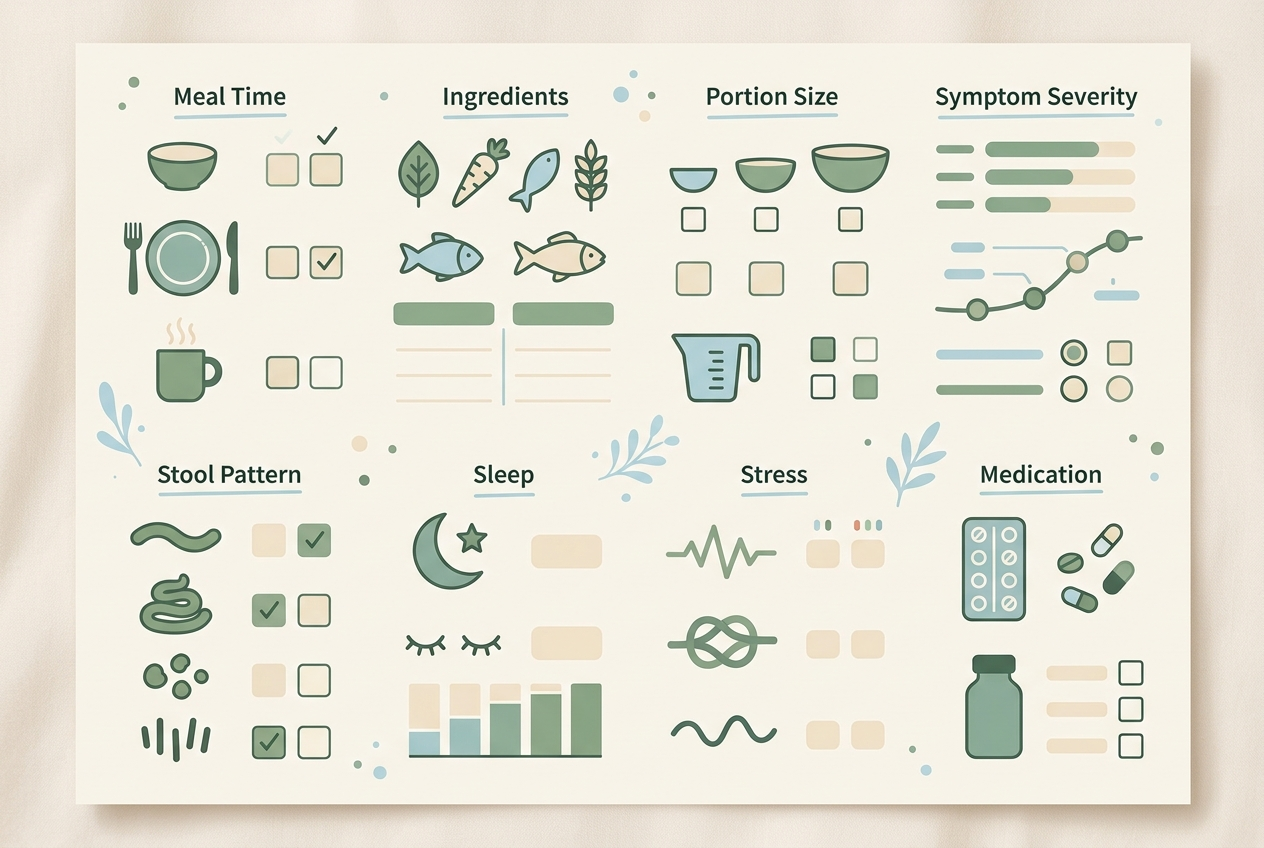
    What can you track before changing your diet?

    Track timing, location, stool pattern, meal composition, carbonated drinks, gum chewing, menstrual-cycle day, medication changes, stress level, sleep, and whether passing gas or stool improves pressure. The Bristol Stool Form Scale can describe stool consistency more clearly than labels like normal or weird. Record serving sizes because bloating often reflects dose, not a food being universally bad. A low-FODMAP trial may help some people with IBS, but it works best as a structured elimination and reintroduction plan rather than permanent restriction. The American College of Gastroenterology’s IBS guideline discusses limited, supervised low-FODMAP use for global IBS symptoms. Tracking first prevents random food removal, which can reduce fiber diversity and make constipation worse. A useful diary covers three to seven days before major changes.

    What gentle steps are reasonable for common bloating?

    Gentle first steps include walking after meals, eating more slowly, reducing carbonated drinks, checking constipation, spacing large meals, and increasing fiber gradually instead of suddenly. Water, regular meals, and consistent bathroom timing can support stool movement when constipation is part of the pattern. Peppermint oil, simethicone, lactase, or targeted dietary trials may fit some situations, but they should match the suspected cause rather than being stacked randomly. People with reflux, pregnancy, gallbladder disease, medication interactions, or chronic conditions should ask a clinician before using concentrated oils or new supplements. The safest approach tests one variable at a time for one to two weeks. If bloating improves after stool regularity improves, constipation was likely a major driver.

    What do people often misunderstand about lower belly bloating?

    People often assume lower belly bloating means fat gain, one bad food, or one missing supplement. Fat gain changes gradually, while bloating can change within hours after meals, bowel movements, gas movement, or cycle shifts. A food can be nutritious and still cause symptoms at a certain dose, especially beans, onions, wheat, apples, dairy, sugar alcohols, cruciferous vegetables, and large raw salads. Another mistake is cutting every fermentable food at once, which makes it difficult to identify the true trigger. Bloating can also coexist with normal digestion, especially after a large meal. The more useful question is whether the pattern is new, severe, persistent, linked to constipation, linked to a specific food dose, or paired with red flags.

    Is lower belly bloating usually gas?

    Lower belly bloating is often related to gas, but gas is not the only cause. Stool burden, fluid shifts, pelvic-floor tension, menstrual-cycle changes, and abdominal-wall coordination can create a similar pressure sensation.

    Can constipation cause lower abdominal bloating?

    Constipation can cause lower abdominal bloating because stool slows transit and can trap gas in the colon. Infrequent bowel movements, hard stool, straining, or incomplete evacuation make constipation more likely.

    Can bloating happen without visible swelling?

    Bloating can happen without visible swelling because the symptom is a sensation of pressure or fullness. Distension describes a visible or measurable increase in abdominal size, and the two can overlap without being identical.

    Can periods cause lower belly bloating?

    Menstrual-cycle hormone shifts can change fluid balance, bowel motility, and pelvic sensitivity. New severe pelvic pain, abnormal bleeding, or symptoms that are very different from baseline should be discussed with a clinician.

    Should you cut out all high-FODMAP foods?

    Do not cut out all high-FODMAP foods indefinitely without a plan. A structured low-FODMAP trial uses short elimination, careful reintroduction, and personalization so the diet does not become unnecessarily restrictive.

    Can drinking water fix bloating?

    Water can help when constipation or dehydration contributes to bloating, but water does not neutralize every cause. Meal size, carbonated drinks, fiber dose, stool pattern, and food intolerance may matter more.

    When is bloating not normal?

    Bloating is not normal when it is severe, worsening, persistent, or paired with vomiting, fever, blood in stool, black stool, unexplained weight loss, fainting, or inability to pass stool or gas. Those symptoms deserve medical attention.

    Sources:

  • Which Vegetables Build Gut Microbiome Diversity Best?

    Which Vegetables Build Gut Microbiome Diversity Best?

    Eating a wider variety of vegetables can support gut microbiome diversity because different plant fibers, resistant starches, and polyphenols feed different microbial groups. A practical target is not one magic vegetable; it is a rotating mix of leafy greens, cruciferous vegetables, legumes, alliums, roots, mushrooms, and colorful plant foods across the week.

    How did we evaluate vegetables for microbiome diversity?

    We evaluated vegetables by looking at fermentable fiber type, polyphenol content, resistant starch potential, culinary repeatability, and evidence from human microbiome research. We prioritized population studies, clinical nutrition reviews, and consensus definitions for prebiotic substrates over single-food claims. The strongest evidence supports overall plant variety and fiber adequacy, while evidence for one vegetable outperforming every other vegetable is weaker. We also considered grocery accessibility, preparation flexibility, and serving-size tolerance because a vegetable only helps if someone can eat it repeatedly. We excluded disease-treatment claims and ranked vegetables as daily dietary tools that can support microbial variety within a broader pattern of meals, sleep, movement, and tolerance. This method favors rotation, category coverage, gradual change, and ordinary grocery-store foods over dramatic short-term protocols, unsupported superfood rankings, or overly narrow food lists.

    Which vegetables build microbiome diversity best?

    The best vegetables for microbiome diversity are the ones that supply different substrates to different gut microbes. Leafy greens such as spinach, kale, arugula, and romaine provide insoluble fiber, magnesium, folate, and plant nitrates. Cruciferous vegetables such as broccoli, cabbage, cauliflower, and Brussels sprouts provide glucosinolates, soluble fiber, and sulfur-containing compounds. Alliums such as onion, garlic, leek, and scallion provide fructans that Bifidobacterium and other saccharolytic bacteria can ferment. Legumes such as lentils, chickpeas, black beans, and split peas provide resistant starch, galactooligosaccharides, and protein-bound fiber. The American Gut Project reported that people eating more than 30 plant types per week had greater microbiome diversity than people eating 10 or fewer, according to a 2018 mSystems paper indexed by PubMed. Meaningful variety matters because the microbiome responds to substrate range, not just vegetable volume.

    • Best weekly target: 20 to 30 different plant foods.
    • Best daily base: greens, alliums, legumes, and colorful vegetables.
    • Best tolerance strategy: increase fiber gradually.

    What vegetable list gives the widest range of gut substrates?

    A useful microbiome-diversity list includes leafy greens, crucifers, alliums, legumes, roots, mushrooms, sea vegetables, and colorful fruiting vegetables. Spinach, kale, and chard supply leafy-green fiber and micronutrients. Broccoli, cabbage, bok choy, radish, and Brussels sprouts supply cruciferous compounds and roughage. Onion, garlic, leek, asparagus, and artichoke supply fructans, inulin-type fibers, and other fermentable carbohydrates. Lentils, chickpeas, peas, and black beans supply resistant starch and galactooligosaccharides. Sweet potato, cooled potato, carrot, beet, and parsnip supply root vegetable fibers and, when cooked then cooled, more resistant starch. Mushrooms supply beta-glucans and chitin-like fibers. Red pepper, eggplant, tomato, purple cabbage, and herbs add polyphenols. The International Scientific Association for Probiotics and Prebiotics defines a prebiotic as a substrate selectively used by host microorganisms for a health benefit in a 2017 consensus statement, so the best list emphasizes substrate diversity.

    How many vegetables do you need each week?

    A realistic target is 15 to 30 different plant foods per week, with vegetables making up the largest share. The 30-plant benchmark comes from observational microbiome data, not a universal clinical prescription, so it should be treated as a practical variety target rather than a medical rule. Someone who eats five vegetables per week can start by adding two new categories: one allium and one legume. Someone already eating 15 plant foods can improve range by rotating colors, fiber types, and preparation methods. The Dietary Guidelines for Americans recommend adults eat vegetables from dark-green, red-orange, legume, starchy, and other vegetable subgroups across the week, and that subgroup framework is useful for microbiome variety. A rotation beats a single “superfood” because gut microbes receive a broader set of fermentable carbohydrates, phenolic compounds, and mineral cofactors.

    Which vegetables are best for beginners with sensitive digestion?

    Seven vegetable categories that provide different fibers and polyphenols for gut microbes
    Seven vegetable categories that provide different fibers and polyphenols for gut microbes

    Beginners with sensitive digestion often do better with cooked, peeled, smaller servings before raw, large, high-FODMAP servings. Carrots, zucchini, peeled cucumber, spinach, lettuce, potato, sweet potato, and squash tend to be easier starting points for many people because cooking softens fiber structure. Lentils, chickpeas, onion, garlic, artichoke, asparagus, and large broccoli servings can be more fermentable, so they may cause gas when the dose rises quickly. This does not make those vegetables bad; it means fermentation speed can exceed tolerance. A careful approach starts with one new vegetable, one half-cup serving, and three to four repeat exposures before adding another variable. A 2020 review in Nutrients describes dietary fiber as a microbiota-accessible carbohydrate category with effects that depend on fiber structure, dose, and host context, so tolerance should guide speed. Symptom tracking should record serving size, preparation, timing, stool pattern, and gas instead of blaming an entire vegetable category.

    What cooking methods preserve microbiome value?

    Cooking methods change texture, water content, resistant starch, and polyphenol availability, but they do not erase microbiome value. Steaming broccoli, sauteing greens, roasting carrots, pressure-cooking beans, and simmering lentils can make fiber easier to chew and tolerate. Cooking and cooling potatoes, rice, or some root vegetables can increase resistant starch, which reaches the colon and becomes a fermentation substrate for short-chain-fatty-acid-producing bacteria. Fermentation adds another layer: sauerkraut, kimchi, and lacto-fermented vegetables can supply organic acids and live microbes when products remain unpasteurized, though microbial counts vary by process and storage. Blending vegetables into soup can improve consistency because soup supports larger portions without requiring a raw salad every day. The most useful rule is practical: choose preparation methods that help you repeat the vegetable. A perfectly raw crucifer serving that causes discomfort is less valuable than a smaller cooked serving that fits the week.

    What do people get wrong about vegetables and the microbiome?

    The biggest mistake is reducing microbiome diversity to one food. No single vegetable feeds every useful microbial group, and no food can guarantee a specific microbiome result. The second mistake is chasing raw volume without tolerance; a sudden jump from low fiber to high fiber can increase bloating, gas, and stool changes. The third mistake is ignoring legumes, herbs, mushrooms, and alliums because they do not look like typical salad vegetables. These foods expand substrate diversity and help a weekly plant count rise naturally. The fourth mistake is judging a vegetable only by calories. Microbes interact with fiber structure, resistant starch, polyphenols, sulfur compounds, and food matrix. The fifth mistake is removing vegetables after one uncomfortable meal without checking portion size, cooking method, or total daily fiber. The most durable approach uses a rotating grocery list, small repeatable portions, and symptom-aware pacing rather than a one-week overload.

    For a detailed comparison of specific products and strains, see Best Options for Rebuilding Your Gut Microbiome: Probiotics, Prebiotics, and Routines Compared.

    For a detailed comparison of specific products and strains, see Gut Microbiome Test: Ombre, Viome, Thorne, and No-Test Routines Compared.

    What is a simple weekly vegetable plan?

    A simple weekly plan uses seven categories: greens, crucifers, alliums, legumes, roots, mushrooms, and colorful vegetables. Monday can use spinach, onion, lentils, and carrots. Tuesday can use romaine, cabbage, chickpeas, and red pepper. Wednesday can use kale, garlic, sweet potato, and mushrooms. Thursday can use arugula, broccoli, black beans, and tomato. Friday can use chard, leek, peas, and beet. Saturday can use bok choy, radish, cooled potato, and herbs. Sunday can use lettuce, cauliflower, asparagus, and eggplant. This pattern creates 25 or more plant exposures without requiring exotic ingredients. The plan works because it distributes fermentable carbohydrates, insoluble fiber, resistant starch, and polyphenols across meals. People with IBS, inflammatory bowel disease, severe constipation, or food-triggered symptoms should personalize the list with a registered dietitian or clinician.

    Do vegetables increase gut microbiome diversity?

    Vegetables can support gut microbiome diversity when they increase overall plant variety, fiber intake, and polyphenol exposure. The strongest practical evidence points to diverse plant intake across the week rather than one specific vegetable.

    What is the best vegetable for gut bacteria?

    There is no single best vegetable for all gut bacteria. Garlic, onion, asparagus, artichoke, legumes, leafy greens, broccoli, and mushrooms each supply different substrates, so a rotating mix is more useful than a single winner.

    Are raw vegetables better than cooked vegetables?

    Raw vegetables are not automatically better than cooked vegetables. Cooking can reduce some heat-sensitive compounds, but it can also improve tolerance, soften fibers, and make a vegetable easier to eat consistently.

    Do legumes count as vegetables for gut diversity?

    Legumes count as plant foods and they are especially useful for microbiome diversity. Lentils, chickpeas, black beans, and peas provide resistant starch, galactooligosaccharides, and fermentable fibers.

    How fast should you add more vegetables?

    Add vegetables gradually if your baseline fiber intake is low. One new vegetable or one extra half-cup serving every few days gives gut microbes and bowel habits time to adapt.

    Can vegetables cause bloating?

    Vegetables can cause bloating when fermentable carbohydrates increase faster than tolerance. Onion, garlic, beans, broccoli, and asparagus are nutritious, but they may need smaller servings or cooked preparation for sensitive digestion.

    What is the easiest way to reach 30 plant foods?

    The easiest way is to count herbs, legumes, seeds, whole grains, mushrooms, fruits, and vegetables together. A soup, salad, grain bowl, or stir-fry can add six to ten plant exposures in one meal.

    Sources:

  • Can Allergies Make Acid Reflux Feel Worse?

    Can Allergies Make Acid Reflux Feel Worse?

    Allergies can make acid reflux feel worse when nasal drainage, coughing, throat clearing, chest pressure, or sleep disruption irritates the upper airway. Allergies do not usually cause reflux by themselves, but allergy flares can overlap with GERD symptoms and make throat burning, sour taste, hoarseness, or nighttime discomfort harder to interpret.

    How did we evaluate acid reflux and allergies?

    We evaluated acid reflux and allergies by separating digestive reflux mechanisms from upper-airway allergy symptoms. We prioritized NIDDK GERD guidance, Mayo Clinic reflux summaries, Cleveland Clinic postnasal drip education, and peer-reviewed research on reflux, cough, and airway symptoms. We excluded claims that seasonal allergies directly “cause GERD,” because the stronger evidence supports symptom overlap and irritation pathways rather than a single-cause model. We also excluded supplement, detox, and cleanse claims because this article is an educational explanation, not a product comparison. The practical question is pattern recognition: reflux tends to track meals, lying down, sour regurgitation, and burning, while allergy symptoms tend to track pollen, dust, pets, nasal itch, sneezing, and drainage. When both patterns appear together, a symptom diary can help separate triggers before a clinician adjusts medication, testing, or referral timing safely.

    Can allergies make acid reflux symptoms feel worse?

    Allergies can make reflux symptoms feel worse by increasing nasal drainage, throat clearing, coughing, and sleep fragmentation. Cleveland Clinic describes postnasal drip as mucus drainage that can cause coughing, throat clearing, sore throat, and hoarseness; those sensations can resemble laryngopharyngeal reflux. NIDDK explains that GERD can cause heartburn, regurgitation, chest discomfort, and swallowing-related symptoms when stomach contents move back into the esophagus. The overlap creates confusion because both conditions can irritate the throat without obvious stomach pain. Allergies may also worsen nighttime symptoms when congestion pushes mouth breathing, coughing, or poor sleep. That does not prove pollen or dust creates stomach acid. It means the airway and esophagus share symptom territory. The most useful clue is timing: allergy symptoms often follow exposure patterns, while reflux often follows meals, bending, alcohol, large portions, or lying down.

    What symptoms point more toward reflux than allergies?

    Symptoms point more toward reflux when burning rises behind the breastbone, sour or bitter fluid reaches the throat, burping follows meals, or discomfort worsens after lying down. Mayo Clinic lists heartburn after eating, regurgitation, upper abdominal or chest pain, trouble swallowing, and a sensation of a lump in the throat among GERD symptoms. Reflux also tends to worsen after large evening meals, peppermint, chocolate, fatty foods, alcohol, coffee, or tight waist pressure in susceptible people. Allergy symptoms point elsewhere when sneezing, itchy eyes, clear nasal drainage, seasonal timing, pet exposure, or dust exposure dominate the pattern. A mixed picture is common: a person may have allergic rhinitis and reflux during the same week. The diary question is not “which one is real?” The better question is which trigger starts first, which symptom lasts longest, and which change reliably helps.

    What symptoms point more toward allergies than reflux?

    Symptom diary setup for tracking meals, allergy exposure, reflux, and throat symptoms.
    Symptom diary setup for tracking meals, allergy exposure, reflux, and throat symptoms.

    Symptoms point more toward allergies when sneezing, nasal itching, watery eyes, clear runny nose, sinus pressure, and exposure-linked flares appear before throat symptoms. Allergic rhinitis often follows pollen seasons, indoor dust, mold, animals, or workplace irritants. Postnasal drip can create throat mucus, coughing, frequent swallowing, and morning hoarseness even when the stomach is not the main driver. Reflux can still coexist, especially if coughing increases abdominal pressure or poor sleep changes meal timing and caffeine intake. Antihistamines, decongestants, and nasal sprays can also change dryness, mucus thickness, or sleep quality, so medication timing belongs in the diary. A 2021 review in Frontiers in Medicine describes reflux and cough as a bidirectional clinical problem rather than a simple one-way cause. That nuance matters because throat symptoms can come from the nose, esophagus, lungs, medications, or several sources at once.

    How can you track the difference at home?

    A useful home log records meals, lying-down time, allergy exposure, nasal symptoms, throat symptoms, cough, medications, and sleep position for seven to fourteen days. Reflux clues include symptoms within two to three hours after meals, worse symptoms after bending or lying down, sour taste, and improvement with smaller evening meals. Allergy clues include symptoms after outdoor exposure, dusty rooms, pets, open windows, or high-pollen days, especially when sneezing and itchy eyes appear. Record medication timing because a new antihistamine, decongestant, proton-pump inhibitor, H2 blocker, or nasal steroid can change the pattern. Avoid changing everything at once; stacked changes make the signal unreadable. Red flags need medical care rather than diary experiments: chest pain with exertion, trouble swallowing, vomiting blood, black stools, unexplained weight loss, choking, severe shortness of breath, or persistent symptoms despite appropriate treatment.

    What common mistakes make the overlap harder to solve?

    The first mistake is treating every throat symptom as reflux. Postnasal drip, vocal strain, viral illness, asthma, medication dryness, and irritant exposure can also cause throat clearing or cough. The second mistake is treating every sour taste as allergies, because regurgitation after meals is a classic reflux clue. The third mistake is taking multiple new remedies at once, then losing the ability to identify the helpful or irritating change. The fourth mistake is ignoring meal size, alcohol, late snacks, caffeine, and sleep position while focusing only on pollen counts. The fifth mistake is delaying care when symptoms are severe, new, progressive, or paired with swallowing trouble. Reflux and allergies can overlap, but overlap does not make self-diagnosis reliable. A clinician can evaluate GERD, allergic rhinitis, asthma, sinus disease, medication side effects, and throat conditions when the pattern stays confusing.

    What questions do people ask about reflux and allergies?

    People usually ask whether allergies cause reflux, whether postnasal drip can mimic reflux, and whether allergy medicine can change digestive symptoms. The best answer is cautious: allergies can worsen throat irritation and cough, while reflux can irritate the throat and airway, so the symptom map overlaps. A diary helps identify whether meals, body position, pollen, dust, pets, or medication timing starts the flare. Medical evaluation matters when symptoms are persistent, severe, or associated with warning signs. People should also remember that reflux and allergies can both be present, so improvement in one system may not fully clear the other. The goal is not to force one label onto every symptom. The goal is to identify the dominant trigger, reduce obvious aggravators, and get medical guidance when the pattern does not make sense clinically anymore.

    Can postnasal drip feel like acid reflux?

    Yes, postnasal drip can cause throat clearing, cough, mucus sensation, hoarseness, and sore throat. Those symptoms can feel similar to laryngopharyngeal reflux, especially when classic heartburn is absent.

    Can acid reflux cause allergy-like throat symptoms?

    Reflux can cause throat irritation, cough, hoarseness, sour taste, and a lump-in-throat sensation. It does not cause pollen allergy, but it can create symptoms in the same throat and airway area.

    Can antihistamines make reflux worse?

    Some people notice dryness, thicker mucus, sleep changes, or altered eating patterns after antihistamines. That does not prove reflux is worsening, so tracking medication timing and symptoms is useful.

    Why are symptoms worse at night?

    Night symptoms can worsen because lying down favors reflux, while congestion and postnasal drip can also worsen in bed. Late meals, alcohol, and mouth breathing can add more irritation.

    Should you treat allergies or reflux first?

    The first target should be the clearest pattern. Exposure-linked sneezing and itchy eyes point toward allergy management, while meal-linked burning and regurgitation point toward reflux evaluation.

    When should you see a clinician?

    Seek medical care for trouble swallowing, chest pain, vomiting blood, black stools, unexplained weight loss, choking, severe shortness of breath, or symptoms that persist despite appropriate care. These signs need evaluation, not home sorting.

    Sources:

  • What Is the Estrobolome, and Why Does It Matter in Your 40s?

    What Is the Estrobolome, and Why Does It Matter in Your 40s?

    The estrobolome is the gut-microbial gene network that helps process estrogens after the liver packages them for elimination. It matters most in midlife because estrogen levels, gut transit, fiber intake, bile flow, and microbial beta-glucuronidase activity can shift during perimenopause and menopause.

    How did we evaluate the estrobolome?

    We evaluated the estrobolome by prioritizing peer-reviewed reviews on gut microbial beta-glucuronidase, estrogen recirculation, menopause-related microbiome shifts, and dietary-fiber fermentation. We weighted human observational data and mechanistic reviews above social-media hormone claims, because estrobolome science is still developing. We excluded claims that promise hormone balancing, detoxification, disease prevention, or cycle correction from a single food, probiotic, or cleanse. The strongest evidence supports a bidirectional relationship between gut microbes and estrogen metabolism; the weaker evidence involves predicting individual symptoms from one microbiome marker. This article uses cautious language because beta-glucuronidase activity, stool patterns, bile acids, body composition, medications, and menopause stage interact. The goal is to explain the mechanism, not diagnose hormone problems from digestive symptoms. We also separated routine digestive support from medical care because midlife symptoms can have several causes.

    What is the estrobolome and how does it work?

    The estrobolome describes gut microbial genes that influence estrogen metabolism, especially genes that encode beta-glucuronidase enzymes. The liver conjugates estrogens through glucuronidation, then bile carries those conjugated estrogens into the intestine. Some gut bacteria produce beta-glucuronidase, which can deconjugate estrogen metabolites and make them available for reabsorption through enterohepatic circulation. A 2023 review in Gut Microbes describes microbial beta-glucuronidase as a regulator of female estrogen metabolism, but the authors also emphasize complex host-microbe interactions rather than a single on-off switch. The practical interpretation is that gut microbes can affect estrogen handling, while estrogen levels can also affect gut microbial ecology. The estrobolome is therefore a feedback system. It includes microbial enzymes, bile movement, stool transit, fiber fermentation, and liver processing, not just one probiotic strain or one hormone pathway. Diet and medications can shift several of those inputs.

    Why might the estrobolome matter more for women in their 40s?

    The estrobolome may matter more in the 40s because perimenopause changes estrogen rhythm before menopause fully lowers ovarian estrogen production. Hormonal fluctuation can coincide with slower gut transit, sleep disruption, stress changes, altered eating patterns, and body-composition shifts, all of which can influence the microbiome. A 2025 review on diet, the gut microbiome, and estrogen physiology describes perimenopause as a window where microbial metabolism and dietary factors may interact with health span. That does not mean bloating proves hormone imbalance or that microbiome testing can explain every symptom. It means midlife is a reasonable time to support fundamentals that affect both digestion and microbial metabolism. Regular bowel movements help eliminate conjugated metabolites. Fiber intake supplies substrates for short-chain fatty acid production. Resistance training, adequate protein, sleep consistency, and medical follow-up provide context that a stool-test dashboard cannot replace.

    What daily habits support estrogen metabolism through the gut?

    Abstract diagram of liver, intestine, bile flow, and gut microbes involved in estrogen metabolism.
    Abstract diagram of liver, intestine, bile flow, and gut microbes involved in estrogen metabolism.

    Daily habits support estrogen metabolism through the gut by improving stool regularity, microbial diversity, and bile-acid movement. Dietary fiber is the most practical lever because gut bacteria ferment fibers into short-chain fatty acids such as acetate, propionate, and butyrate. A 2022 systematic review in Nutrients found that dietary fibers can affect short-chain fatty acids and gut microbiota composition in healthy adults, although responses vary by fiber type and person. Cruciferous vegetables, legumes, oats, berries, ground flaxseed, chia, and resistant starch provide different fermentable substrates. Hydration and walking support motility, which matters because prolonged constipation can change contact time between intestinal contents and microbial enzymes. Alcohol moderation matters because liver metabolism and gut permeability interact with hormone processing. The strongest routine is boring but measurable: fiber target, bowel pattern, sleep, movement, and medication review, repeated for weeks rather than days.

    What do people get wrong about the estrobolome?

    People often get the estrobolome wrong by turning a real mechanism into a one-step hormone hack. Beta-glucuronidase is not automatically bad; microbial beta-glucuronidase enzymes participate in normal metabolism, and different bacterial enzymes behave differently. Another mistake is assuming more probiotics always means better estrogen clearance. The research does not support choosing a random probiotic solely to “fix” estrogen recirculation. A third mistake is using detox language when the actual physiology involves liver conjugation, bile flow, microbial enzymes, stool transit, and reabsorption. A fourth mistake is ignoring red flags such as abnormal bleeding, severe pelvic pain, unexplained weight loss, black stools, or persistent diarrhea. Those signs require medical evaluation, not microbiome optimization. The useful question is narrower: which daily inputs make bowel regularity and microbial fermentation more stable, and which symptoms need clinical attention?

    Should you test your microbiome for estrobolome activity?

    Microbiome testing can be interesting, but most commercial stool tests cannot yet translate estrobolome markers into a reliable personal hormone plan. Some research assays measure microbial beta-glucuronidase genes, microbial taxa, metabolites, or inferred enzyme activity, but clinical interpretation remains limited. A PubMed-indexed review on the estrogen-gut microbiome axis describes physiological and clinical implications, yet review-level evidence does not equal a validated consumer diagnostic tool. If someone has heavy bleeding, irregular cycles, hot flashes, pelvic pain, or new digestive symptoms, standard medical evaluation should come first. A stool test may provide discussion material, but it should not override symptoms, medication history, colon-cancer screening age, thyroid status, iron status, or gynecologic assessment. For most people, tracking fiber intake, bowel frequency, alcohol, sleep, and symptom timing gives more actionable information than a single microbiome snapshot, especially during fluctuating perimenopause.

    What questions do people ask about the estrobolome?

    People ask whether the estrobolome controls estrogen, whether gut health affects perimenopause, whether constipation changes hormone symptoms, and whether specific foods can improve estrogen metabolism. The best short answer is balanced: the gut microbiome participates in estrogen recirculation, but it does not independently control hormones. Gut-supportive habits may improve the background system that processes metabolites, especially when bowel regularity and fiber intake are inconsistent. Individual symptoms still need context from age, cycle pattern, medications, stress, sleep, thyroid status, and gynecologic history. A practical plan starts with food diversity, bowel regularity, alcohol moderation, and medical care for red flags. Strong claims about detoxing estrogen or reversing menopause exceed the evidence. The useful middle ground is tracking digestive patterns while treating hormone symptoms as medical context, not internet guesswork.

    Is the estrobolome a real scientific term?

    Yes, researchers use estrobolome to describe gut microbial genes involved in estrogen metabolism. The term is real, but consumer claims often oversimplify what the science can predict.

    Can constipation affect estrogen recirculation?

    Constipation can increase intestinal transit time, which may influence microbial metabolism and reabsorption conditions. It should be treated as one factor, not as proof of excess estrogen.

    Do probiotics balance estrogen?

    No specific over-the-counter probiotic has been proven to balance estrogen in the broad way marketing claims imply. Probiotic effects are strain-specific, dose-specific, and outcome-specific.

    Which foods support the estrobolome?

    Fiber-rich plant foods are the best-supported starting point. Legumes, oats, berries, flaxseed, chia, vegetables, and resistant starch feed microbial fermentation in different ways.

    Does perimenopause change the gut microbiome?

    Research suggests menopause-related hormonal shifts can coincide with microbiome changes. The direction and size of those changes vary by diet, body composition, medications, and study design.

    Can a stool test diagnose hormone imbalance?

    A stool test cannot diagnose hormone imbalance by itself. Blood tests, symptom history, cycle history, medications, and clinician evaluation provide more reliable context.

    When should symptoms be checked medically?

    Abnormal bleeding, severe pelvic pain, black stools, persistent diarrhea, unintentional weight loss, or new symptoms after age 45 should be checked medically. Digestive and hormonal symptoms can overlap with conditions that need standard evaluation.

    Sources:

  • Why Do I Feel Bloated After a Bowel Movement?

    Why Do I Feel Bloated After a Bowel Movement?

    Mild stomach discomfort and bloating after a bowel movement can happen when stool movement, gas movement, rectal sensitivity, constipation, or pelvic-floor coordination changes how the gut feels after emptying. It is usually a pattern to track, not a diagnosis. Severe, new, persistent, or worsening symptoms need medical evaluation.

    How did we evaluate bloating after a bowel movement?

    We evaluated post-bowel-movement bloating by matching symptom timing to common digestive mechanisms: stool retention, gas transit, visceral sensitivity, pelvic-floor coordination, and bowel-habit changes. We prioritized NIDDK, MedlinePlus, NCBI Bookshelf, PubMed-indexed Rome IV discussions, and peer-reviewed reviews over anecdotal forum explanations, product-first claims, and social-media diagnosis language. We excluded product-first explanations because this question asks what the pattern may mean before anyone compares remedies, and we weighted tracking steps higher than one-size-fits-all advice. The main limitation is that symptom timing cannot identify one cause by itself; discomfort after a bowel movement can overlap with constipation, diarrhea, IBS-pattern symptoms, diet changes, medication effects, anxiety physiology, hemorrhoids, fissures, pelvic-floor tension, or unrelated abdominal problems. We also separated mild recurring patterns from red-flag patterns because those two groups need different next steps and different clinical urgency levels overall.

    Why can bloating happen after you poop?

    Bloating after a bowel movement can happen because the bowel movement changes pressure, gas position, and sensory signaling inside the colon and rectum. A person may empty some stool but still retain gas or stool higher in the colon. The rectum may also feel irritated after straining, urgency, diarrhea, or repeated wiping. In functional bowel disorders, normal stretch can feel stronger than expected because the gut-brain axis processes internal signals more intensely. A review in PMC describes visceral hypersensitivity as an important mechanism in irritable bowel syndrome, especially for pain and bloating perception (PMC). That does not mean every post-poop symptom is IBS. It means timing, stool form, straining, urgency, food pattern, bathroom duration, medication changes, and red flags matter more than one isolated episode. A single mild episode often tells less than a repeated pattern across similar meals and bowel movements.

    What does constipation have to do with after-poop bloating?

    Constipation can cause bloating after a bowel movement when stool remains in the colon or evacuation feels incomplete. MedlinePlus describes constipation as fewer than three bowel movements per week, hard or dry stool, or painful passage in many cases (MedlinePlus). NIDDK advises medical care when constipation persists despite self-care or appears with rectal bleeding, blood in stool, continual abdominal pain, or other concerning signs (NIDDK). A person can poop daily and still strain, pass small hard pieces, or feel unfinished. That pattern can leave gas trapped behind stool, make the abdomen feel distended, and create discomfort after the bathroom. Tracking Bristol stool type, straining, time on the toilet, urgency, and the sense of complete emptying gives more useful information than tracking frequency alone. The key question is not just “Did I go?” but “Was emptying easy and complete?”

    Could pelvic-floor coordination be involved?

    Pelvic-floor coordination can matter when the muscles that should relax during a bowel movement tighten, do not fully relax, or require straining to empty. NCBI Bookshelf notes that pelvic-floor dysfunction can involve incomplete evacuation, prolonged straining, or pressure during defecation (NCBI Bookshelf). This pattern can make someone feel bloated or uncomfortable after going because the rectum and lower bowel remain irritated or not fully emptied. Clues include long bathroom sessions, repeated trips, narrow stool, needing to change position, breath-holding, or feeling like more stool remains. This is not something to self-diagnose from one symptom. A clinician, gastroenterologist, or pelvic-floor physical therapist can evaluate coordination problems when the pattern is persistent, especially when ordinary fiber, water, walking, and routine changes do not help. The practical clue is effort: easy bowel movements usually point away from coordination trouble.

    How can you track the pattern before guessing?

    Digestive tracking log with Bristol stool type, straining, bloating timing, and red flag columns.
    Digestive tracking log with Bristol stool type, straining, bloating timing, and red flag columns.

    Track the pattern for one to two weeks with four data points: stool form, straining, timing of bloating, and food or drink triggers. The Bristol Stool Form Scale can help describe stool texture more precisely than “normal” or “weird.” Note whether bloating begins before the bowel movement, immediately after, or one to three hours later. Also note carbonated drinks, large meals, dairy, beans, onions, wheat, sugar alcohols, high-fat meals, caffeine, stress, new medications, and menstrual-cycle timing when relevant. Rome IV discussions define IBS around recurrent abdominal pain related to defecation and bowel-habit changes, but clinical interpretation belongs with a healthcare professional (Rome IV review). A log helps separate occasional gas movement from constipation, diarrhea, urgency, incomplete evacuation, or escalating symptoms. It also gives a clinician concrete details if the pattern continues beyond basic routine changes.

    When should after-poop bloating be checked?

    After-poop bloating should be checked promptly when it is severe, progressive, new after age 50, associated with fever, vomiting, blood, black stool, unexplained weight loss, anemia, persistent diarrhea, nighttime symptoms, or ongoing abdominal pain. It should also be checked when constipation does not improve with basic self-care or when bowel habits change suddenly and stay changed. These red flags do not prove a serious condition, but they move the question out of self-tracking territory. Mild discomfort that comes and goes with stool form, meal size, or straining can often be logged first. Persistent patterns deserve a clinician because stool retention, pelvic-floor dysfunction, IBS, medication effects, infections, inflammatory conditions, and structural problems can overlap. The goal is not alarm; the goal is not missing the pattern that needs care. New symptoms after antibiotics, surgery, travel, or major medication changes deserve extra caution.

    What questions do people ask about bloating after bowel movements?

    Is it normal to feel bloated after pooping?

    Occasional bloating after a bowel movement can happen, especially with gas, constipation, straining, or large meals. It is worth tracking when it repeats, worsens, or appears with pain or bowel-habit changes.

    Can incomplete emptying cause bloating?

    Yes, incomplete evacuation can leave stool or gas behind and create pressure after the bathroom. Clues include straining, multiple trips, hard stool, or feeling unfinished.

    Can IBS cause discomfort after bowel movements?

    IBS-pattern symptoms can include abdominal pain related to defecation and altered bowel habits. Only a clinician can interpret whether a recurring pattern fits IBS or another condition.

    Does diarrhea cause after-poop bloating?

    Diarrhea can irritate the rectum and change gas movement, so bloating or discomfort can appear afterward. Persistent diarrhea, dehydration, fever, blood, or nighttime symptoms should be checked.

    Should I take fiber for this pattern?

    Fiber may help constipation-leaning patterns, but sudden increases can worsen gas and bloating. Increase fiber gradually and track stool form, water intake, and symptoms.

    What should I write down for a doctor?

    Write down stool frequency, Bristol stool type, straining, pain location, bloating timing, blood, weight change, medications, supplements, and food patterns. A clear log is more useful than a vague “my digestion is off.”

    What is the practical next step?

    For mild recurring bloating after a bowel movement, track stool form, straining, timing, and incomplete-emptying sensations for one to two weeks. Improve basics first: steady fluids, regular bathroom time, gradual fiber, gentle walking, and less straining. Avoid changing several variables at once because that makes the pattern harder to interpret. If stool is hard, start with constipation basics. If stool is loose or urgent, track food timing, caffeine, stress, and recent illness. If emptying feels incomplete despite regular bowel movements, ask about pelvic-floor coordination rather than assuming the issue is only diet. Seek medical care sooner if symptoms are severe, new, persistent, worsening, or paired with red flags. A clear symptom log makes that visit faster and more useful because it shows timing, severity, and stool pattern instead of relying on memory alone later.

  • Fat or Bloating? How to Tell What Is Changing Your Belly Size

    Fat or Bloating? How to Tell What Is Changing Your Belly Size

    Sudden belly size changes are usually bloating, gas, stool, fluid, posture, or meal volume, while body fat changes more slowly over weeks. A 21-year-old man at 6’1″ and 195 lb can have either pattern, so track timing, waist change, bowel pattern, and red-flag symptoms before assuming fat gain.

    How we evaluated fat versus bloating?

    We evaluated this question by separating visible abdominal distension from longer-term body composition change, then checking which clues a reader can observe without pretending to diagnose themselves. NIDDK digestive references received priority for gas, constipation, and bloating mechanisms, while medical triage references shaped the red-flag section because symptom safety matters more than a mirror guess. We excluded supplement-first explanations because a cold-stage question needs anatomy, timing, stool pattern, meal context, hydration, posture, and symptom pattern before product categories or internet hacks enter the conversation. The main limitation is that a photo, body weight, and height cannot identify the cause of abdominal size without a clinical history, abdominal exam, timeline, medication review, repeated measurements, stool history, food pattern, and sometimes basic testing.

    What is the practical difference between belly fat and bloating?

    Belly fat is stored adipose tissue, while bloating is a sensation of pressure, fullness, or visible distension in the abdomen. Body fat changes when energy intake, activity, sleep, alcohol, and training patterns create a sustained surplus over time. Bloating can change across one day because swallowed air, intestinal gas, meal volume, constipation, sodium, and fluid shifts change abdominal shape faster than fat tissue can. NIDDK lists belching, bloating, distension, and passing gas as common gas-related symptoms in its gas in the digestive tract guide. A useful home check compares morning waist, evening waist, bowel movement timing, and symptom triggers for seven days. If the abdomen is flatter in the morning and larger after meals, bloating is more likely. If waist circumference rises steadily across weeks, body fat or broader weight gain becomes more plausible.

    How can timing show whether the change is bloating?

    Timing is the strongest nonmedical clue because bloating follows meals, bowel rhythm, and gas movement more closely than fat gain. A stomach that feels normal on waking and tight after lunch often reflects meal volume, fermentable carbohydrate intake, swallowed air, constipation, or delayed gas transit. A stomach that looks similar every morning for several weeks may reflect fat gain, posture, muscle tone, fluid retention, or an underlying medical pattern. NIDDK explains that gut microbes in the large intestine help digest carbohydrates and can produce gas during that process. The most useful log records wake-up waist, bedtime waist, meals, carbonated drinks, gum, alcohol, stool form, and pain location. A seven-day pattern beats one mirror check. Fast day-to-day swings point toward bloating, stool, or fluid. Slow month-to-month changes point toward body composition, training, or energy balance.

    What warning signs mean this needs medical attention?

    Most bloating is not an emergency, but abdominal change deserves medical attention when it comes with persistent pain, vomiting, fever, black stool, blood in stool, unexplained weight loss, trouble swallowing, chest pressure, or a rigid abdomen. Mayo Clinic advises scheduling care when abdominal pain worries you or lasts more than a few days in its abdominal pain triage guide. New severe constipation, diarrhea, or rapid belly swelling also belongs in a clinician conversation. For a 21-year-old lifter or student, the practical threshold is change plus persistence. A one-day post-meal belly is usually a pattern to observe. A two-week change with pain, appetite loss, vomiting, bleeding, or unexplained scale movement is not a fitness puzzle. A clinician can check medications, hernia signs, bowel patterns, food intolerance clues, and basic labs when the history points beyond routine bloating.

    What does constipation have to do with looking bloated?

    Infographic comparing short-term bloating patterns with slower body fat changes over time.
    Infographic comparing short-term bloating patterns with slower body fat changes over time.

    Constipation can make the abdomen look and feel larger because stool retention slows transit and increases pressure in the colon. NIDDK describes constipation as a pattern that can include difficult, infrequent, hard, or incomplete bowel movements in its constipation resource. The pattern matters more than a single missed day. Straining, pellet-like stool, incomplete evacuation, low fluid intake, low fiber intake, travel, stress, opioid medications, and abrupt diet changes can all change abdominal comfort. A high-protein cutting diet can also reduce fiber if vegetables, oats, legumes, fruit, and whole grains disappear. Constipation-related distension often improves after a bowel movement, hydration, walking, and a steady fiber routine. However, sudden constipation with severe pain, vomiting, blood, or major weight change needs medical evaluation. Stool pattern belongs in the same log as waist timing and meals.

    How should someone track the pattern for one week?

    A one-week log should measure timing, not anxiety. Measure waist at the navel after waking, before bed, and during the worst bloating window. Record meals, fiber-heavy foods, dairy, carbonated drinks, alcohol, gum, large protein shakes, creatine loading, sodium-heavy meals, bowel movements, stool form, pain score, and training sessions. Use the same tape position and relaxed posture each time because flexing or slouching changes the result. The goal is a pattern such as “two-inch increase after carbonated drinks,” “distension improves after bowel movement,” or “waist is unchanged but posture changes after lifting.” A steady morning waist with large evening swings points toward bloating or meal volume. A rising morning waist across several weeks points toward weight gain or fluid. The log should end with a simple next step: adjust one variable, seek care for red flags, or continue monitoring.

    What questions do people ask about fat versus bloating?

    Can bloating make you look heavier than you are?

    Yes. Bloating can push the abdomen outward without adding body fat. The change can be most visible after large meals, carbonated drinks, constipation, or high-fermentation foods.

    Can body fat appear overnight?

    No. Body fat does not appear as a large abdominal change overnight. Fast changes are more often food volume, stool, gas, water, posture, or inflammation.

    Is BMI enough to answer this?

    No. BMI uses height and weight, so it cannot distinguish muscle, fat distribution, bloating, stool, or posture. Waist timing and symptom pattern add more useful information.

    Should I cut out every food that causes bloating?

    No. Removing too many foods at once makes the pattern harder to interpret. Test one variable at a time unless a clinician gives a specific medical diet.

    Can stress make bloating feel worse?

    Yes. Stress can change gut sensation, eating speed, breathing pattern, and bowel rhythm. The mechanism is not “all in your head”; the gut and nervous system communicate continuously.

    When should I stop self-tracking?

    Stop self-tracking and seek care if pain is severe, symptoms persist, bleeding appears, vomiting continues, or weight changes without explanation. Tracking is useful only when symptoms are mild and stable.

    What is the bottom line?

    Fat gain and bloating can both change the abdomen, but they move on different timelines. Bloating shifts across hours with meals, gas, stool, fluid, and posture. Fat gain usually shifts across weeks with sustained energy balance. A seven-day waist, meal, stool, and symptom log gives a better answer than a single mirror check. If the pattern includes severe pain, vomiting, blood, fever, unexplained weight loss, or persistent change, medical evaluation is the right next step. If the pattern is mild and meal-linked, start with slower eating, fewer carbonated drinks, consistent fiber, hydration, walking, and regular sleep before making dramatic diet changes. The practical answer is not “fat” or “bloating” from one photo; the answer is the timeline, the pattern, and whether red flags are present. Repeatable measurements beat one anxious snapshot overall.

  • What Is the Gut Microbiome, and Why Does It Matter?

    What Is the Gut Microbiome, and Why Does It Matter?

    The gut microbiome is the community of bacteria, archaea, fungi, viruses, and microbial genes living mostly in the large intestine. It helps ferment fiber, produce short-chain fatty acids, train immune signaling, and interact with digestion. A healthy microbiome is not one perfect profile; it is a resilient ecosystem that changes with diet, medication, sleep, stress, and age.

    How did we evaluate the gut microbiome?

    We evaluated the gut microbiome through large human mapping projects, peer-reviewed diet-and-fiber studies, and consensus terminology from microbiology organizations. Population studies received more weight than single-person microbiome tests because stool profiles vary by sampling method, database, and recent meals. We prioritized evidence on microbial diversity, fermentation, short-chain fatty acids, and body-site specificity, while excluding commercial claims that promise a single “ideal” score. The main limitation is that microbiome science describes patterns well but does not yet translate every stool-test result into a precise personal action plan.

    What is the gut microbiome in plain English?

    The gut microbiome is a living ecosystem inside the digestive tract, especially the colon. Bacteria such as Bifidobacterium, Faecalibacterium, Roseburia, and Lactobacillus coexist with fungi, archaea, viruses, and microbial genes. The NIH Human Microbiome Project helped show that microbial communities differ across body sites, so the gut microbiome is not the same as the skin, mouth, or nasal microbiome. Gut microbes ferment nondigestible carbohydrates, release metabolites, interact with bile acids, and communicate with intestinal immune cells. The word “healthy” does not mean one universal species list. It usually means the community has functional resilience: it can process dietary fiber, recover after disruption, and maintain balanced interactions with the intestinal lining. Modern sequencing can identify microbial DNA, but DNA detection does not prove that a microbe is active, beneficial, or harmful in every person.

    • Core idea: the microbiome is an ecosystem, not a single organ
    • Key location: the large intestine
    • Practical lever: repeatable diet pattern

    How does food shape the gut microbiome?

    Food shapes the gut microbiome because microbes eat what human enzymes do not fully digest. Dietary fiber, resistant starch, polyphenols, and some prebiotic carbohydrates reach the colon and become substrates for fermentation. A 2022 systematic review in Nutrients evaluated 42 randomized controlled trials and found that different fibers can change short-chain fatty acid profiles and gut microbiota composition, though results vary by fiber type and person. Inulin, psyllium, beta-glucan, legumes, oats, vegetables, berries, and cooled starches can feed different microbial groups. High-consistency diets often create more measurable patterns than one-time “gut reset” meals. Ultra-low-fiber eating can reduce the amount of fermentable material available to beneficial fiber-associated microbes. The best-supported food strategy is not exotic; it is diverse plant intake repeated long enough for microbial metabolism to adapt.

    • Best studied input: dietary fiber
    • Important output: short-chain fatty acids
    • Biggest caveat: individual response varies

    What do short-chain fatty acids actually do?

    Short-chain fatty acids are microbial metabolites produced when gut bacteria ferment carbohydrates that humans cannot digest directly. Acetate, propionate, and butyrate are the main short-chain fatty acids discussed in human microbiome research. Butyrate serves as an energy source for colonocytes, while acetate and propionate participate in broader metabolic signaling. A review in Gut Microbes describes dietary fiber and prebiotics as substrates that gastrointestinal microbes can metabolize through fermentation. These compounds are one reason fiber quality matters: the same gram count from wheat bran, inulin, oats, beans, or resistant starch may produce different microbial effects. Short-chain fatty acids are not magic chemicals, and higher is not always better in every context. They are useful markers of microbial activity because they connect food choice, bacterial metabolism, intestinal transit, stool chemistry, and intestinal physiology in a measurable chain.

    Can a stool test tell you whether your microbiome is healthy?

    Fiber-rich foods linked to short-chain fatty acid production in the gut microbiome.
    Fiber-rich foods linked to short-chain fatty acid production in the gut microbiome.

    A stool test can describe part of the microbial DNA found in one sample, but it cannot fully define gut health by itself. The Integrative Human Microbiome Project in Nature showed that microbiome research uses multi-omic data, longitudinal sampling, and clinical context to interpret host-microbe patterns. Consumer stool tests usually provide a narrower one-time snapshot. A “low” or “high” organism score may reflect recent diet, antibiotics, bowel transit time, laboratory methods, or reference databases. Useful interpretation asks whether symptoms, food tolerance, medication history, and diet pattern line up with the report. Stool testing can be helpful for research and sometimes for clinician-guided care, but it should not turn every microbe into a villain. The microbiome is dynamic, so trend, context, repeat sampling, clinician interpretation, and repeatable habits matter more than a single dramatic chart.

    What habits support microbiome resilience?

    Microbiome resilience usually improves through repeatable, boring habits rather than extreme resets. A practical pattern includes 25-38 grams of daily fiber when tolerated, gradual fiber increases, regular meals, fermented foods that are clearly live-culture when tolerated, adequate sleep, and careful antibiotic use under medical guidance. Plant diversity matters because beans, oats, berries, greens, nuts, seeds, lentils, and resistant starches feed different microbial pathways. Hydration and movement support bowel regularity, which changes how long microbes interact with stool contents. Sudden high-dose fiber can increase gas, so gradual increases are smarter than aggressive overnight changes. Antibiotics, gastrointestinal infections, major diet shifts, and chronic stress can disrupt microbial patterns, but resilient ecosystems often recover with time and consistent inputs. The best microbiome routine is the one a person can repeat for weeks without triggering avoidable digestive discomfort.

    What questions do people ask about the gut microbiome?

    Is the gut microbiome the same as gut bacteria?

    Gut bacteria are part of the gut microbiome, but the microbiome also includes microbial genes, viruses, archaea, fungi, and their metabolites. Bacteria receive most attention because sequencing and fermentation research often focuses on bacterial taxa.

    How fast can the gut microbiome change?

    The gut microbiome can shift within days after diet or medication changes, but durable patterns usually require repeated inputs. A single high-fiber meal may change fermentation temporarily, while a consistent fiber pattern is more likely to shape community activity.

    Are probiotics the same as the microbiome?

    Probiotics are live microorganisms that meet a defined benefit standard when taken in adequate amounts, according to ISAPP consensus terminology. The microbiome is the broader resident ecosystem already living in and on the body.

    Does everyone need fermented foods?

    Not everyone tolerates fermented foods, and fermented foods are not identical to probiotics. Some fermented foods contain live microbes, while heat-treated or shelf-stable products may not contain meaningful live cultures.

    What hurts the gut microbiome most?

    Repeated low-fiber eating, unnecessary antibiotic exposure, major sleep disruption, and highly restrictive diets can reduce microbial inputs or resilience. The effect depends on baseline diet, medication history, and the individual microbial ecosystem.

    Can you permanently fix the microbiome?

    The microbiome is not a broken machine with a one-time permanent fix. It is an adaptive ecosystem that responds to food, medication, illness, stress, sleep, and aging across time.

    For a detailed comparison of specific products and strains, see Best Options for Rebuilding Your Gut Microbiome: Probiotics, Prebiotics, and Routines Compared.

    For a detailed comparison of specific products and strains, see What’s the Best Fiber Supplement for Gut Health? An Evidence-Based Comparison.

    For a detailed comparison of specific products and strains, see Best Supplements to Help Your Gut: Probiotics, Fiber, Enzymes, and Botanicals Compared.

    For a detailed comparison of specific products and strains, see Looking for a Reliable Gut Health Supplement? How to Compare Probiotics, Fiber, Enzymes, and DGL.

    For a detailed comparison of specific products and strains, see Gut Health Supplements That Made a Difference: Probiotics, Fiber, Enzymes, and Peppermint Compared.

    For a detailed comparison of specific products and strains, see Gut Health Supplements That Actually Make a Difference: Probiotics, Fiber, and Enzymes Compared.

    What is the simplest takeaway about the microbiome?

    The gut microbiome is best understood as a responsive ecosystem. It changes when food inputs, bowel transit, medication exposure, sleep timing, stress load, and daily routines change. The most evidence-aligned first step is a gradual, tolerable increase in plant diversity and fiber, not a dramatic cleanse or a single stool-test score. Start with repeatable meals that include oats, beans, lentils, vegetables, berries, nuts, seeds, or resistant starch, then adjust based on comfort and bowel regularity. People with severe symptoms, blood in stool, unexplained weight loss, persistent diarrhea, or ongoing pain should seek medical evaluation because microbiome habits cannot replace diagnosis. For most healthy adults, the realistic goal is resilience, not a perfect microbiome report. That means supporting regular microbial inputs, avoiding unnecessary disruption, and watching how digestion responds over time instead of chasing every new trend.